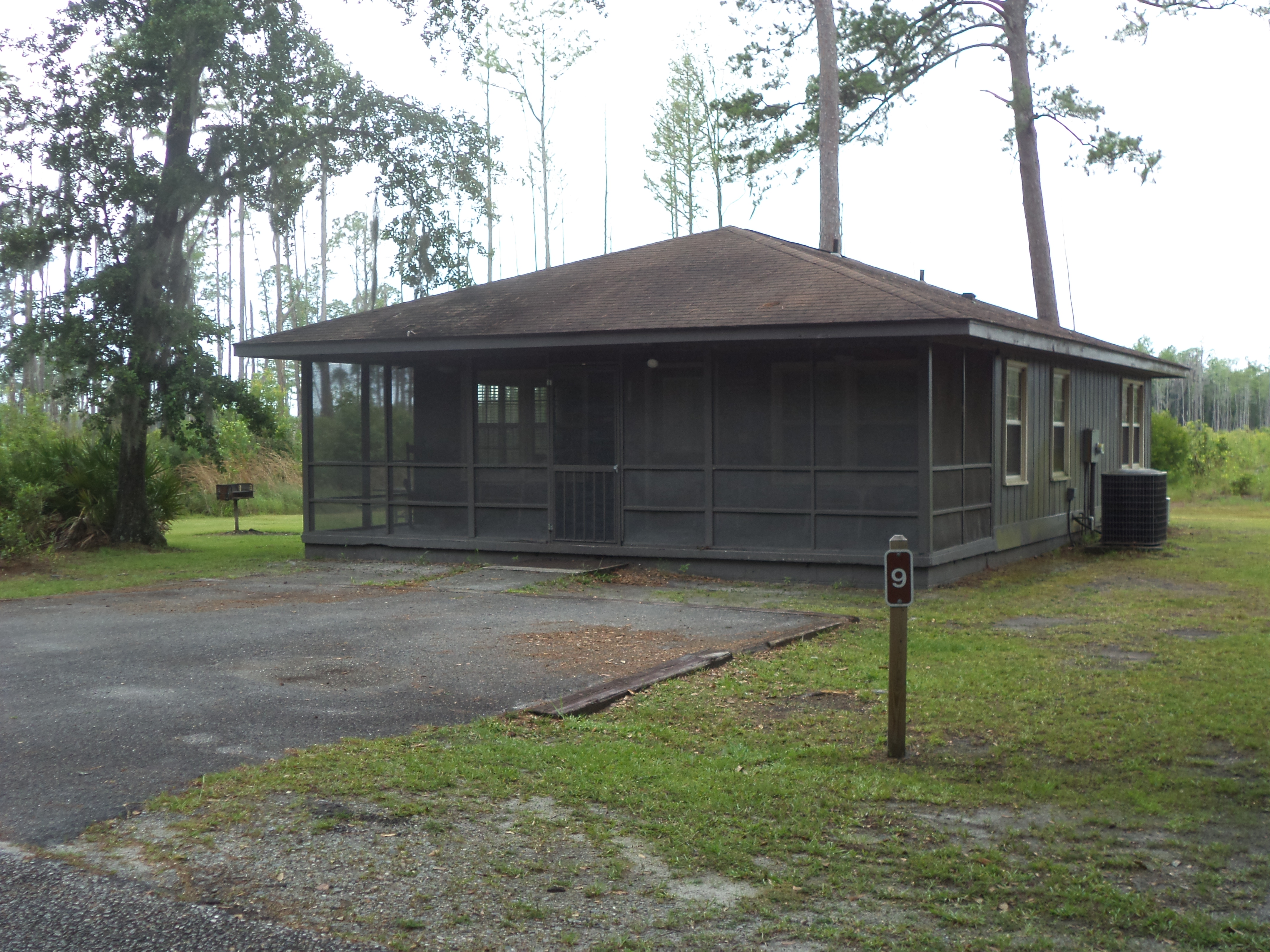
Fanning Springs State Park offers a small, day-use-focused getaway where a second-magnitude spring pumps 65 million gallons per day into the Suwannee River. The park has just one primitive group campsite accommodating eight people, plus cabins that book quickly in summer and on holidays. Day-use fees are $6 per vehicle and $2 per person for water entry; primitive campers arrive by foot, bike, or paddle (no overnight vehicle parking).
The park offers a primitive group campsite accessible only by foot, bicycle, or paddling on the Suwannee River Wilderness Trail, plus cabins for overnight lodging. Vehicle overnight parking for primitive campers is not permitted.
Historical Significance
The park notes that people have used the spring and Suwannee River corridor for thousands of years, but visitor materials focus on natural history rather than detailed cultural context.Weather and SeasonsSpring delivers the sweet spot: mid-60s to low 80s air temps, lower humidity, and fewer crowds on weekdays. The 72°F spring feels refreshing without the summer shock, and wildflowers brighten the hardwood understory. Summer brings families and heat; the cold spring water is a relief but uncomfortable for some kids. Winter mornings can be foggy and quiet, with manatees seeking warmth in the spring when the river chills. Cabins stay cozy with fireplaces in cooler months. Peak visitation is summer weekends and holidays; off-season offers solitude but colder swims.
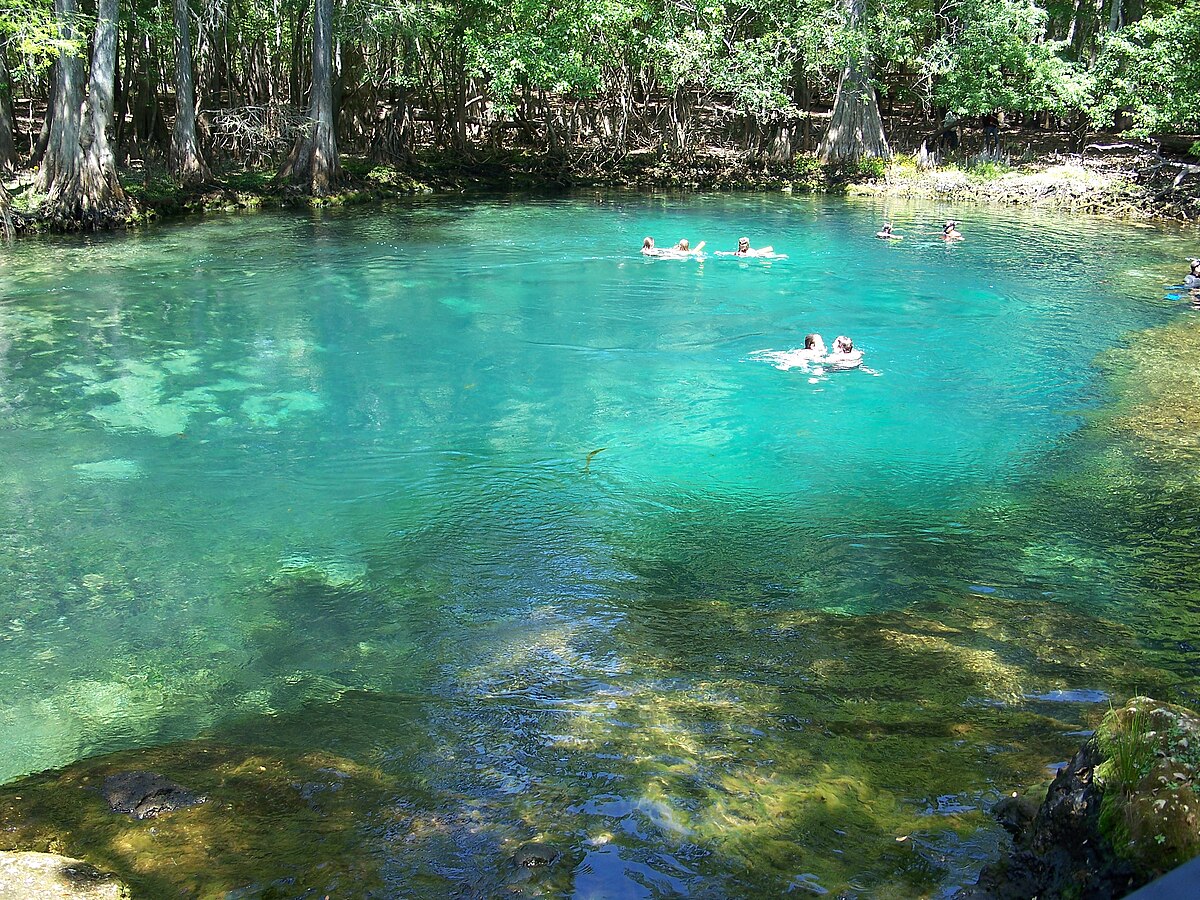
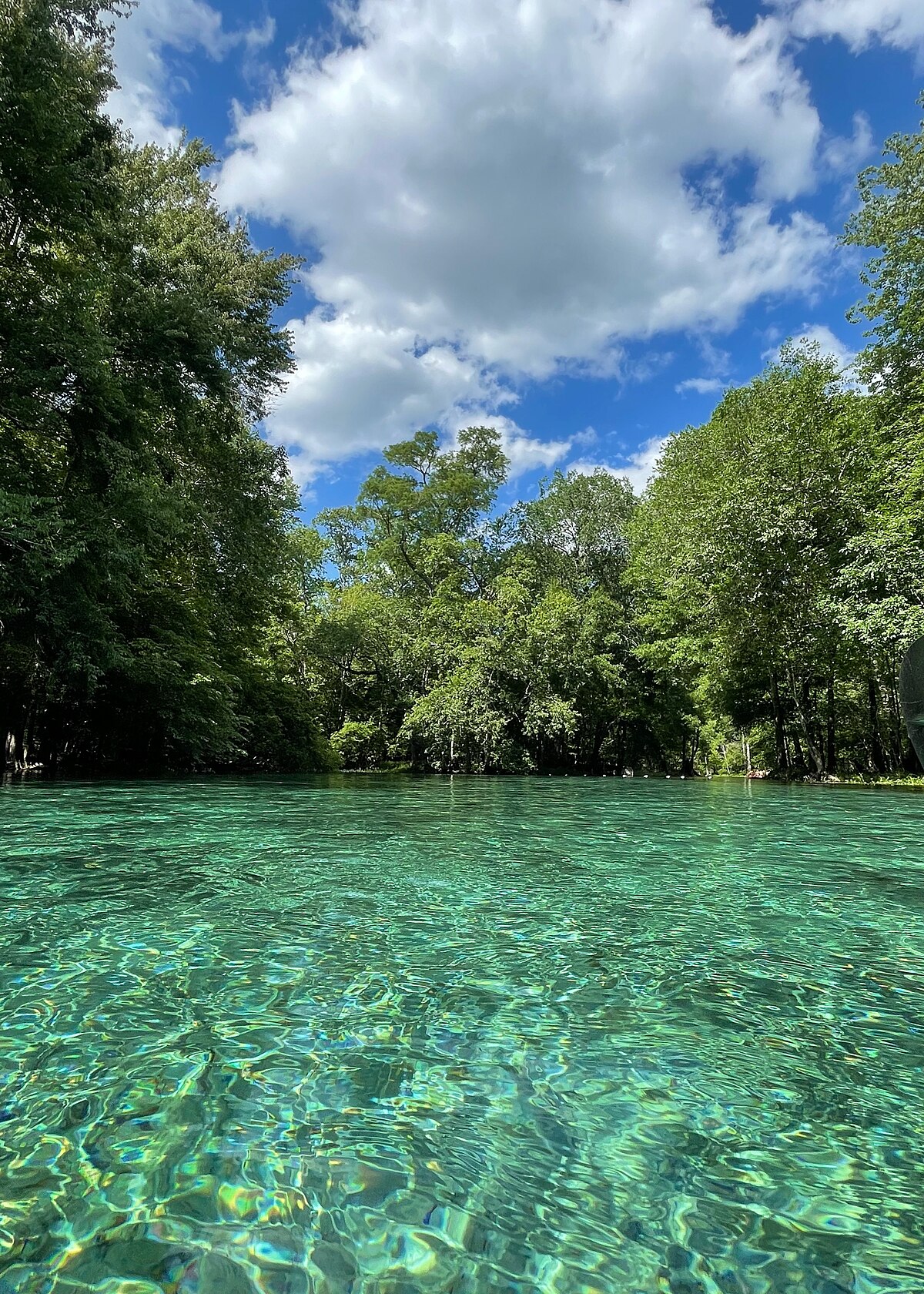
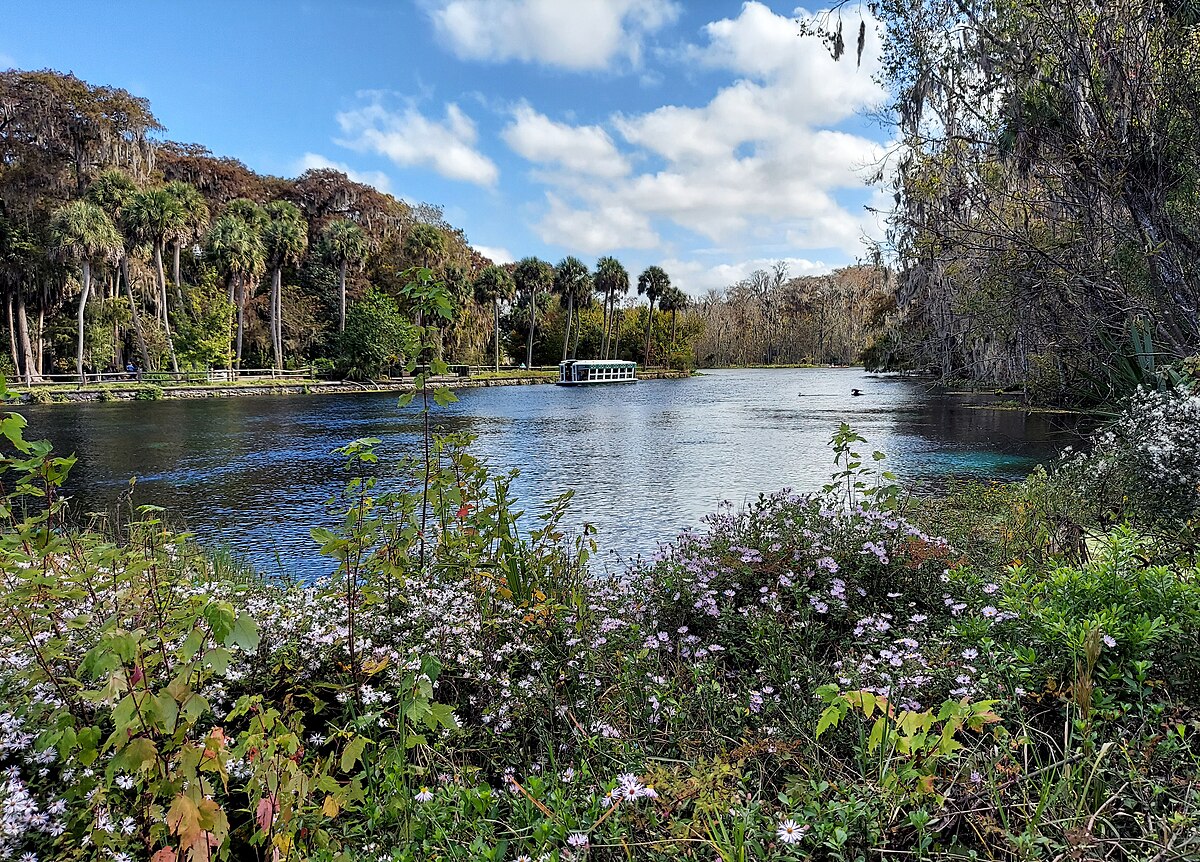
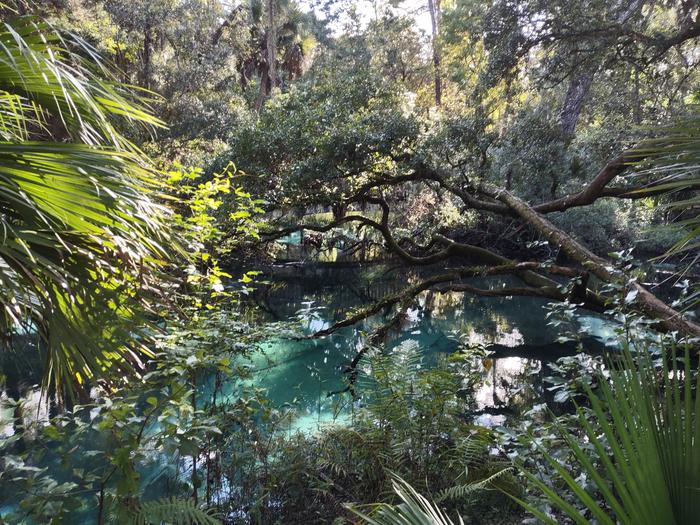
Natural Features and SceneryThe spring basin is the centerpiece: crystal-clear 72°F water boiling up from karst limestone, visible on calm days, then rushing into the tea-colored Suwannee. An elevated boardwalk winds through cypress swamp where bald cypress knees rise from the water and moss drapes the canopy. The spring run shelters musk turtles, mullet, bass, bowfin, and the occasional manatee when river temperatures drop in winter. Live oak hammocks shade the riverbank; mixed pine and hardwood forest covers the uplands. A gazebo at the boardwalk's end overlooks the river. The park sits at 49 feet elevation in typical North Florida karst terrain.
Geological RegionKarst topography with a second‑magnitude spring (producing ~65 million gallons/day) on the Suwannee River; floodplain swamp with cypress and upland mixed hardwood/pine communities.
Scenic ViewsClear blue‑green spring basin and visible boil, Suwannee River overlook at the end of the boardwalk, riverside views and cypress swamp scenery with high tree canopy and cypress knees.
 4.53
4.53