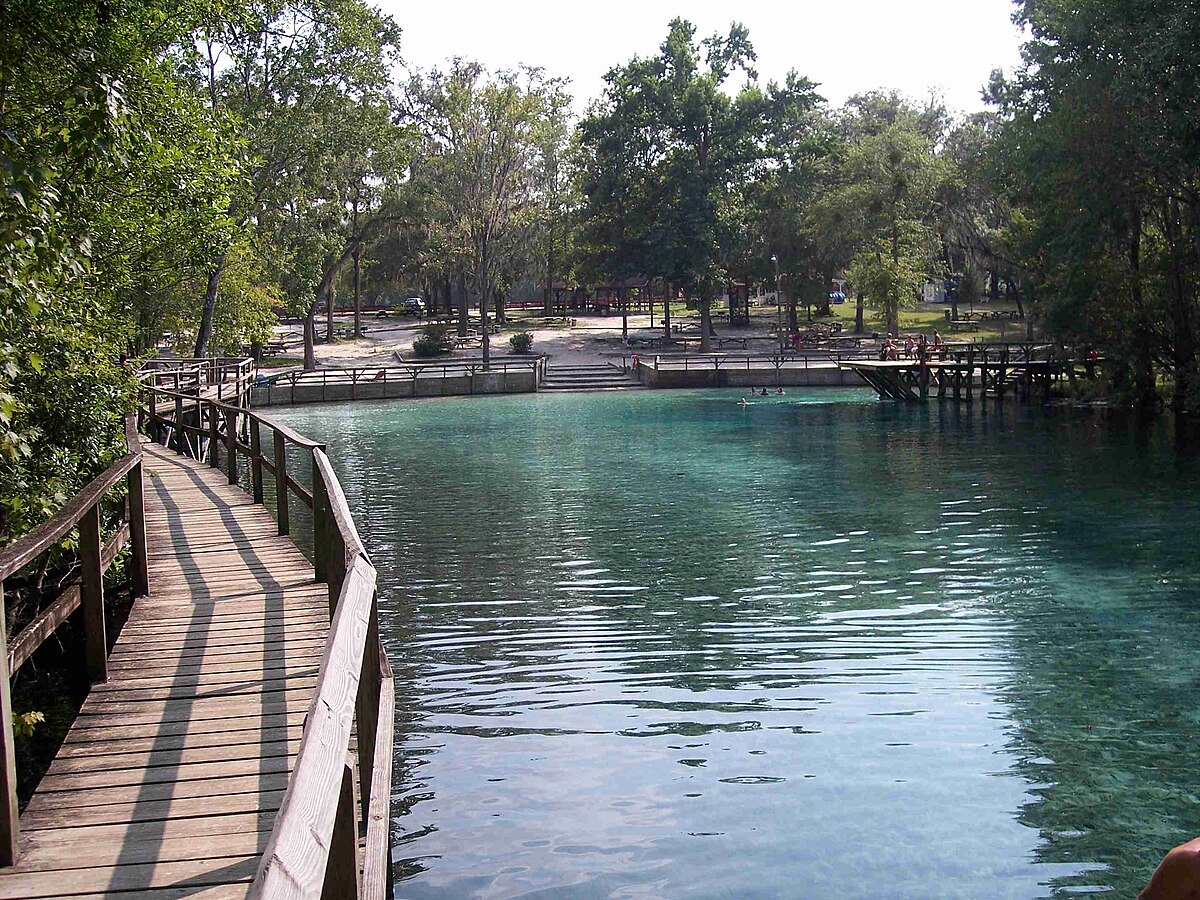
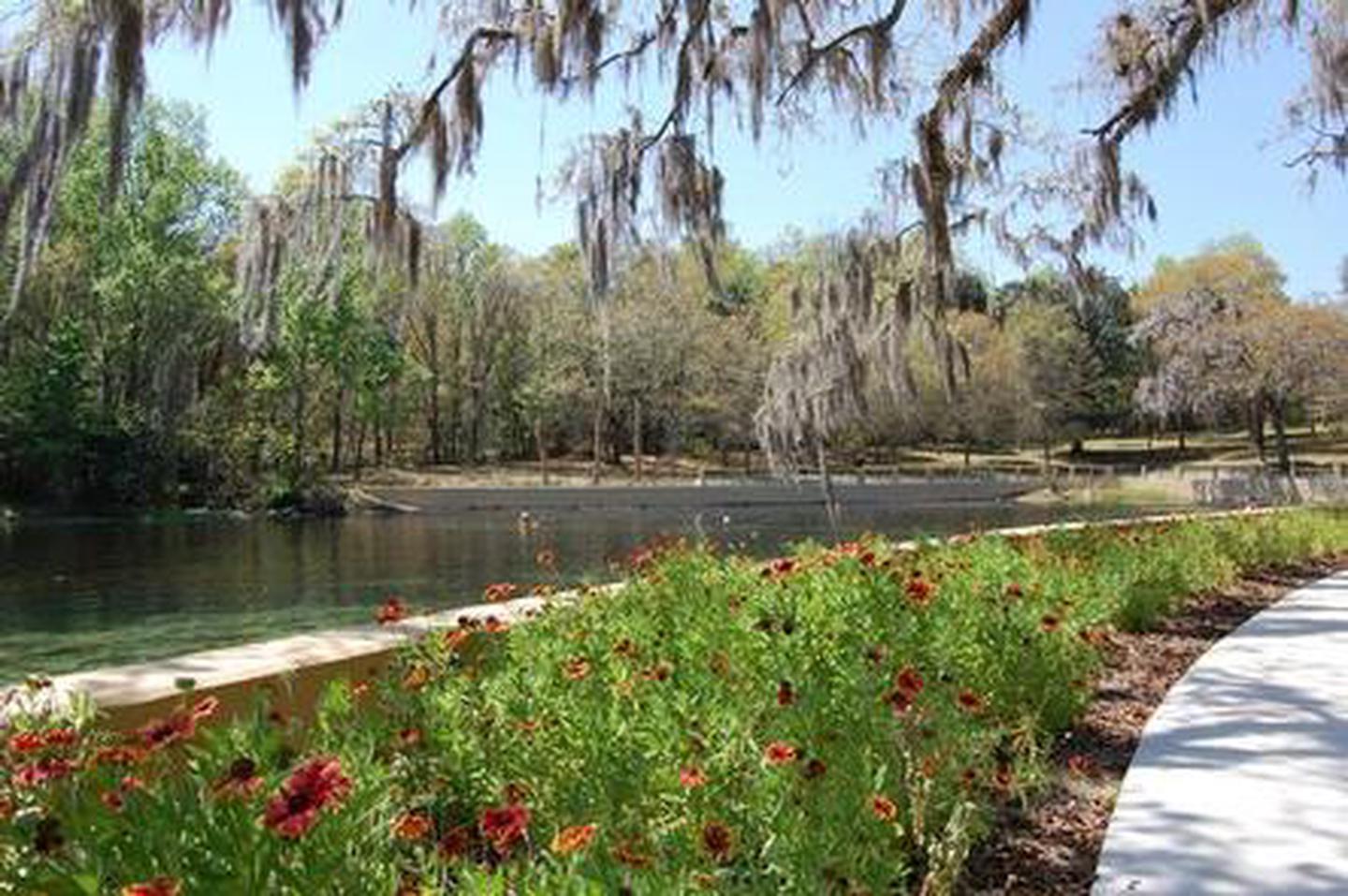
Ruth B. Kirby Gilchrist Blue Springs sits along the Santa Fe River in north-central Florida, protecting at least six clear freshwater springs and a short spring run. The campground has 25 sites: 17 with 30-amp hookups for RVs or tents, and eight tent-only sites in a primitive area at the back. Day-use admission is $6 per carload. The main spring head is deep and best for strong swimmers, but family-friendly shallows and excellent snorkeling draw visitors year-round.
Weather and SeasonsSpring (March through May) offers the best balance: daytime highs in the mid-60s to mid-80s °F, nights in the 50s and 60s, and the 72°F spring water feels refreshing rather than shocking. Humidity and biting insects are lower than summer, bird activity peaks, and vegetation is fresh. Summer brings higher crowds, heat, and mosquitoes, especially near the river and wetlands. Weekends fill quickly year-round, so reserve early. Cooler months (late fall and winter) thin the crowds and suit hiking or viewing the clear water, though fewer people swim then. Weekdays outside major holidays are the quietest times to visit.
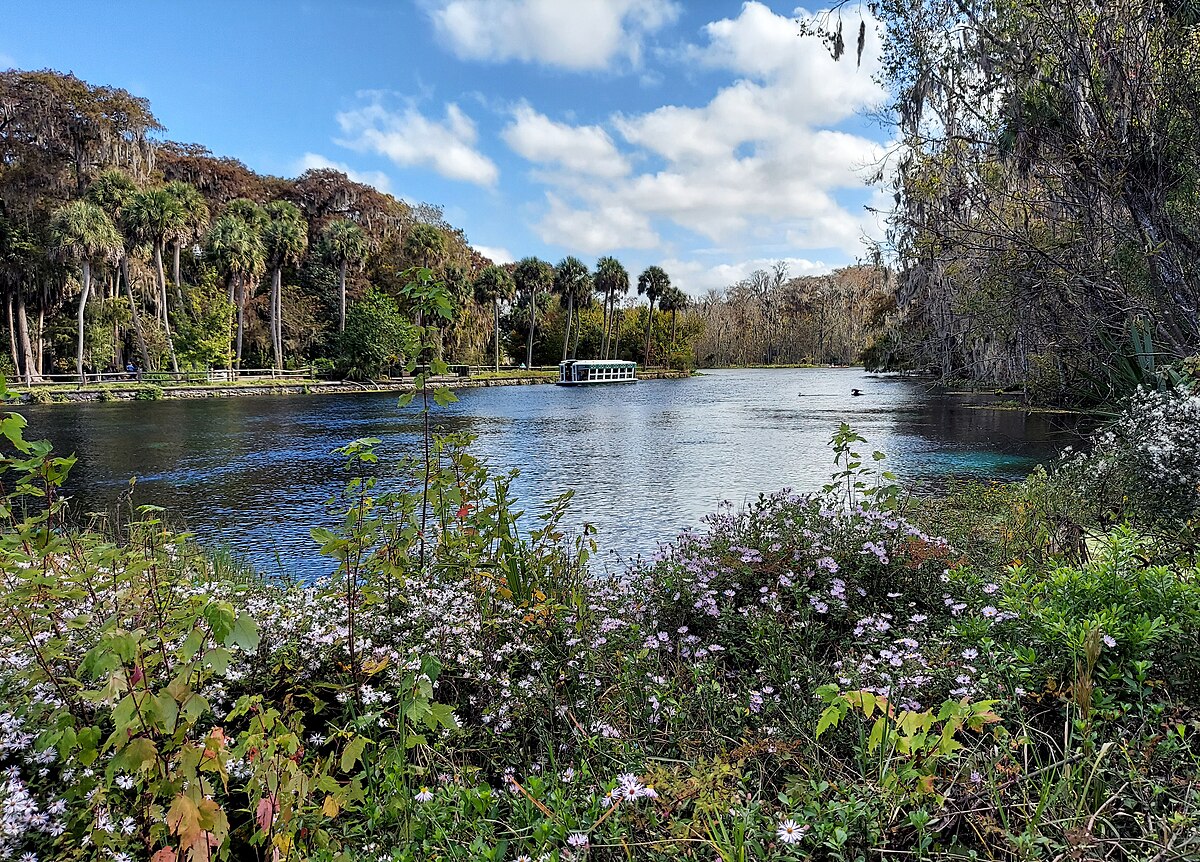
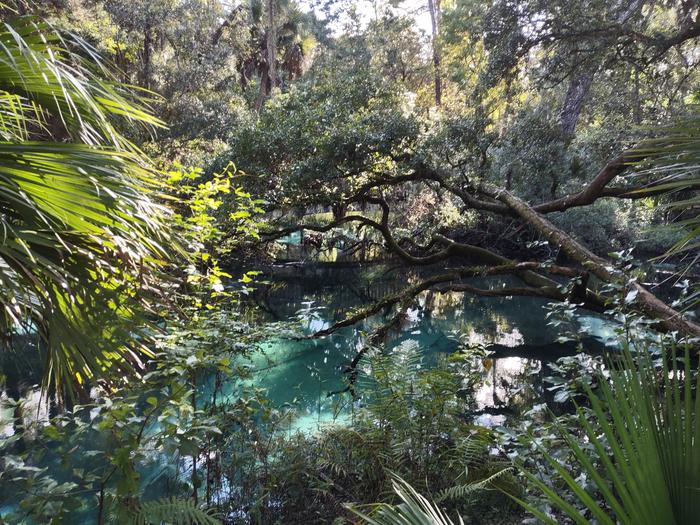
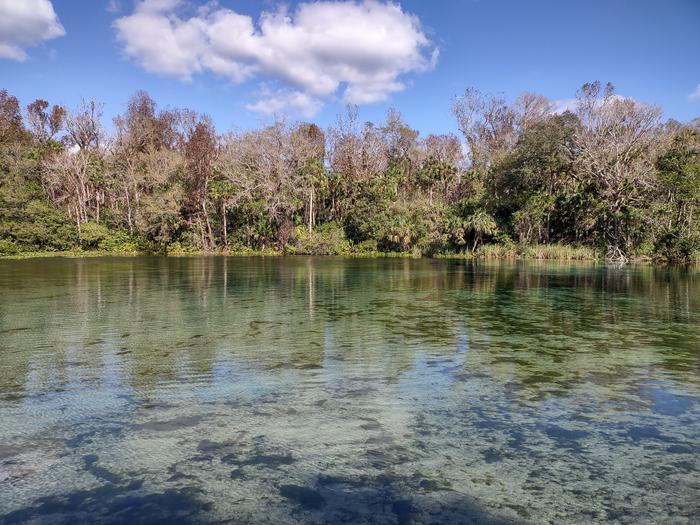
Natural Features and SceneryThe main Gilchrist Blue Spring is vivid blue-green with crystal-clear water that exposes limestone vents, fish, turtles, and aquatic vegetation below the surface. The short spring run flows into the tannin-stained Santa Fe River, creating a visible color contrast where clear spring water meets dark river water. Hardwood hammock and floodplain forest surround the compact park. Live oaks draped in Spanish moss, cypress, and lush understory vegetation provide classic old-Florida scenery and shade between campsites. White-tailed deer, birds, and typical north-Florida wildlife move through the woods; snakes and alligators are present in the broader ecosystem. The elevation is only 75 feet, so the terrain is flat and low-lying along the river.
 3.69
3.69