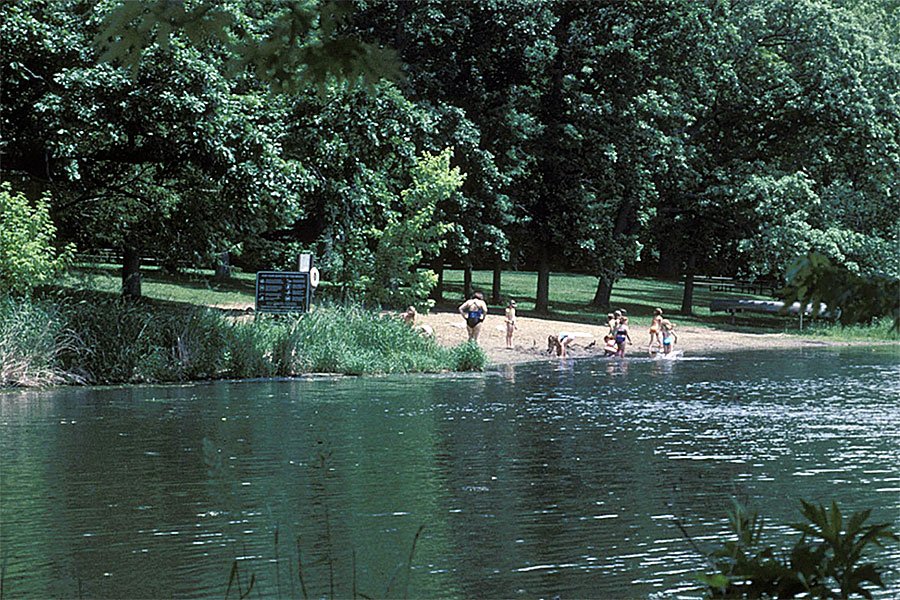
Gather your group beneath the forest canopy at one of two primitive wooded sites that share a welcoming roofed shelter along the South Branch Root River. This secluded retreat puts you steps away from mysterious underground passages, a preserved 1800s village, and some of Minnesota's finest trout streams—all wrapped in the shade of towering trees.
Two primitive group camps located in a wooded area near the South Branch Root River; each has tent spaces and they share a roofed shelter.
Historical Significance
Forestville Mystery Cave State Park includes the restored 19th-century village of Historic Forestville and protects Mystery Cave, Minnesota’s extensive cave system. The park preserves both cultural history (Historic Forestville) and significant karst geology and cave resources.Weather and SeasonsPlan your group adventure between April and October, when the camps welcome visitors and Mystery Cave tours run regularly from late spring through early fall. Here's an insider tip: even on the hottest summer day, Mystery Cave stays a constant 48°F, so pack a fleece or jacket for your underground exploration. Above ground, the shaded riverside location offers natural air conditioning during warm months, making this an ideal escape when temperatures climb.
Weather data by Open-Meteo.com, licensed under CC BY 4.0, processed by Outdoorithm.
Natural Features and SceneryYour camp sits cradled in mature hardwood forest where the South Branch Root River whispers through one of Minnesota's most fascinating landscapes. This is the Driftless Area, where ancient glaciers never reached and limestone cliffs rise dramatically above spring-fed streams. Beyond your wooded site, explore restored prairies and oak savannas, discover the perpetually-cool algific slopes at Big Spring, and venture into the vast Mystery Cave system that honeycomb the bedrock beneath your feet—a hidden world of passages and rooms carved over millennia.
Geological RegionDriftless Area karst region (limestone bluffs, sinkholes, caves; karst topography)
Scenic ViewsImmediate views from the group camp are wooded and river-corridor oriented rather than wide panoramas; bluff-top overlooks and river vistas are available on nearby trails elsewhere in the park.
 3.73
3.73