Walk in Campsites Campground sits under the canopy of Nerstrand Big Woods State Park, one of Minnesota's last intact maple-basswood-oak hardwood forests. Sites are spacious and tree-lined, offering more privacy than typical state-park loops. Electric sites include water hookups; all sites have cooking grates and access to drinking-water taps throughout the campground.
Weather and SeasonsSpring and fall are the standout seasons. In April and May expect cool temperatures, good waterfall flow, and a carpet of wildflowers. Trillium and the dwarf trout lily peak in late April. Fall offers the best combination of crisp weather, brilliant maple-and-oak color, and low insect activity, with daytime highs around 45–60°F and cool nights down into the 30s in September and October. Weekends around peak color get busier; weekday solitude is common. Summer is pleasant under the shaded canopy and good for families wanting kids to wade in the shallow creek above the falls, though humidity and mosquitoes can be noticeable. Winter use focuses on skiing and snowmobiling; walk-in camping in freezing conditions requires more preparation.
Weather data by Open-Meteo.com, licensed under CC BY 4.0, processed by Outdoorithm.
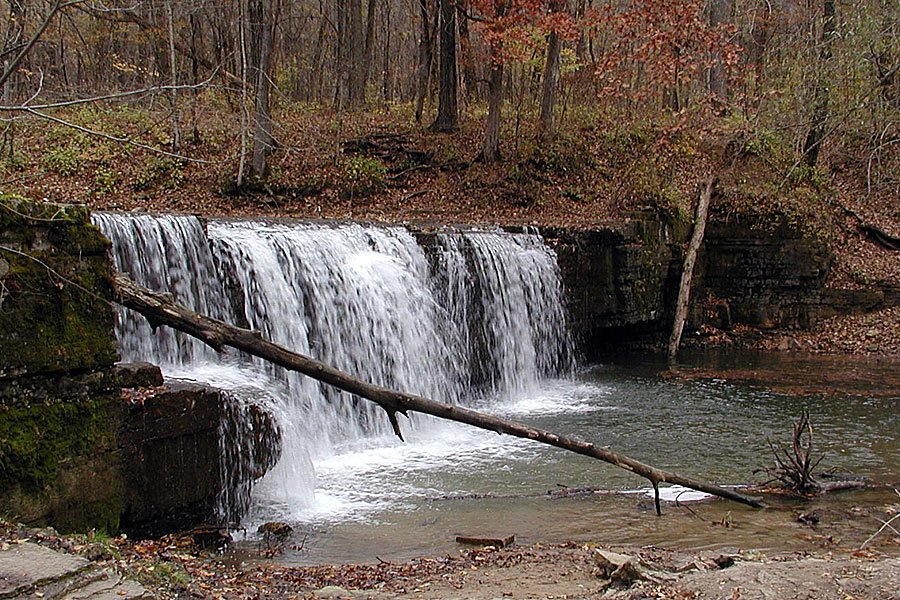
Natural Features and SceneryThe campground occupies a remnant of the historic Big Woods, a mature hardwood forest with a closed canopy, thick understory, and deep leaf litter over glacial deposits up to 150 feet thick. Platteville Limestone bedrock, roughly 500 million years old, outcrops occasionally along Prairie Creek, which has carved a small valley crowned by Hidden Falls. A 20-foot waterfall reached via forested loop trail. Spring brings over 50 documented wildflower species including trillium, hepatica, bloodroot, and the federally endangered dwarf trout lily along the Trout Lily Boardwalk. Summer offers dense green shade, ferns, and fungi. Fall lights up the maple and basswood canopy in strong yellows and reds. White-tailed deer, raccoons, and at least seven woodpecker species move through the forest; birders report scarlet tanagers, rose-breasted grosbeaks, and indigo buntings. Mosquitoes and ticks are common in warm months near the creek and lowlands.
 0
0