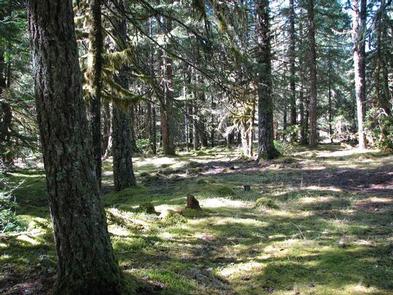
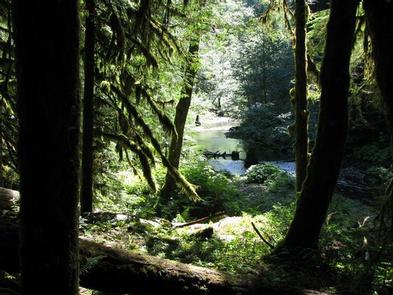
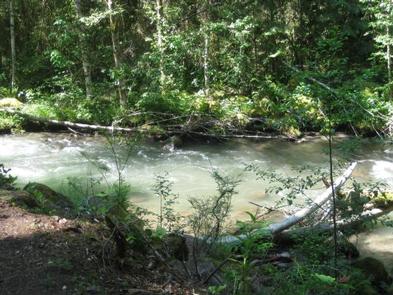
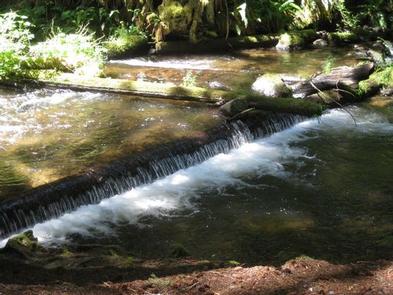
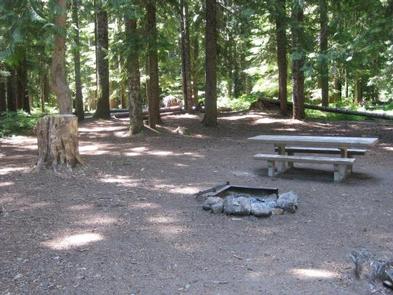
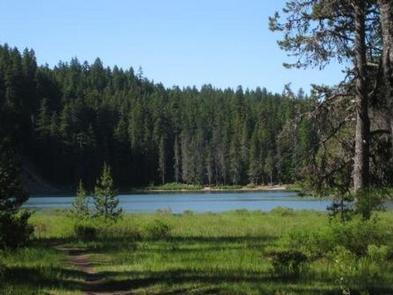
McNeil Campground sits on the Wild and Scenic Sandy River in Mt. Hood National Forest, 2,000 feet up in a forest of lodgepole pines and Douglas firs. The 34 tent and primitive sites operate first-come, first-serve for $15-$21/night from June through early September. The campground occupies an ancient volcanic mudflow, with moss-covered boulders scattered throughout the grounds.
McNeil Campground accommodates a variety of campers, providing spaces for both tent camping and combined (tent/RV) sites. It is first-come, first-serve.
Historical Significance
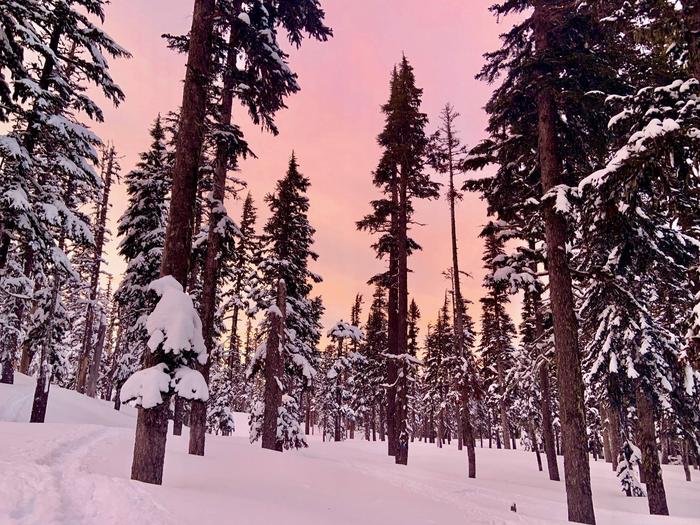
The campground sits on one of Mt. Hood's prehistoric mudflows, or lahars, that thundered down the mountainside thousands of years ago. The volcanic debris from that event created the distinctive terrain and soil composition visible today. The scattered boulders and unique geology make this a living geological museum of the Cascade Range's volcanic history.Weather and SeasonsJune through early September brings the most reliable conditions, with daytime highs in the 60s to upper 70s and dry trails. The Sandy River runs warmest and lowest in summer, which is best for fishing, swimming, and wading. Expect moderate crowds on summer weekends and holidays. Weekdays are quieter. Spring brings wildflower displays and snowmelt-swollen streams. The campground transforms in autumn as the forest shifts color, then closes for winter.
ElevationPerched at 2,000 feet above sea level, McNeil Campground basks in generous sunshine that filters through the forest canopy. This moderate elevation strikes the perfect balance—high enough to escape summer's most intense heat while remaining accessible year-round. The campground's open, airy atmosphere sets it apart from the denser, more shaded sites found elsewhere in the region, creating bright, welcoming spaces where morning light arrives early and evening alpenglow lingers on the surrounding peaks.
Weather data by Open-Meteo.com, licensed under CC BY 4.0, processed by Outdoorithm.
Natural Features and SceneryThe campground sits atop a prehistoric lahar. A mudflow that thundered down Mt. Hood thousands of years ago, carrying volcanic debris and reshaping the terrain. You'll see the evidence in volcanic rocks throughout the forest and the unique soil that supports the lodgepole pines and Douglas firs. Moss drapes over boulders and blankets the forest floor. The Sandy River flows close to the sites, and the forest canopy creates a mix of sun and shade across the loop.
Geological RegionMcNeil Campground occupies a fascinating geological intersection within Mt. Hood National Forest, where ancient volcanic forces have sculpted an extraordinary landscape. The campground sits atop one of Mt. Hood's prehistoric mudflows—a lahars that thundered down the mountainside thousands of years ago, carrying volcanic debris and forever altering the terrain. Today, this dramatic past is visible in the moss-draped volcanic rocks scattered throughout the forest and the unique soil composition that supports the thriving ecosystem of lodgepole pines and Douglas firs. This living geological museum offers campers a chance to literally sleep on history while surrounded by the ongoing story of the Cascade Range.
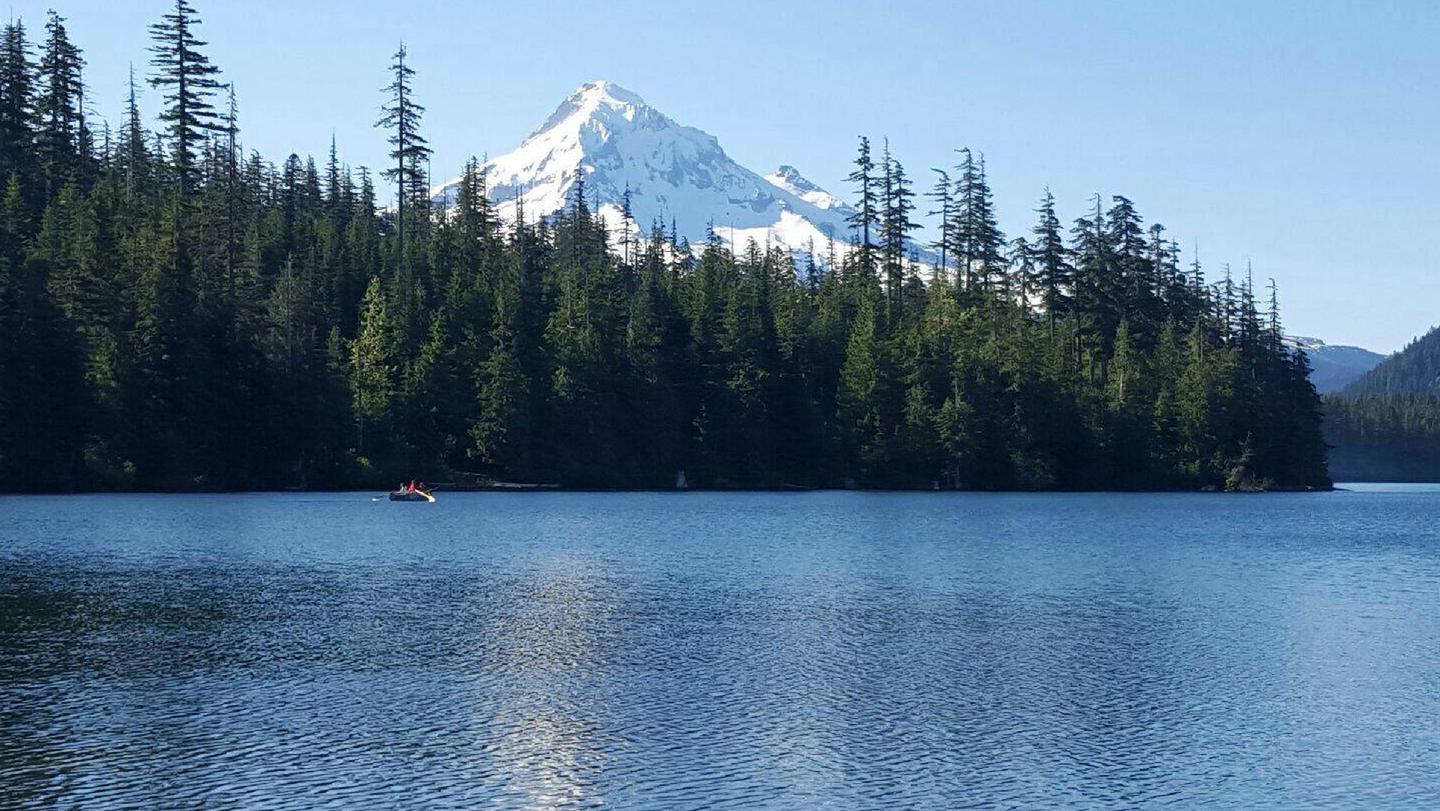
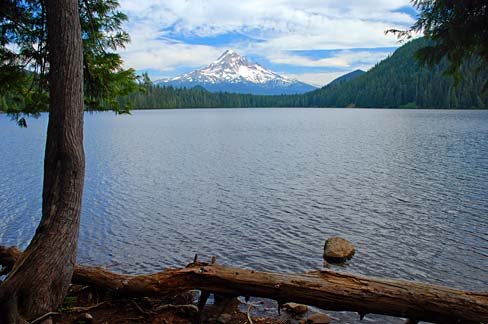
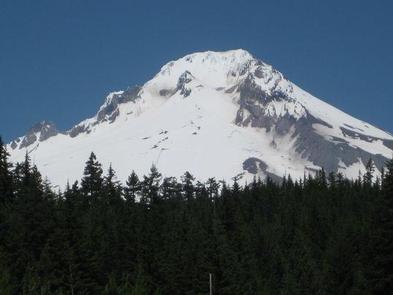
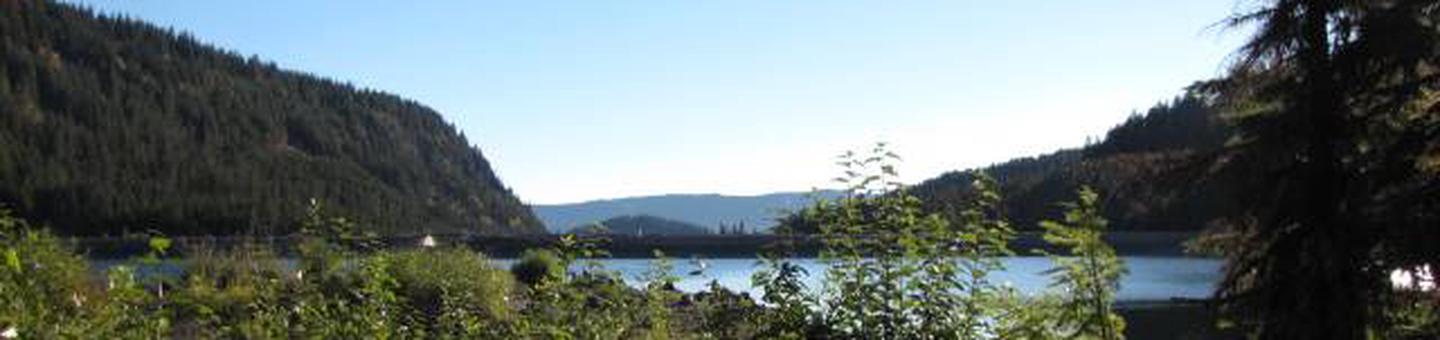
Scenic ViewsSome sites offer views of the nearby ridgeline and the Wild and Scenic Sandy River. "Nested in between a Ridgeline and the mountain" as described in user reviews.
Lodging & AccommodationsNo lodging accommodations like hotels or cabins are available.
Programs & ActivitiesNo cultural or educational programs are offered.
 4.05
4.05