Group Camping for 40+ People: How We Plan and Run the Trip
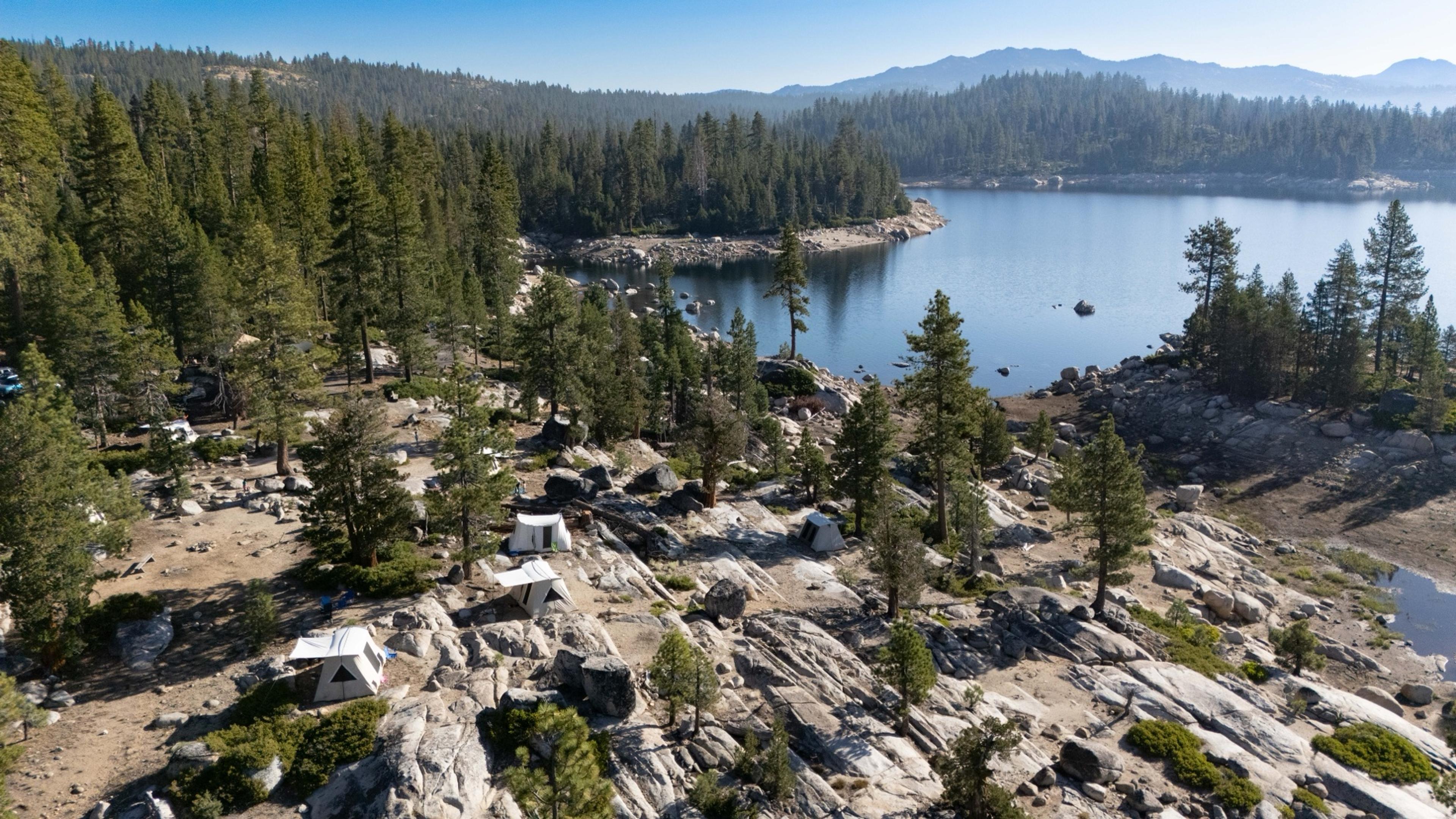

We booked our Spicer Reservoir campsite at 7:02 on an August morning, a full year before the trip. That is the part nobody tells you about camping with forty-five people: the trip is decided a year out, on a clock that isn't the one you think.
This is how we plan and run trips at that size, and what we got wrong first. If you're still looking for a site rather than planning the trip, start with our group campsite finder and come back.
What Four Group Trips Actually Cost and Held
Every number here comes from our own reservations and trip records, as of August 2026.
- Spicer Reservoir, Stanislaus National Forest: 45 people, about half of them kids aged two to sixteen, one site, three nights. Booked August 2, 2025 at 7:02 a.m. Pacific for August 2026, a twelve-month booking window.
- Williams Grove, Humboldt Redwoods: 48 people, 12 families, roughly $25 per family per night in site fees.
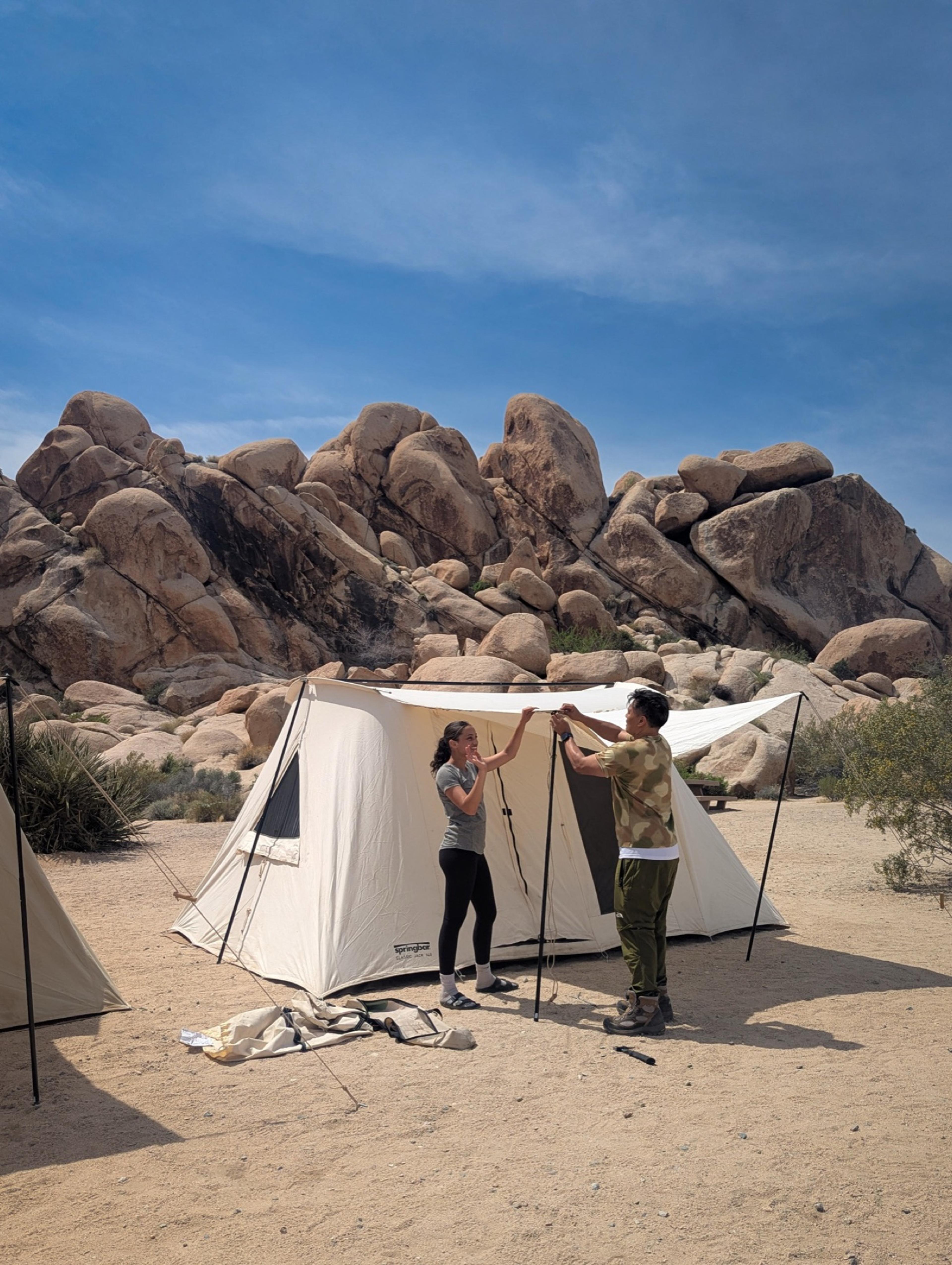
- Indian Cove, Joshua Tree: 40 people across two adjacent group sites, four nights, $530 in site fees. Nine households, so about 4.4 people per household.
- Pinnacles National Park: 40 people, a dozen kids under ten.
For scale beyond our own trips: we track 590 group-named campgrounds across 33 states.
How Group Campsite Booking Windows Work
This is where group camping stops behaving like normal camping, and it's the single thing most likely to sink your trip before it exists.
Booking windows are set facility by facility, so there is no one rule. The pattern that catches people out: individual campsites commonly open about six months ahead, while plenty of group sites open a full year ahead. Same website, same park, sometimes the same access road, double the lead time. Plan a group trip the way you'd plan a normal trip and you'll reach the reservation page six months late.
We booked Spicer on August 2, 2025 for August of 2026. The receipt is stamped 7:02 in the morning. Justin thinks that was the first day the window opened far enough to cover the dates we wanted. We booked August 2 through August 10 and later trimmed it to August 5 through 8.
The release-time trap
Spicer's reservation opened at 10:00 a.m. Eastern, which is 7:00 a.m. where we live. Release times are set facility by facility, and a Californian who assumes the clock matches the state can be hours late for a site in their own backyard. California's state park system is separate again, with its own windows and an 8 a.m. Pacific release. Check the listing, not your assumptions.
So the order of operations is backwards from what feels natural. Find the site, look up its specific window and release time, put that morning in your calendar, and only then start asking people whether they're free.
How We Found Ours
We found the site as a pin on a map, while filtering for group sites on our own website. My husband Justin and I were camped at Lake Alpine last July with his parents. The pin was close, so one morning we drove over to look.
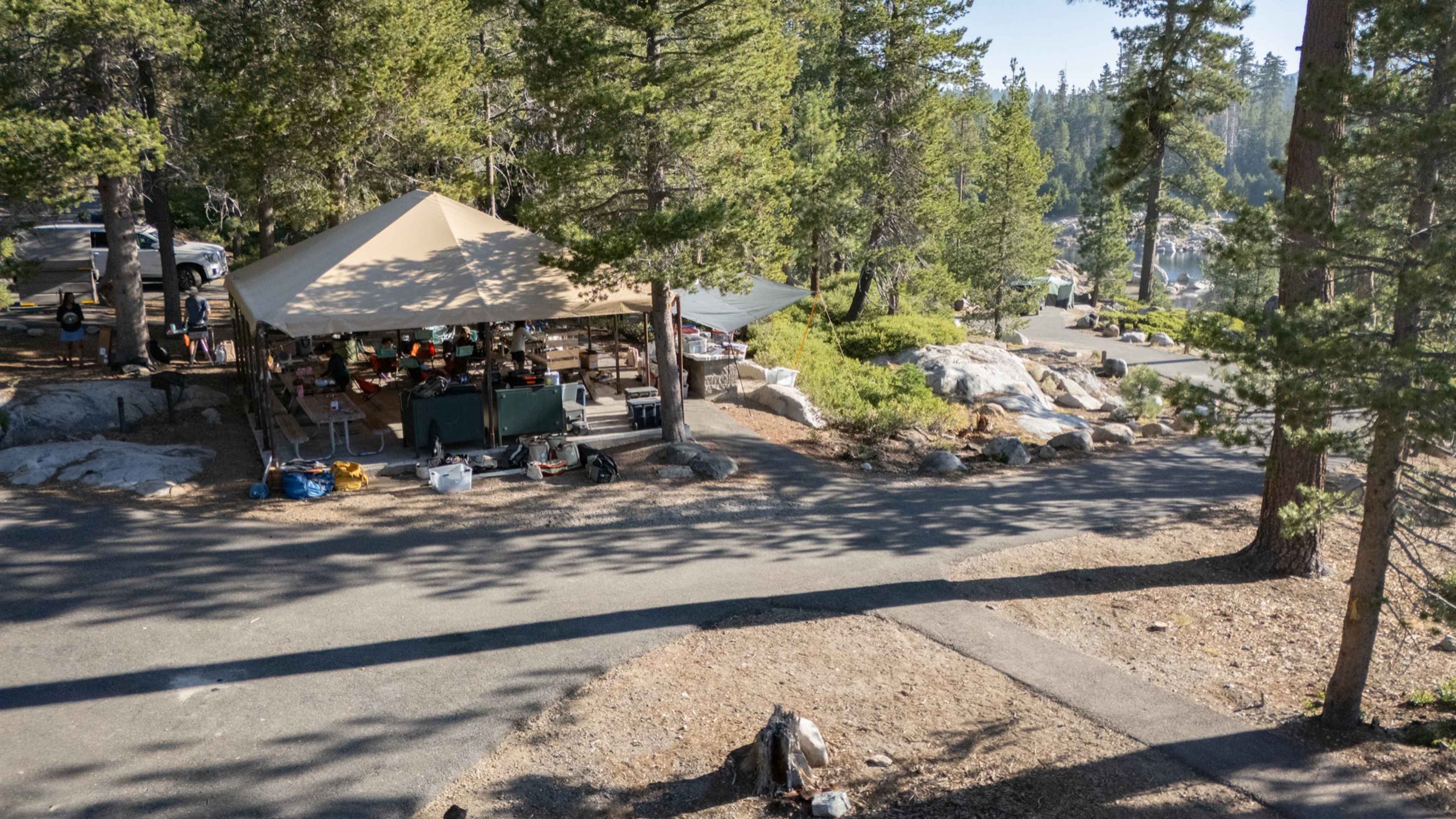
We pulled into the overflow lot above the campground and could hardly believe it: the site was private, with its own road in rather than a spur off a larger campground. A covered shelter over a concrete pad, which in a Sierra August is shade, and shade is a luxury. Clean pit toilets. Big views. And below us, the group camped there that week was swimming off what amounted to their own beach.
We knew we wanted to bring a group. We also knew we had about two weeks to make it happen, because the site books a year out.
If you can go stand at a candidate site before you commit a year in advance, do it. If you can't, our group campsite pages list sites state by state, and if the dates you want are already taken, cancellation alerts are worth setting. Group reservations get cancelled like any others.
How to Run a Trip for Forty-Five People
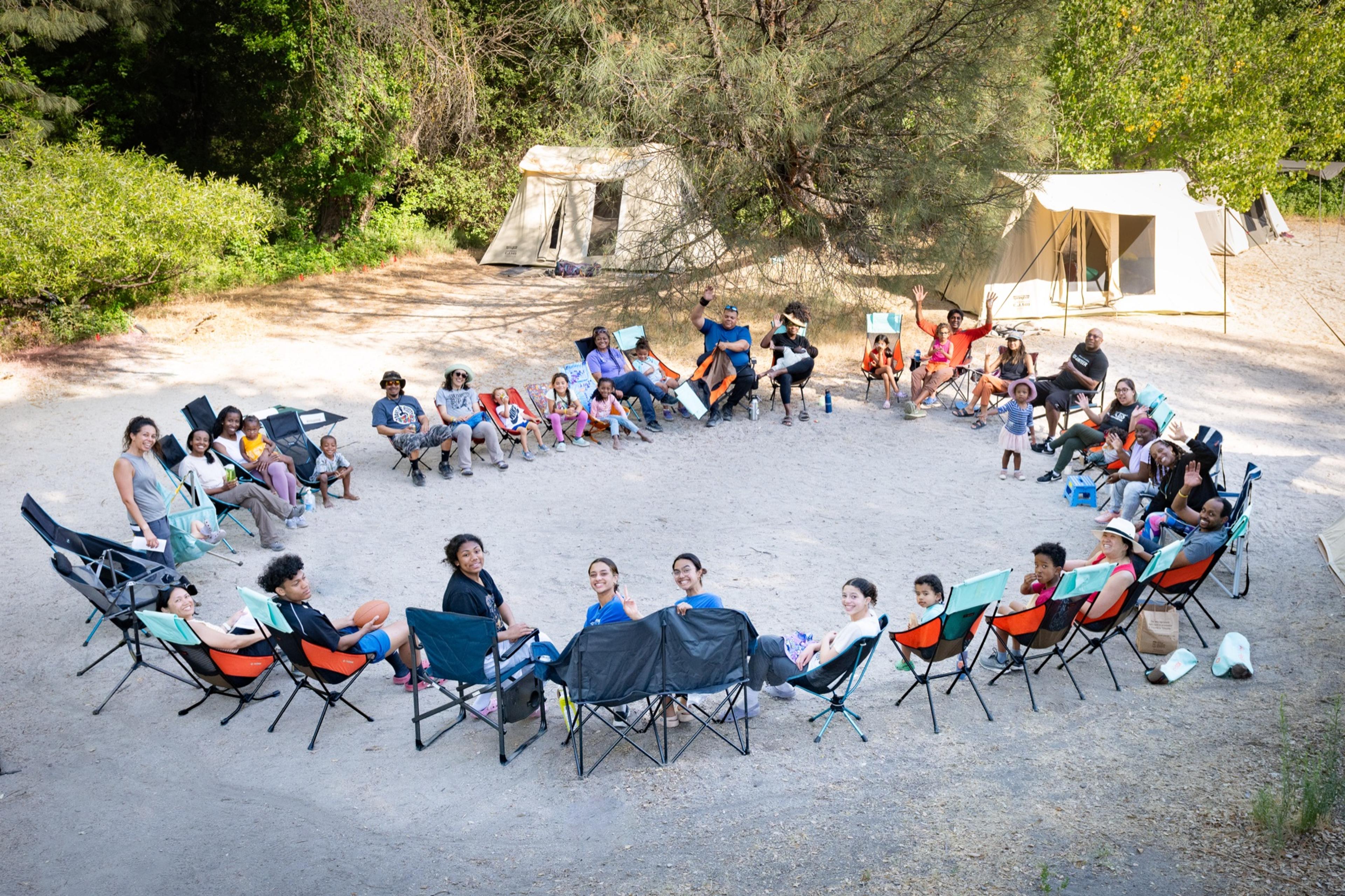
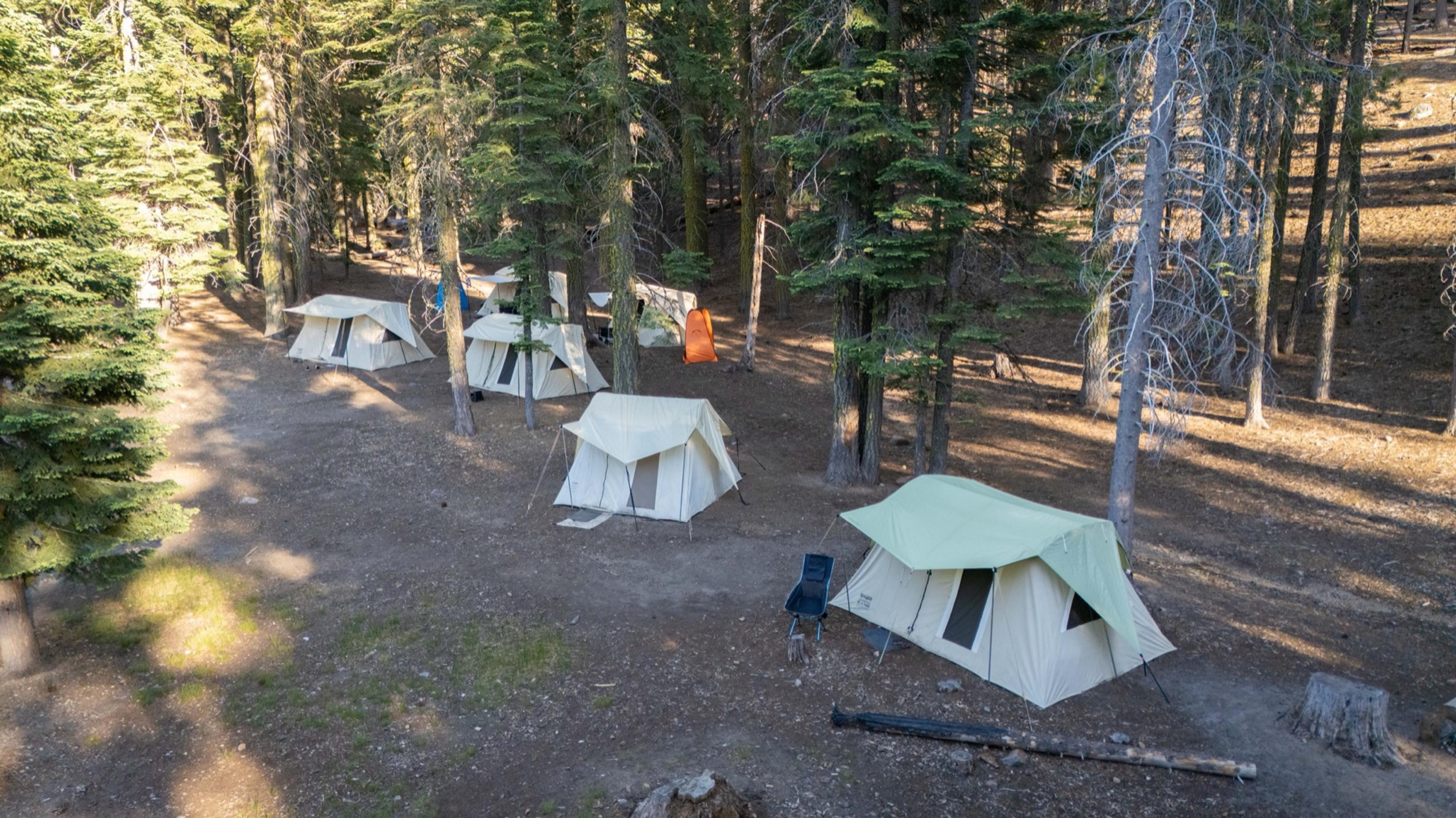
Most of our big trips run through Outdoorithm Collective, the nonprofit we founded. On a typical trip a third or more of the households are on their first or second camping trip ever. Nine to twelve households, three or four days, one big site.
- Arrival is a window, not a time. Ours runs 2 to 4 p.m. with dinner at 5:45, which leaves room for people to be late without derailing anything. People have rolled in at 11 p.m. and been fine.
- Food has to be a system. At forty-plus you cook almost nothing from scratch on site: we cook at home, vacuum-seal, freeze, and reheat, and the frozen bags double as cooler ice on the drive. The whole method is in how we feed forty at camp.
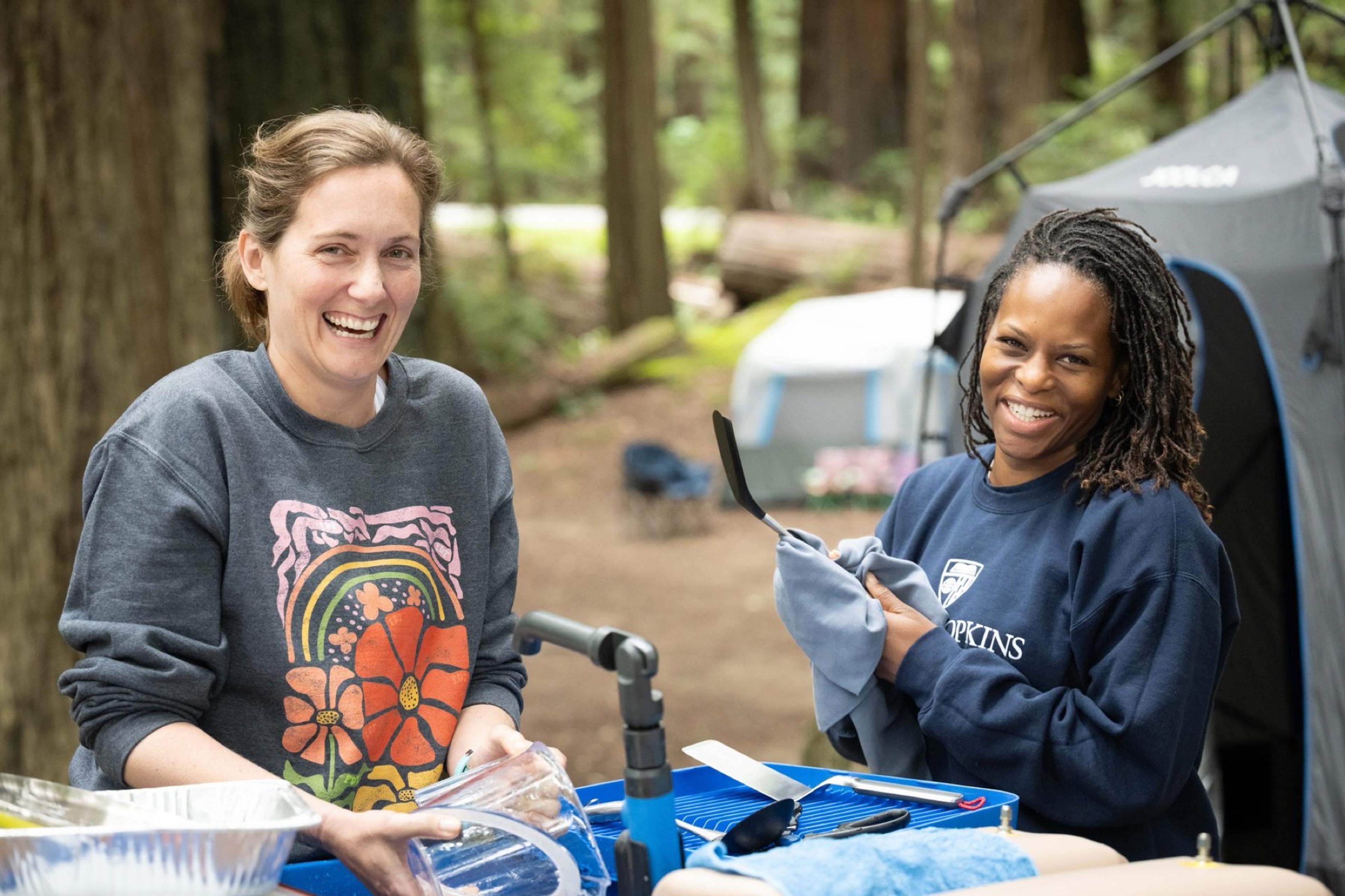
- Jobs beat volunteers. There's a job board at camp and everyone takes a turn: chopping, flipping pancakes, running a wash bin. It's shared work, not assigned labor, and it's where a surprising amount of the friendship happens. The full bin logic is in the bin system post.
- Open and close with a circle. At the start, everyone says their name and how many times they've camped. Plenty of people say zero, which settles a nervous first-timer faster than any amount of reassurance. At the end, before anyone drives off, each person shares one moment that stuck. People consistently say it's the part they did not expect and would not skip.
- Offer two versions of everything. There's always a hike, and always an easier version of it. A flat mile around the lake or two thousand feet up a mountain, both count.
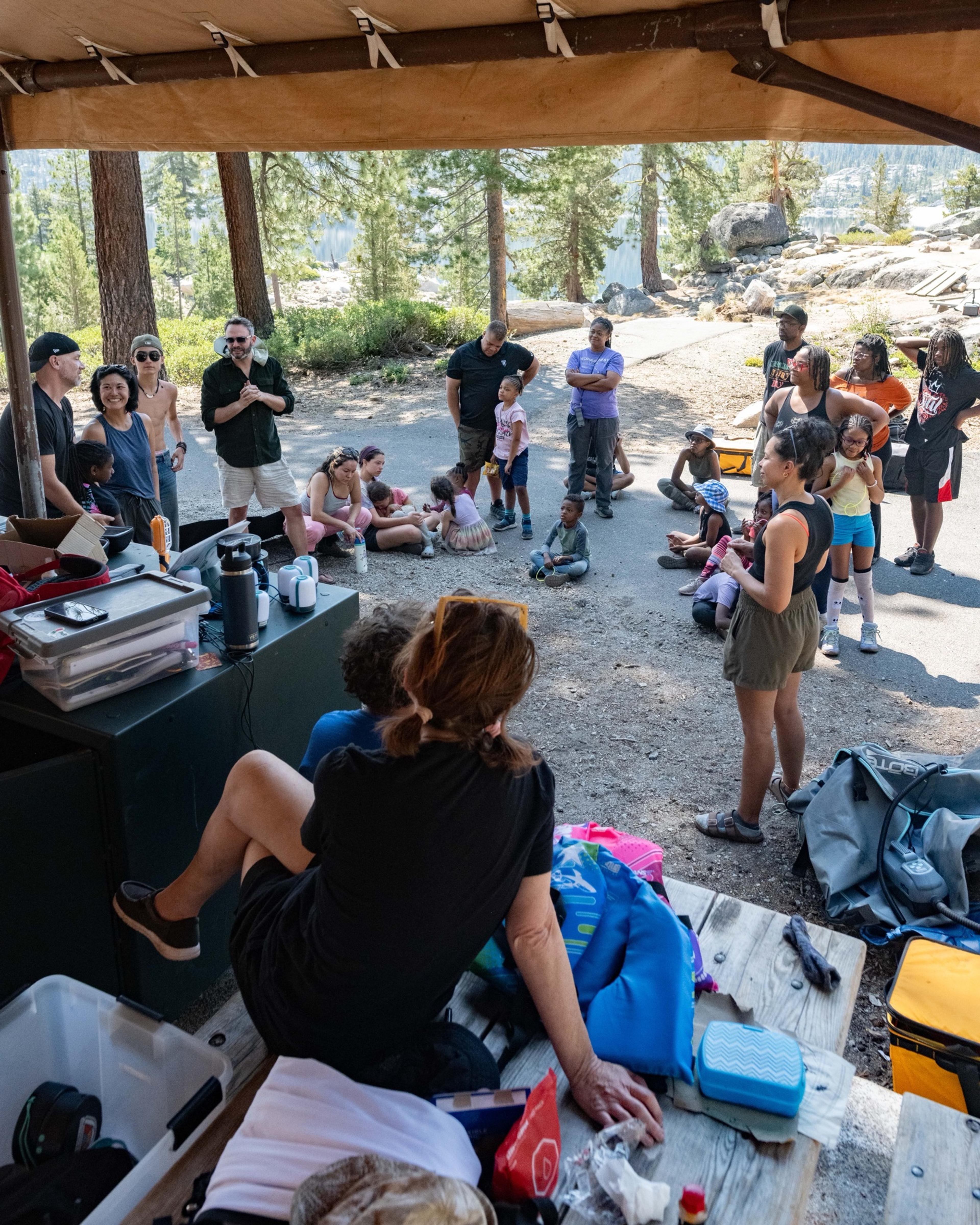
The thing nobody warns you about is how restful a big group is for parents. Kids move as a pack and every adult keeps a loose eye on every kid. As the Collective's trip page puts it, you are still your child's parent; you are just not the only adult paying attention. Noe, after a July trip, described it from the inside: "Knowing that we were doing the chores together and also watching over each others kids is a huge relief and a blessing to experience."
What a Group Site Costs Per Family
A group site is billed as one reservation, so the site fee divided by the families in it gets small fast. Four nights at Indian Cove for forty people across two sites came to $530 in site fees. At Williams Grove, twelve families worked out to roughly $25 per family per night.
A site that looks expensive on the reservation page is often the cheapest way for a family to sleep outside. Collective trips themselves are free to the families who come, covered by donations and grants, because for a family that has never camped, the cost of a full kit is the thing standing in the way.
What Goes Wrong at Scale
Something always does. At Spicer it was yellow jackets, and five people got stung before the week was out. A 50 mph windstorm hit a Joshua Tree trip at 2 a.m., and the next morning everybody traded their version of the night over pancakes. A campervan slid into the river bank at Humboldt, which is how an engineer, a doctor, a social worker and an actor ended up holding shovels together.
Planning where to go next? Camp Sage knows every campground we track. Ask it anything, from drive times to which loops have shade.
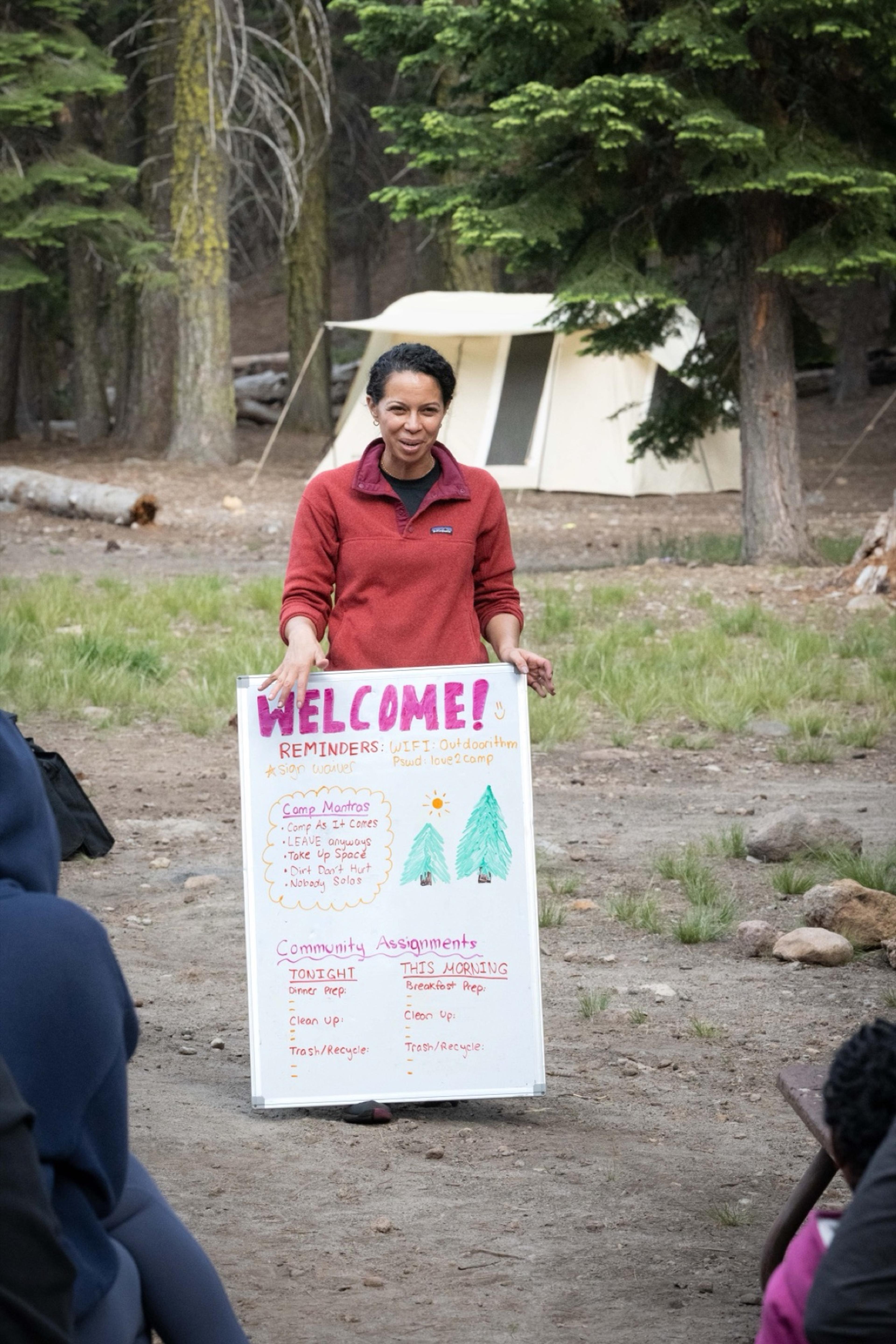
Ask Camp SageFive hand-painted signs go up at every camp: Leave Anyway, Camp as It Comes, Nobody Solos, Dirt Don't Hurt, Take Up Space. They are not rules, they are permission slips, and each one came out of a trip where something went sideways. Ruth, after a trip, said: "The mantras removed a lot of pressure. They allowed me to just show up and take up space."
Plan for something going wrong and a group trip is mostly fine. Plan for perfection and forty-five people will find the crack before lunch.
Find Group Campsites by State
Our group campsite hub covers every state we track. The busiest: California, Washington, Minnesota, Colorado, Oregon, Michigan, and Utah. If you just want what's close, use group campsites near you.
Frequently Asked Questions
How far in advance do you book a group campsite?
Further than you think, and it varies by facility. Individual sites commonly open about six months out, while many group sites open a year ahead. Spicer runs a twelve-month window and releases at 10:00 a.m. Eastern. Look up your specific site's window and release time before you plan anything else.
How many people fit in a group campsite?
Most hold 10 to 50, some as few as seven, and a few go past a hundred. The listing gives maximums for both people and vehicles, and the vehicle limit is the one people forget. We've run 40 across two adjacent sites at Joshua Tree and 45 in a single site at Spicer.
Are group campsites cheaper than regular campsites?
In our two documented trips, yes, because one reservation splits across everyone. Indian Cove: $530 in site fees for 40 people across nine households over four nights, which is about $14.72 per household per night. Williams Grove: 12 families at roughly $25 per family per night. Collective families themselves pay nothing; those trips are covered by donations and grants.
Where can I find group campsites near me?
Use our group campsites near you page, or browse the full group campsite hub by state. Then check that specific site's booking window before you plan around it.
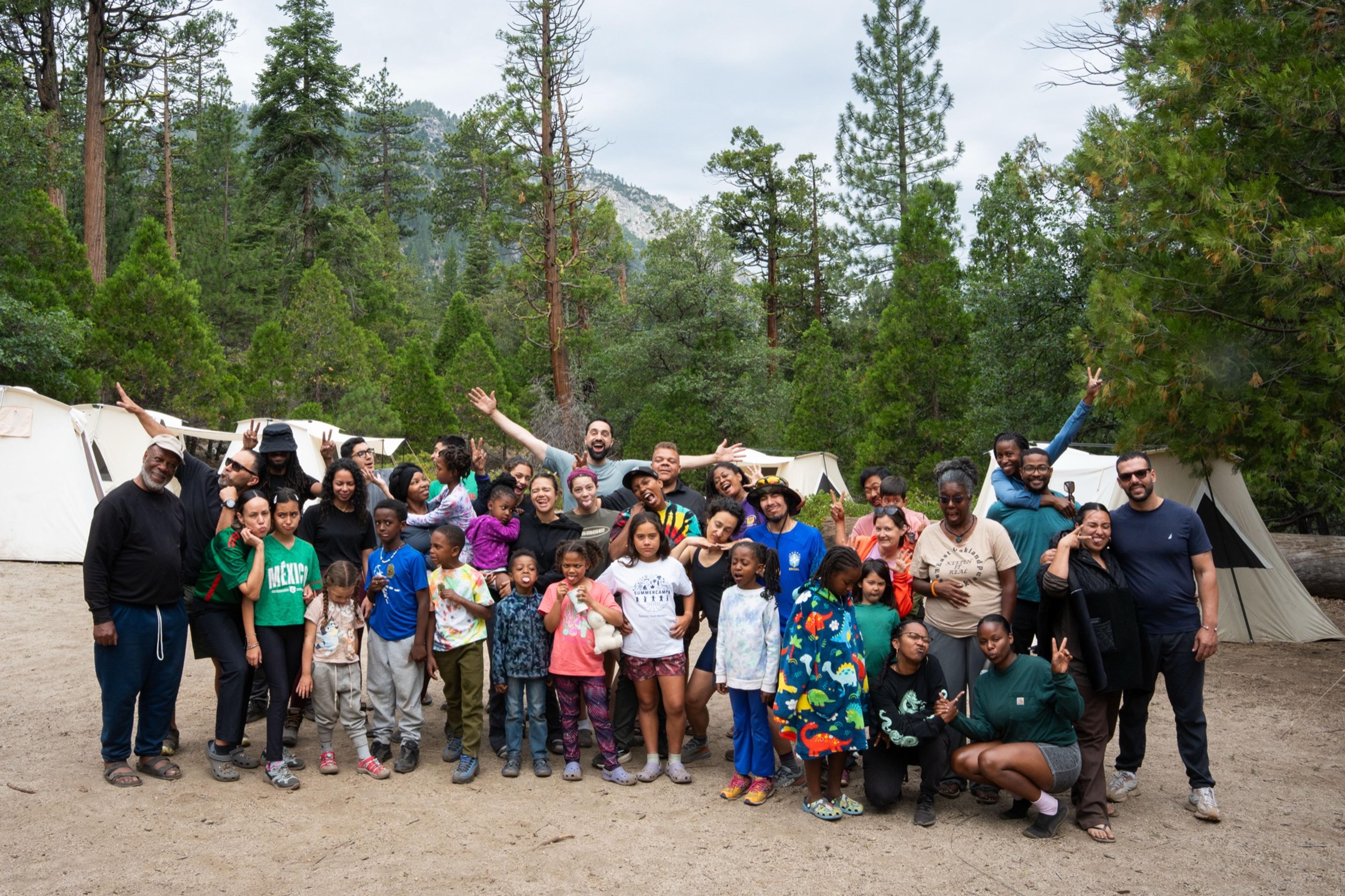
A year after we stood in that overflow lot doing math about booking windows, forty-five of us were under that shelter at Spicer while the kids ran the granite. The alarm that made it possible went off twelve months earlier, at an hour that felt ridiculous at the time.
Find the site first. Then set the alarm. Start with the group campsites near you.

Want a personalized version of this guide?
Camp Sage tailors recommendations to your dates, group, and gear — free.
Join our newsletter to get more resources and tips to help your family camp with confidence!