Camping Meals for Large Groups: How We Feed 40 at Camp

On the third night at Indian Cove, we fed forty people brisket and ribs off two portable grills. Twelve kids under ten, teenagers, grandparents, families camping for the first time. Nobody waited long enough to complain about the line.
Here is the part nobody believes: the brisket wasn't cooked at camp. Almost nothing is. The secret to camping meals for large groups isn't a bigger stove or a braver cook. It's doing the cooking at home, where your kitchen is, and letting camp be the place where food gets hot and people get fed.
This is the system we run on Outdoorithm Collective trips, station by station. The gear behind it lives in our camp kitchen guide; this is how the whole thing runs when the headcount hits forty.
Make-Ahead Camping Meals: Cook at Home, Reheat at Camp
The week before a trip, the big proteins get cooked at home: brisket, ribs, whatever the main night calls for. Sides too, mac and cheese especially. Everything goes through the FoodSaver (check price at Amazon) into sealed bags, and the bags go into the freezer.
The frozen bags do double duty. Packed into the coolers, they are the ice, keeping everything else cold while they hold themselves at temperature for the drive. Our powered fridge carries the rest and never needs an ice run.
At camp, the sealed bags go into a hot-water bath to come back up to temperature. Three numbers run the food safety: the cooler stays under 40°F, reheated food hits 165°F in the middle before anyone eats (an instant-read thermometer, not a guess), and the warming bath holds everything above 140°F until the last plate. Perishables never sit out more than two hours, and only one when it's hot out.
The Cooking Line: What Actually Gets Cooked at Camp
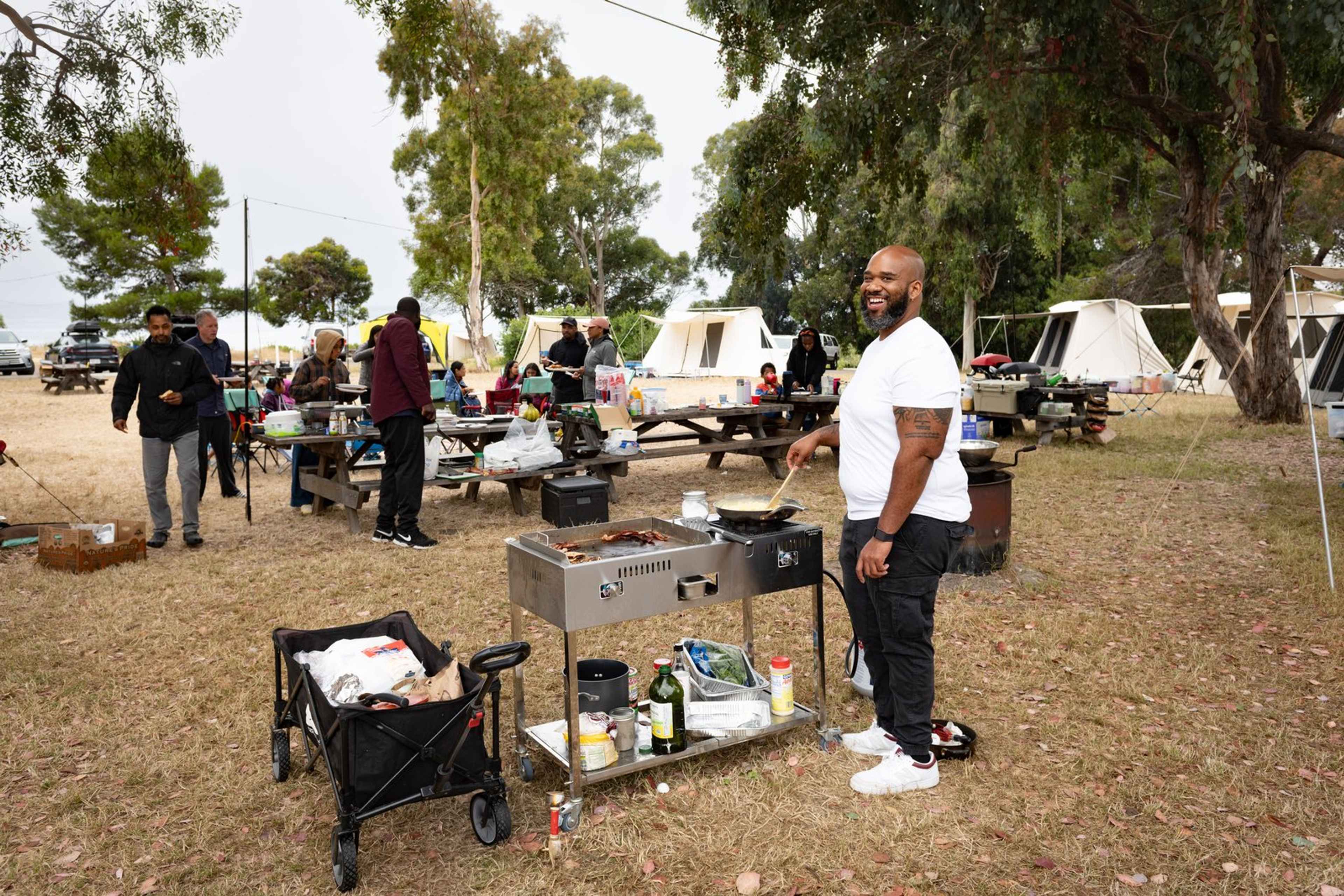
What does get cooked fresh happens on the Magma Crossovers: a single-burner firebox (check price at Amazon) and a double, each on its pod stand, each running off a 10-pound propane tank in a carry case. The tops swap in seconds: the grill top runs like a backyard BBQ for corn, burgers, and hot dogs, and the nonstick griddle top turns out pancakes, french toast, and sausage faster than forty people can eat them. Assembly is in the Magma setup guide.
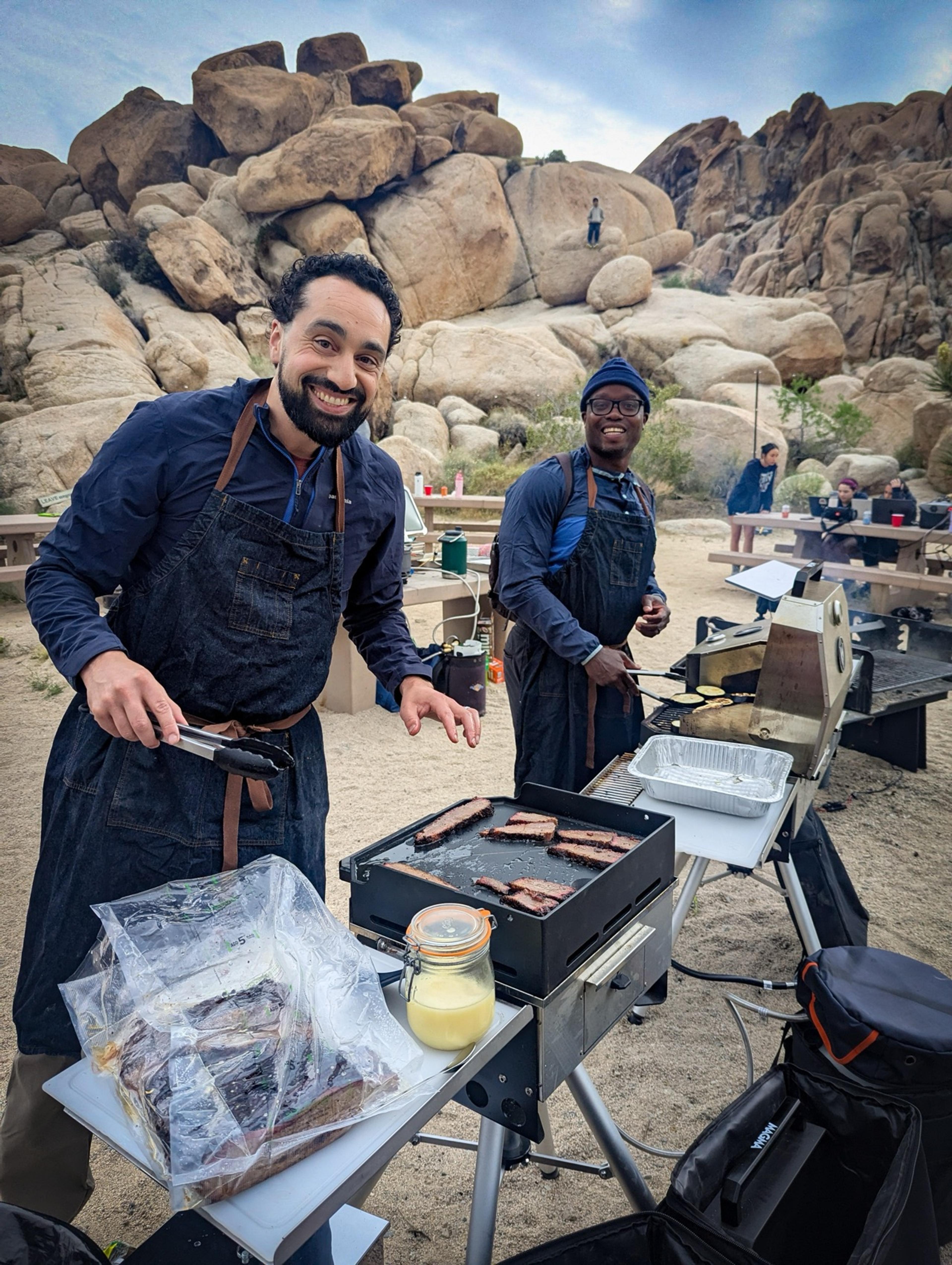
Two grills for forty people sounds thin until you remember the grills only finish food. Brisket gets sliced and crisped on the griddle. Burgers are the whole job, not one of nine jobs. The line moves because the menu was planned around it. And in bear country, the grease traps come out every night and go in the bear box, a lesson a black bear at Kings Canyon taught us so you don't have to learn it yourself. Late summer adds one more freeloader: the same open trays and drippings pull in yellow jackets, and we wrote up what actually works against meat bees.
The Warming Line: Chafing Dishes Keep Forty Plates Hot
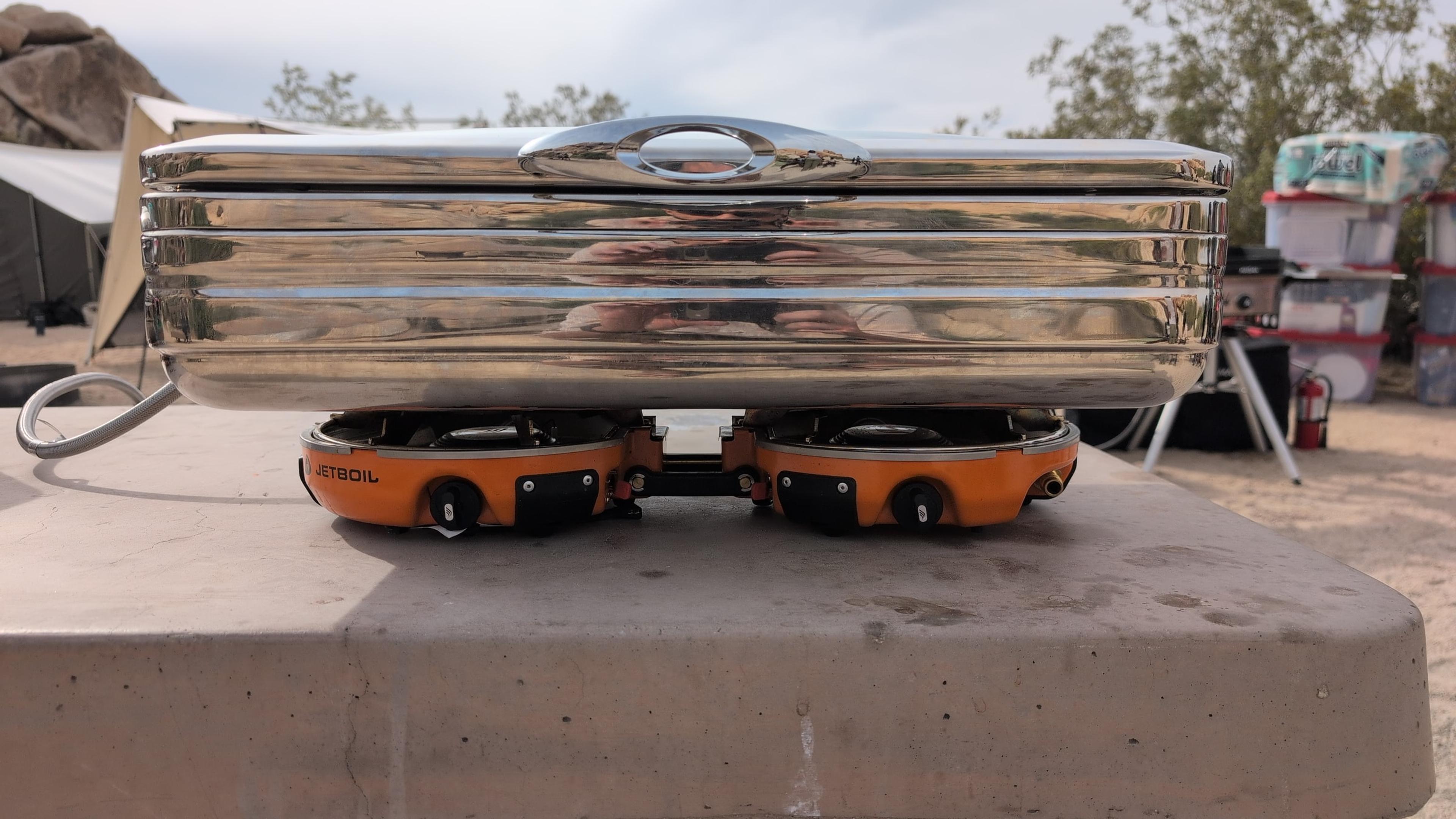
Between the grills and the eaters sits the buffet line: stainless chafing dishes over the two burners of a Jetboil Genesis ($449.95 at REI), water bath steaming underneath. It's our own improvisation, run carefully: dead-level table, low flame, an adult always in reach, and a lab jack leveling the back edge. The reheat bags warm here too, and the 165°F-then-hold-at-140°F rule is the law of the line. Step-by-step photos are in the chafing dish setup guide.
Drinks Live Somewhere Else
The fastest way to clog a camp kitchen is to make forty people walk through it for water. Drinks get their own table, away from the flames. We filter with the Guzzle H2O Stream (setup guide) into a YETI Silo, pour in a bag of ice, and cold water runs on tap all day. Coffee scales the same way: a 36-cup enamelware boiler on the morning burner, decanted into a YETI gallon jug that holds the heat until the slow risers wander over.
The Wash Line Is Where the Community Shows Up
Three bins after every meal: wash, rinse, sanitize, then everything air-dries. Biodegradable soap and a soap-dispensing brush, and none of it ever goes in a creek. The full bin logic is in our bin system post.
But the bins aren't really about dishes. At Humboldt Redwoods, everyone flipped pancakes and everyone washed dishes, and that was the whole social contract. Nobody assigns the wash line. It staffs itself, because standing at a bin with your hands in warm water next to a stranger is how strangers stop being strangers. One first-time camper told us afterward: "From set up to meal time, I felt more and more comfortable as folks connected, provided support, and helped with everything I didn't know."
Packing for a trip? Our free interactive checklist tracks everything, tent to toothbrush, so nothing gets left in the garage.
Open the camping checklist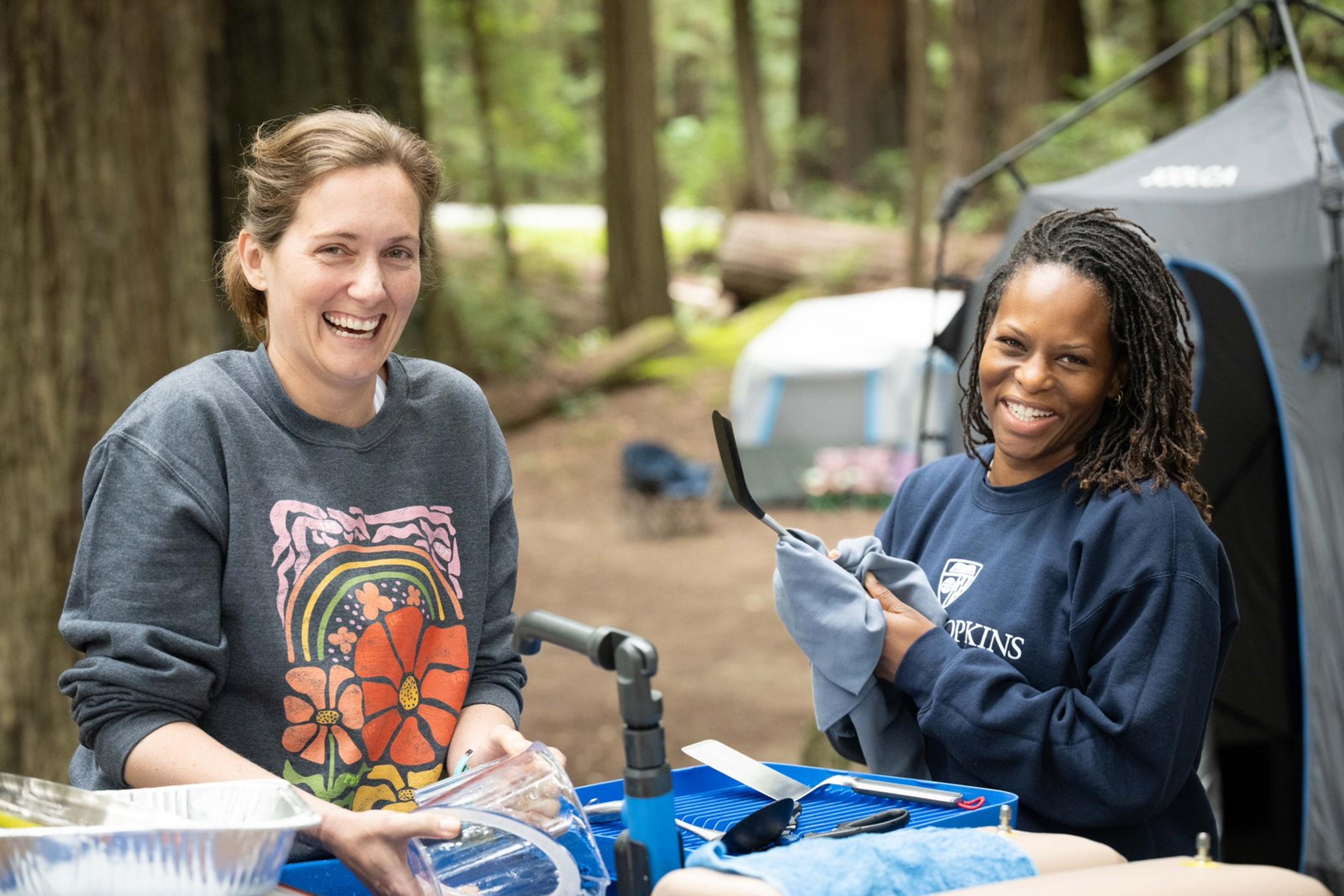
A Real Group Camping Menu (the One That Fed Forty)
- Mornings: pancakes, french toast, and sausage off the griddle, 36 cups of coffee in the boiler.
- First night: burgers, hot dogs, and corn on the grill top. Fast, cheap, and nobody's picky after setup day.
- Big night: the make-ahead brisket and ribs, reheated in the bath, sliced and crisped on the griddle, with the mac and cheese warming beside them.
- Pizza night, when the Ooni comes along (check price at Amazon): dough rested at camp temperature, toppings prepped at home, kids assembling their own.
- S'mores. Always s'mores. Quality control handles itself.
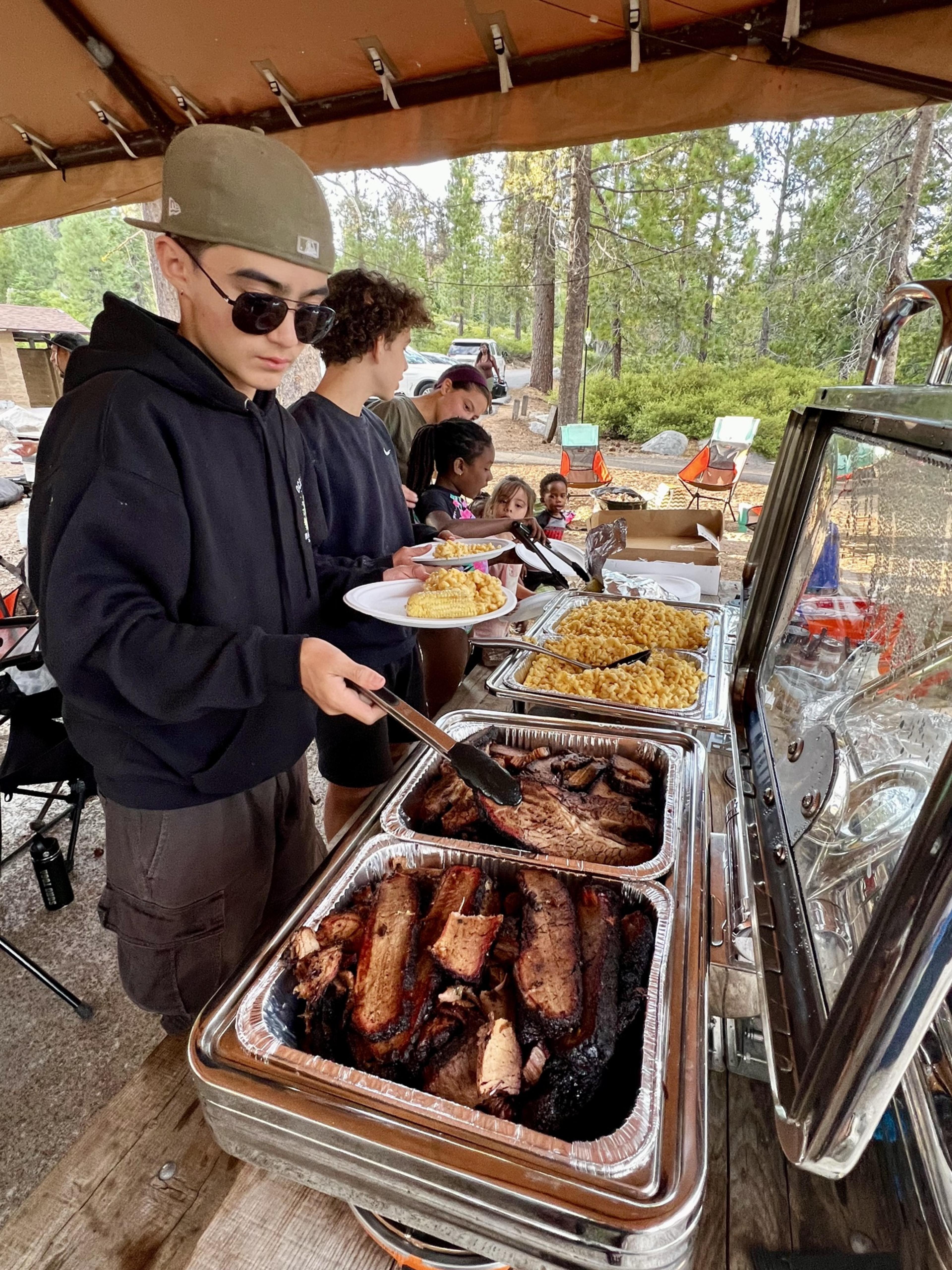
The big-night line at a group camp this August. The make-ahead trays doing their job.
Group Camping Meal Questions We Actually Get
What are the easiest camping meals for a large group?
Meals you finish rather than cook: make-ahead braises and casseroles vacuum-sealed at home and reheated in a hot-water bath, plus griddle breakfasts (pancakes, french toast, sausage) and grill-top staples (burgers, hot dogs, corn) that scale by the dozen. The pattern that fails is the one-pot recipe that serves six, multiplied by seven pots.
How do you keep food safe when cooking for a crowd outdoors?
Four numbers: coolers under 40°F, reheated food to 165°F in the center (verified with an instant-read thermometer), hot food held above 140°F, and perishables out of the cooler no more than two hours (one hour above 90°F outside). At group scale, food safety is a station design problem, not a vigilance problem: the warming line holds temperature so nothing sits on a picnic table going lukewarm.
What gear do you need to cook for a large group at camp?
A high-output grill with swappable tops, a two-burner stove, chafing dishes for hot-holding, a big water cooler with a filter, a large coffee boiler, three wash bins, and serious cold storage. Every piece we use, with prices and the reasoning, is in our camp kitchen gear guide.
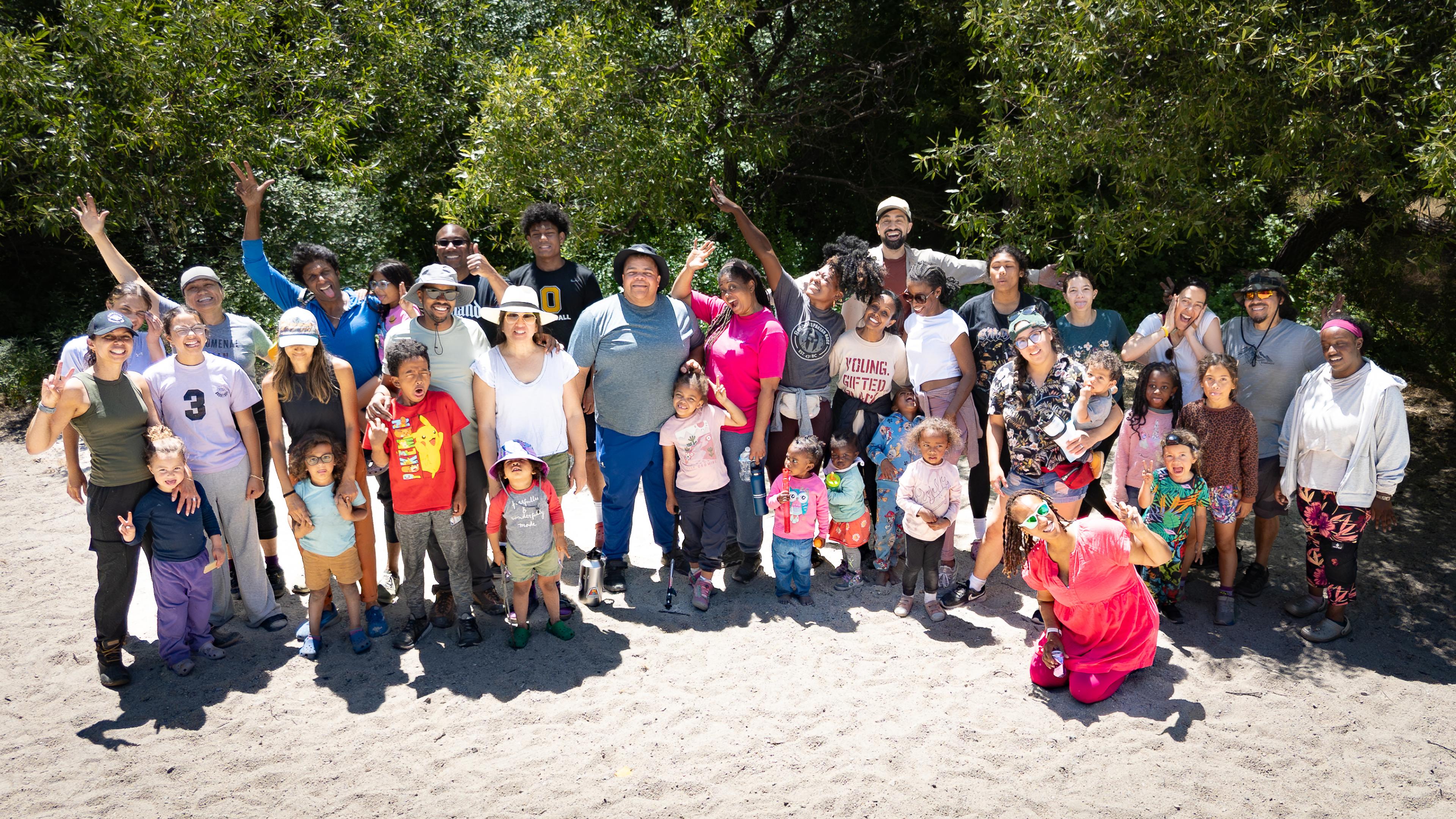
There's a photograph from one of our Pinnacles trips of the whole group in a circle of camp chairs on the sand, tents behind them, everybody waving up at the camera. Nothing in that photo is a kitchen. But the circle only happens because dinner was never one person's problem: it was forty people's job, split into stations small enough that a first-timer could own one by Saturday.
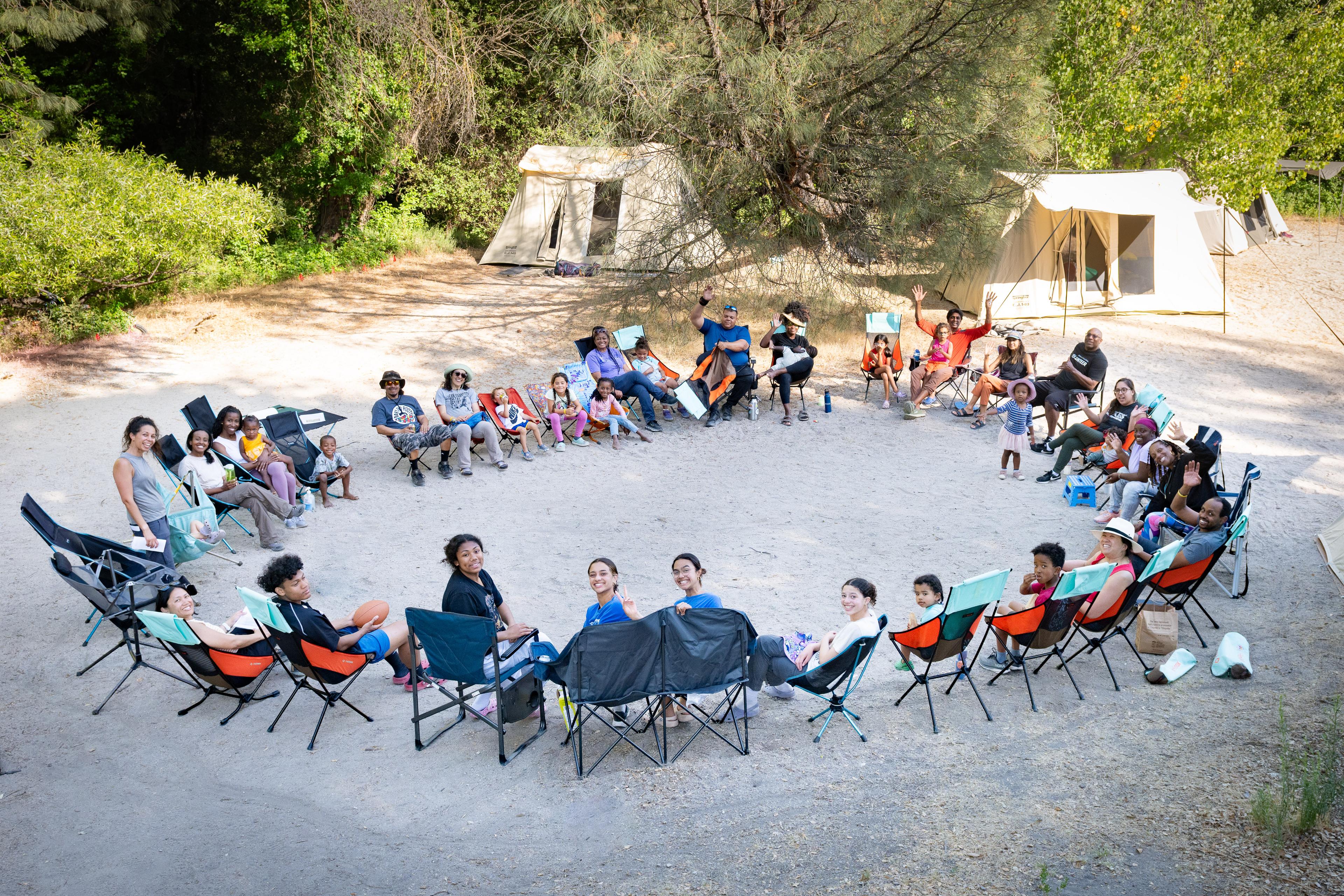
Feeding forty is one piece of a bigger job. The rest of how we plan and run trips this size, from booking the site a year out to the camp job board, is in our guide to group camping for 40+ people.
Back at Indian Cove, the brisket line moved, the wash bins filled, and the twelve-kid pack ate standing up between boulder missions. Feeding forty people at camp isn't a cooking achievement. It's a logistics trick and a trust exercise, and the logistics are the easy half.

Want a personalized version of this guide?
Camp Sage tailors recommendations to your dates, group, and gear — free.
Join our newsletter to get more resources and tips to help your family camp with confidence!