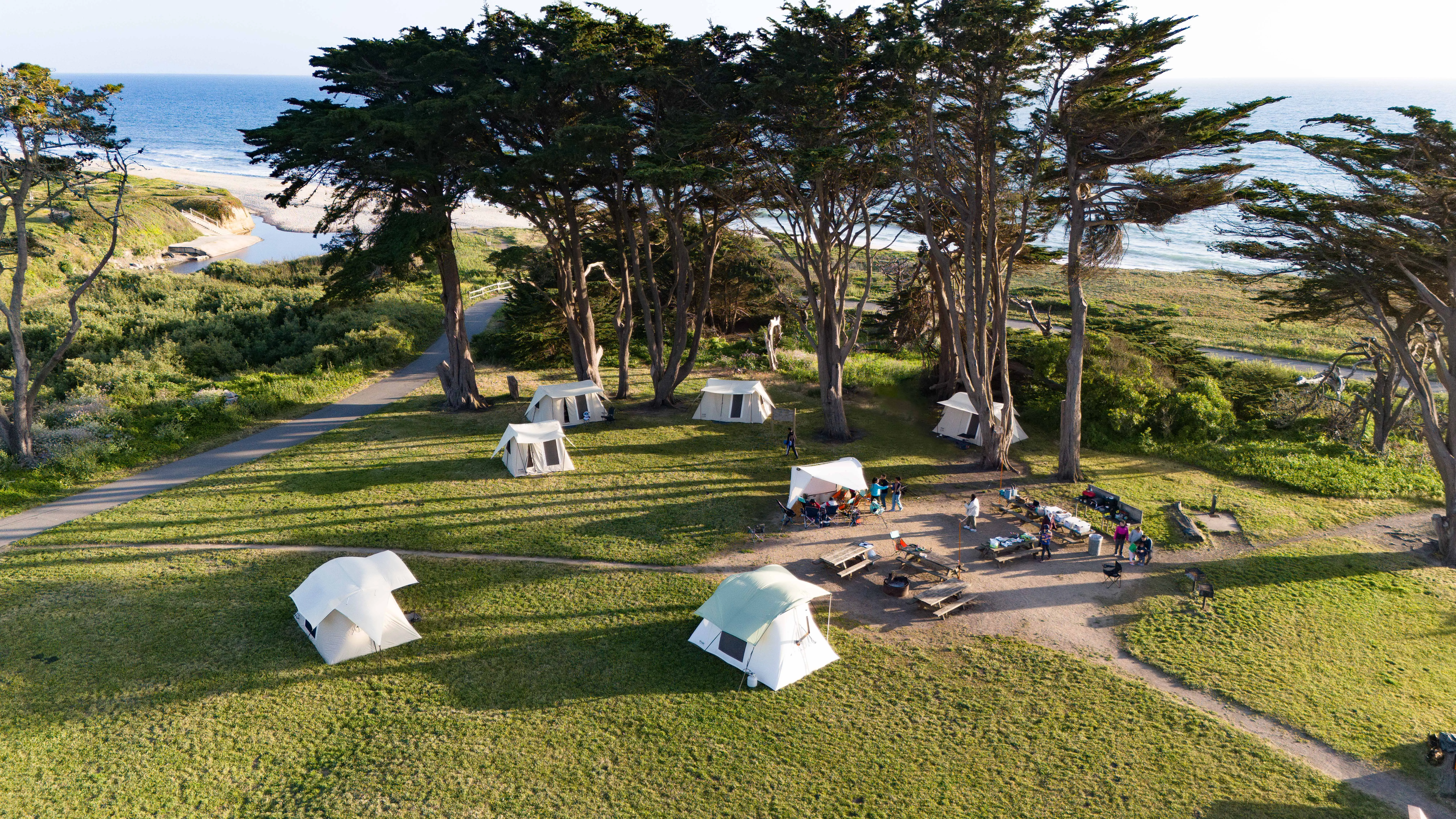
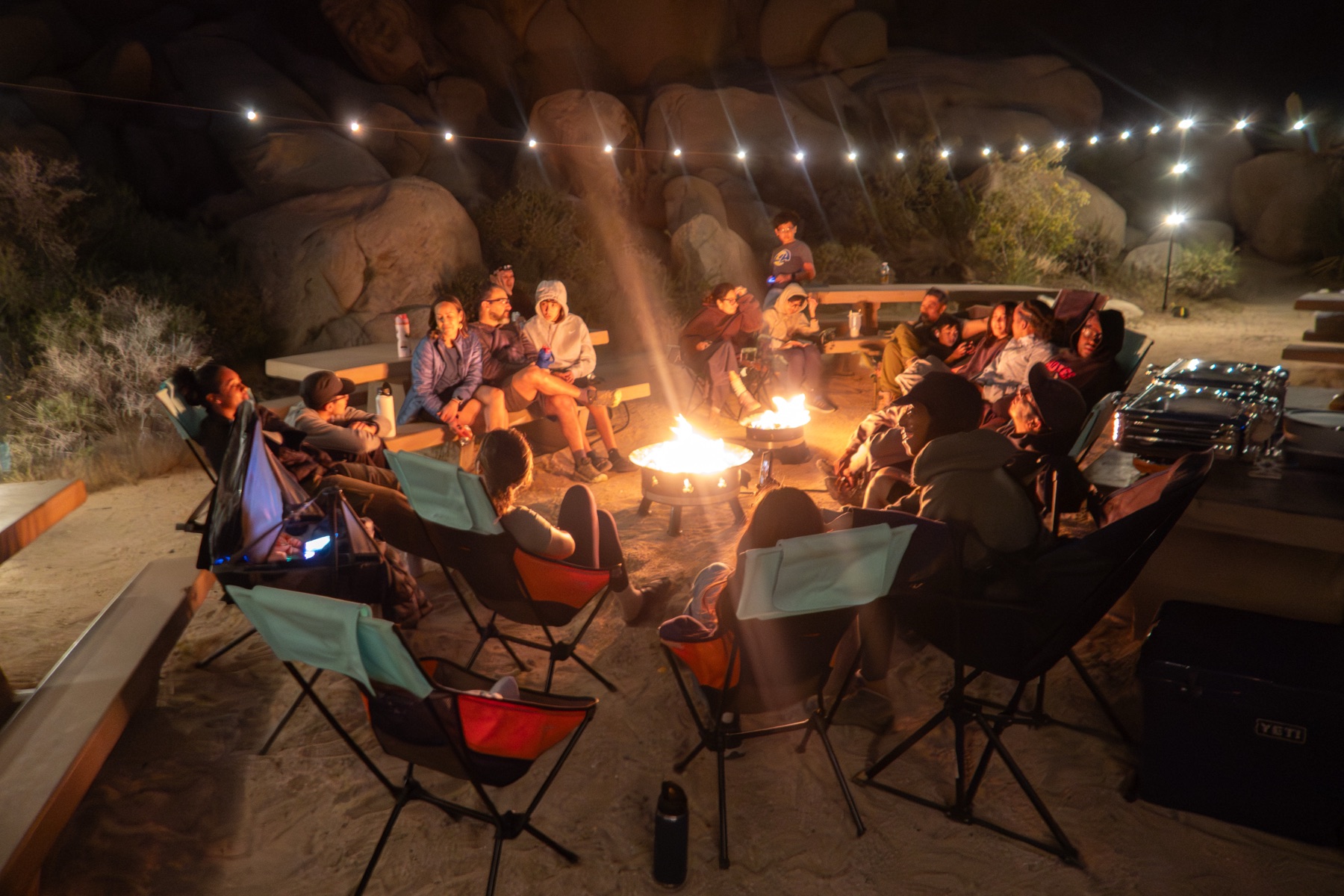
Each one is a decision you make from the couch, weeks before the trip. Make them in this order and the trip mostly plans itself.
01
Choose a campground you could bail on
Under two hours from home, developed, with flush toilets, running water, and ideally a campground host. The two-hour rule is the whole strategy: the drive does not eat the day, and if the night truly falls apart you drive home and sleep in your own beds. Families who know they can leave almost never need to.
▸The details, and why they work
Shortlist by what kids actually use: a swimming area or a shallow creek, a loop road for bikes, other families in the loop. County and regional parks are the most overlooked first-trip option in nearly every state. They book more easily than the famous parks and teach the same lessons. You are choosing a place to learn, not a destination for life.
02
Find the exact date your campground opens, then book that morning
Every park system releases campsites on its own schedule. Recreation.gov, ReserveCalifornia, and forty-plus state systems each open bookings a set number of months or days ahead, at a set hour. The When to Book calculator returns the date and time for your campground. Put it in your calendar and book one night the minute it opens.
▸The details, and why they work
Create and verify your account on that system days ahead, never at 7:58 on booking morning. Book a single night first. A good night produces trip two; three rough nights produce none. If your dates are already inside the booking window, the site is either open or it is not, and step three covers the second case.
03
Full? Set a cancellation alert and let someone else's plans change
Sold out is a snapshot, not a verdict. Our own family has made 381 reservations and cancelled 233 of them, and we are normal. In our booking data across thousands of campgrounds, openings cluster in the final two weeks before check-in. A free alert watches the campground and messages you the moment a site opens.
▸The details, and why they work
Set the alert for your first-choice campground and a backup, with flexible dates if a weekday night is possible. Then stop refreshing. When the alert lands, book immediately; a released site is usually gone within the hour. Shoulder season and Sunday nights are the easy wins for a first trip.
04
Check the forecast before you spend a dollar
A first trip should happen in good weather, and you get to choose. Look at the ten-day forecast for the campground itself, not the nearest city; campgrounds sit higher, colder, and wetter than the towns below them. Nights run far colder than the daytime high suggests.
▸The details, and why they work
Plan for the low, not the high. If the overnight low is under 40 and you are borrowing summer bags, move the trip. If the forecast turns biblical the week of, reschedule; the campground will still be there and a small cancellation fee is cheaper than a trip that ends camping for good. Check fire restrictions the same morning you check the forecast.
05
Borrow the big gear; if you buy, buy in this order
Do not buy a full kit for a trip you have not taken. Ask friends, check whether your library lends gear, look at rentals. Trip one is how you learn what your family actually needs. If you buy anything, buy in this order: sleeping pads, then sleeping bags, then a headlamp each, then a rain layer each.
▸The details, and why they work
Pads before bags, because cold comes up from the ground, not down from the air; look for an R-value of 3 or higher. Bags rated 10 to 15 degrees colder than the forecast low. Tents: size up by two. A six-person tent sleeps four people and their stuff.
06
Pack from a list: bins for gear, a duffel per person
One clear latching bin is the kitchen. One is camp gear: lights, stakes, tarp, tools, first aid. Clothes go in duffels, one per person, including the kids, who pack their own against the printed list. The bins stay packed between trips, which is why trip two takes twenty minutes to prepare.
▸The details, and why they work
Load heavy and low first; tent and chairs last, because they come out first. One complete extra set of dry clothes per kid. The items families forget most, in order: tent stakes, the lighter, toilet paper, medications, trash bags, spare batteries, toothbrushes.
07
Plan the arrival: leave in the morning, on site by 3
If this page could give you one sentence, it is this one. Pitching a tent for the first time by headlamp with tired, hungry kids is the single most common way families decide camping is not for them. Daylight makes every other step easy. Pitch the tent once in the backyard the weekend before, so setup at the site is a rehearsed twenty-minute job.
▸The details, and why they work
Cell service ends about an hour out. Before it does: download offline maps, screenshot the reservation and site number, keep snacks in the cab. Buy firewood near the campground, never at home; moving it spreads pests and most parks ban it. At the site, walk it before unpacking: flat ground, no roots, not the low spot where rain pools, nothing dead hanging overhead.
08
Plan the food and the night before you leave home
The first-trip menu that works: sandwiches on arrival, one easy hot dinner, pancakes in the morning, and s'mores, which are mandatory. Do the knife work at home, freeze a pre-cooked chili flat so it doubles as cooler ice, and store everything scented exactly as your campground's posted rules say. Never in the tent.
▸The details, and why they work
Warm kids sleep; cold kids end trips. An insulated pad under every sleeper, dry sleep clothes, a beanie, and a warm water bottle dropped in the bag fifteen minutes before bedtime. By day, a whistle on every kid: three blasts means stay put and keep blowing. Health kit: children's pain reliever with the dosing syringe, antihistamine, tweezers, and the character band-aids that end tears on contact.