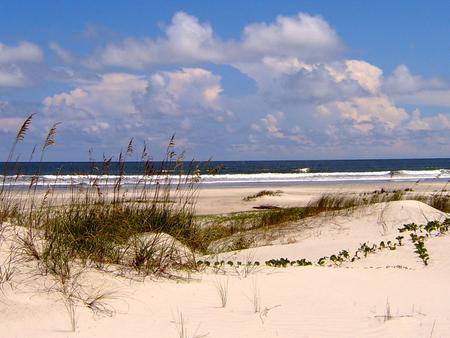
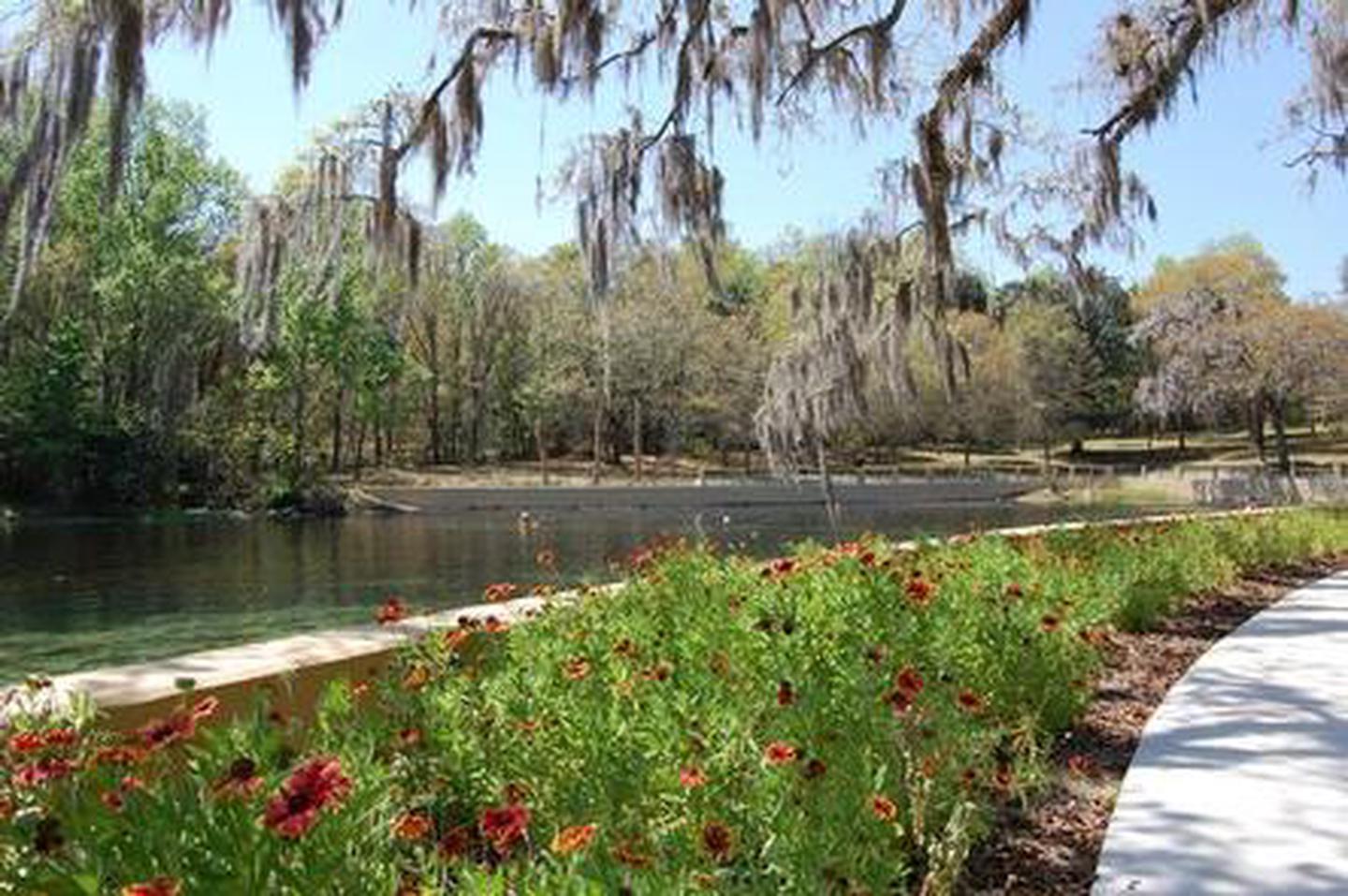
Sea Bean Campground sits in a maritime hammock on Anastasia Island, a short walk from four miles of Atlantic beach. The 139-site campground spreads beneath live oaks draped in Spanish moss, each site equipped with electric and water hookups, picnic table, fire ring, and in-ground grill. Designated for smaller rigs, tents, and vans, the loop's tight turns and tree canopy create a shaded, private feel distinct from the park's larger RV areas.
The campground contains 139 sites for both RVs and tents, located in a maritime hammock a short walk or bike ride from the beach. Certain sites are paved and accessible; maximum RV length is 38 feet.
Weather and SeasonsLate fall through early spring delivers the most comfortable camping: mild temps, fewer bugs, and pleasant conditions for beach hiking and biking. Summer brings the warmest ocean water (mid-70s to low-80s °F), lifeguarded swimming from Memorial Day through Labor Day, and peak campfire and fishing opportunities, but expect intense sun, humidity, and afternoon thunderstorms. The beach offers little natural shade, so sun protection is mandatory year-round. Holidays and summer weekends draw heavy crowds; midweek visits in November or February balance weather and solitude. Winter beach walks remain popular, though swimmers should know rip-current risks without lifeguards present.
Natural Features and SceneryAncient live oaks arch overhead while salt breezes drift in from the ocean a few hundred yards east. The campground occupies a barrier island hammock where dense vegetation meets sandy soil. Beyond the loops, the park transitions sharply: dunes rise toward the Atlantic beach, and tidal marshes edge Salt Run to the west, their cordgrass channels winding through shallow flats popular with wading birds. The beach itself stretches unshaded for miles, backed by low dunes that shelter the endangered Anastasia Island beach mouse. Roseate spoonbills, ospreys, and shorebirds work the flats and surf. Dolphin sightings are common from the beach. In the hammock, squirrels and raccoons are regular visitors, and songbirds call from the canopy. Mosquitoes stay light thanks to dry, sandy sites, but no-see-ums can be active after dark.
Geological RegionAtlantic barrier island — maritime hammock, dunes and tidal marsh (Salt Run)
Scenic ViewsCampground loops are inland in the hammock with short walks or bike rides to beach views, dune overlooks and viewpoints over the Salt Run marsh; direct oceanfront campsites are not indicated on the official page.
 3.13
3.13