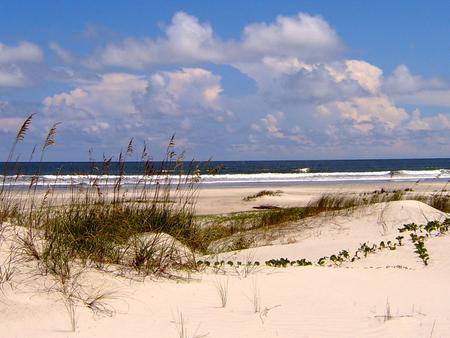
Talbot Island State Park Campground sits on the quiet marsh side of one of northeast Florida's last undeveloped barrier islands. The 4.5-star campground offers wooded RV sites with full hookups under a canopy of live oaks and palmetto, steps from tidal creeks and a short drive across busy A1A to five miles of wild Atlantic beach. Cell service is available, and most campers praise the park's authentic 'old Florida' serenity despite persistent mosquitoes.
The campground is described as wooded, mostly private sites on the marsh/river side of the barrier island, with a mix of sites including those with marsh/river views; RV services (hookups and dump station) are explicitly reported.
Historical Significance
The island is valued as an undeveloped, preserved barrier island within the Talbot Islands complex, representing regional conservation and natural heritage. Nearby historic sites outside the campground include Fort George Island and Kingsley Plantation.Weather and SeasonsWinter is the most comfortable season, with daytime highs around 55–68°F, nights in the mid-40s to mid-50s, and minimal mosquitoes. Lower humidity and steady ocean breezes make it ideal for beachcombing, kayaking, and wildlife viewing, and campsites stay quiet outside holiday weekends. Summer delivers warm Gulf Stream water and long sunny days but also intense heat and swarms of mosquitoes and biting flies that reviewers say test even seasoned campers. Late fall through spring offers the best balance of mild weather and manageable bugs.
Natural Features and SceneryThe campground occupies the salt-marsh side of Little Talbot Island, a rare undeveloped barrier island at 33 feet elevation. Sites nestle beneath moss-draped live oaks, with many outer-loop spots overlooking tidal creeks and estuarine grasses where wading birds hunt the shallows. Across A1A, the Atlantic side offers five miles of windswept beach, towering dunes, and maritime hammock. The island's protected status means driftwood-strewn shoreline, coastal marsh, and quiet creeks remain much as they have for centuries. Campers frequently spot hawks, owls, osprey, ibis, and a resident gopher tortoise near the sites.
Geological RegionUndeveloped Atlantic barrier island with dunes, maritime hammock, coastal marsh and tidal creeks (marsh/estuary and ocean/dune environments).
Scenic ViewsMany sites and common areas look over tidal creeks, salt marsh and the river, with sunrise/sunset views from the boat launch and some outer loop sites. A short trip across A1A provides open ocean and dune views from boardwalks and beach access points.
 4.48
4.48