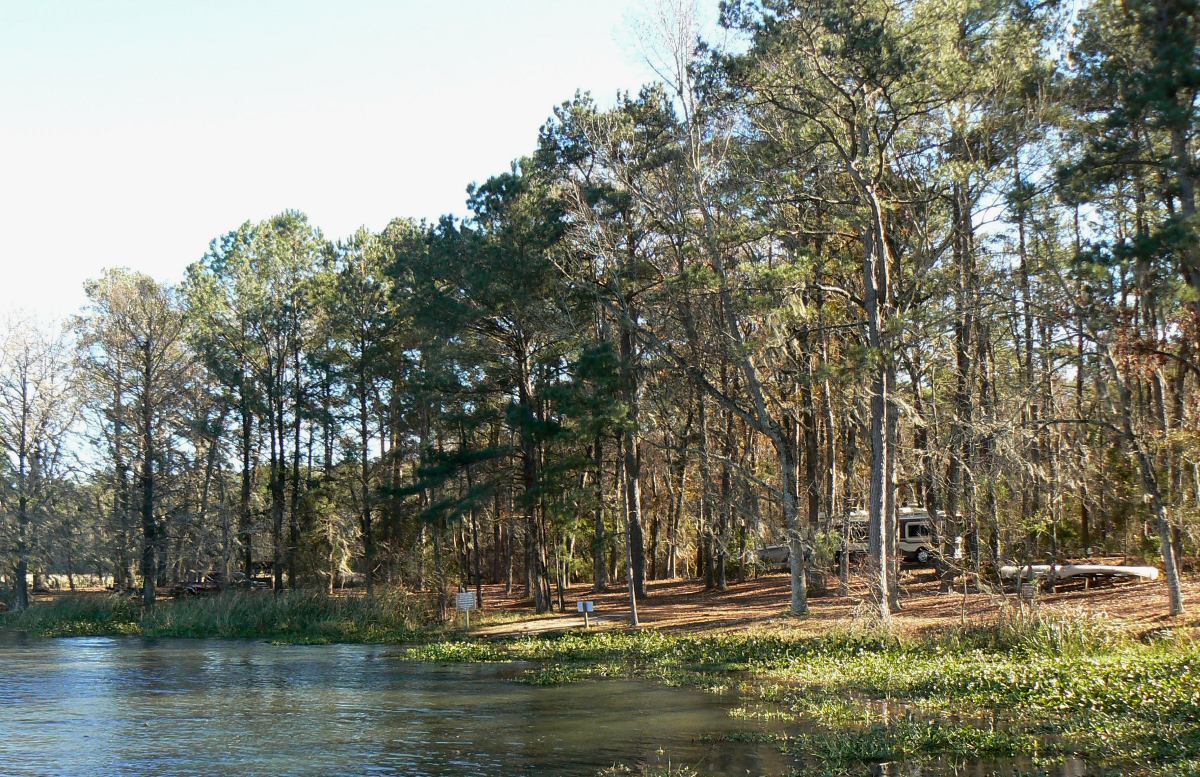
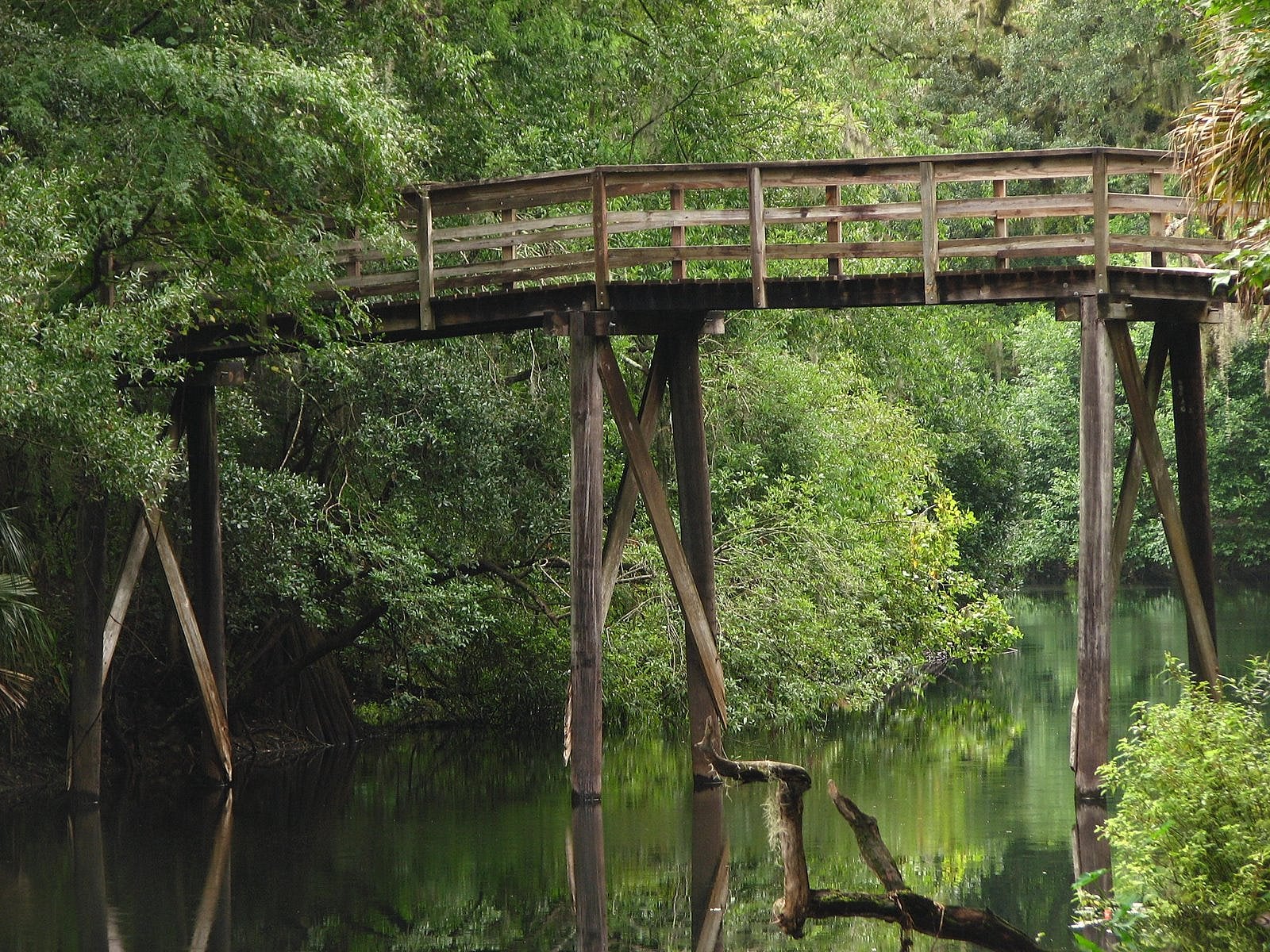
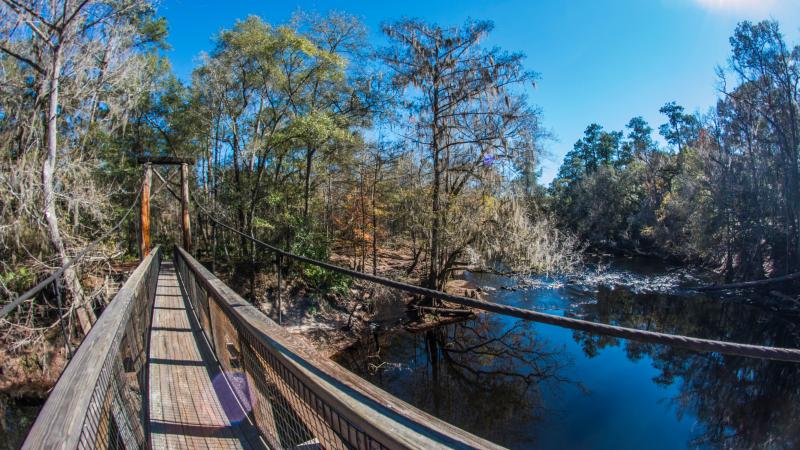
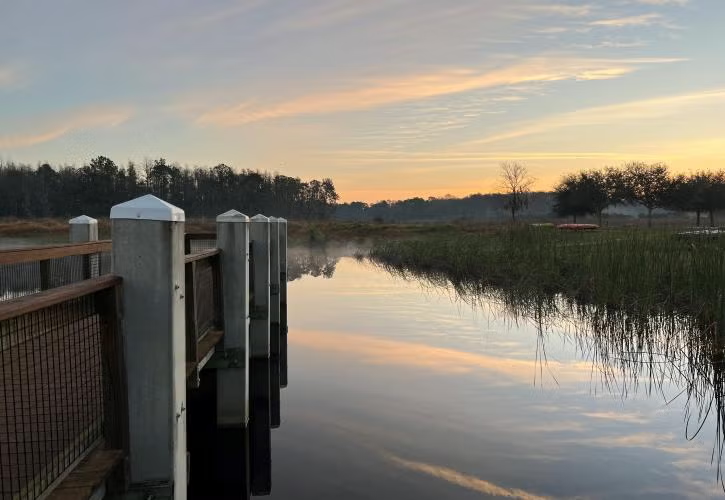
Tucked into a lush riverine forest along Florida's Hillsborough River, this family-friendly campground puts you right in the heart of genuine Old Florida wilderness. Wake up under towering oaks and pines, then spend your days paddling rare Class II rapids, hiking shaded trails through cypress swamps, or simply watching the tannin-dark river drift past from scenic overlooks—all from your shaded campsite with modern amenities.
Combination campground: developed family loops with utility hookups and a separate walk-in primitive group camping area.
Historical Significance
The park was established to protect a notable stretch of the Hillsborough River and is adjacent to Fort Foster, a reconstructed Second Seminole War fort and interpretive site that hosts tours and living‑history events during certain times. The site is one of Florida’s older state parks and interprets 19th‑century regional history.Weather and SeasonsWhile spring and summer draw crowds eager to cool off in the river, savvy campers know that fall through early spring offers the sweet spot—cooler temperatures, lower humidity, and peaceful trails perfect for hiking and wildlife watching. Just keep an eye on the forecast during hurricane season (June through November), as tropical weather can occasionally lead to temporary closures. A quick check of park status before you head out ensures smooth sailing for your adventure.
Weather data by Open-Meteo.com, licensed under CC BY 4.0, processed by Outdoorithm.
Natural Features and SceneryYour campsite sits nestled among a patchwork of classic Central Florida ecosystems—towering pine flatwoods give way to dense oak-pine hammocks, while ancient cypress swamps line the tea-colored Hillsborough River. As you explore the park's trails and boardwalks, you'll wind through palmetto understory and past distinctive cypress knees rising from the wetlands. River overlooks offer front-row seats to this pristine floodplain landscape, where seasonal wildflowers paint splashes of color against the deep greens and browns of the forest.
Geological RegionNorth Florida flatwoods
Scenic ViewsRiver overlooks (including views of the park’s naturally occurring Class II rapids), swamp and cypress dome vistas from boardwalks and trails, and wooded hammock views from many campsite loops.
 4.04
4.04