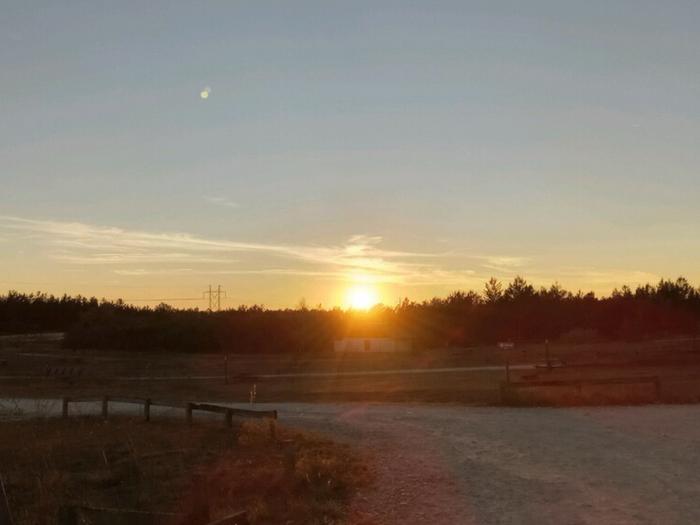
Arbuckle's five primitive hike-in campsites sit scattered throughout the forest's trail network, accessible only on foot. Each site includes a picnic table and fire ring. No water, no electricity. Fees run $2-$5 per night, with an eight-person limit per site. Reviewers mention walking for miles without seeing another person.
The Arbuckle Primitive Hike-In Campsites are designed for primitive tent camping, emphasizing a secluded and natural experience. All sites require hike-in access, with no vehicle accommodations at the campsites.
Historical Significance
The Lake Wales Ridge formed millions of years ago when fluctuating sea levels left this sandy spine above water, creating an island refuge. Plants and animals evolved in isolation here, producing species that exist nowhere else. The ridge remains one of North America's oldest and most biologically diverse ecosystems.Weather and SeasonsWinter delivers the best conditions. Daytime highs reach the mid-60s to mid-70s°F, with nights in the 40s–50s°F. Trails stay firmer and bugs retreat, making long hikes comfortable. Scrub-jays and migrating songbirds appear during cooler months. Flooding hits during wet periods, temporarily closing some campsites. November through March offers the most reliable weather and lowest bug pressure.
ElevationWhile specific elevation data isn't available, the Lake Wales Ridge represents some of Florida's highest ground—a subtle but significant rise above the surrounding flatlands that has shaped millions of years of natural history.
Natural Features and SceneryThe campsites occupy the Lake Wales Ridge, a 150-mile band of ancient sand dunes running through central Florida at 85 feet elevation. Sugar-sand trails wind through xeric scrub: sand pines, scrub oaks, wiregrass, and slash pines. Reviewers describe mostly shaded trails and the chance to spot scrub-jays and rare native plants adapted to the dry, fire-dependent ecosystem. Oak hammocks provide pockets of deeper shade. This is dry-land Florida, not swamp.
Geological RegionYour campsite rests atop the legendary Lake Wales Ridge, a 150-mile ribbon of ancient sand dunes that forms the backbone of central Florida. This narrow geological wonder runs north to south through the heart of the peninsula, representing one of North America's oldest and most biologically diverse ecosystems. The Ridge's xeric (dry) scrub habitats have persisted here for millions of years, creating a living museum of rare and endangered plants that have adapted to the challenging conditions of sugar-sand soils and periodic fires. It's a landscape that tells the story of Florida when it was younger, wilder, and vastly different from today.
Scenic ViewsLovely views of Reedy Creek and surrounding scrub areas. Visitors have described these as 'about as natural as it gets in modern Florida.'
Lodging & AccommodationsNo hotel-style lodging or modern accommodations are available at this primitive campground.
Programs & ActivitiesNo cultural or educational programs are explicitly mentioned.
 4.67
4.67