Lathrop State Park, Colorado's first state park since 1962, spreads across 1,594 acres surrounding Martin and Horseshoe Lakes near Walsenburg. The park offers 103 campsites for tents and RVs, with fees ranging from $28 to $40 per night. Sites vary from spacious electric hookup spots that accommodate 40-foot rigs to more basic tent areas, though highway noise and limited shade are common tradeoffs.
Lathrop State Park caters to diverse camping preferences, offering sites for RVs, tents, and group camping. Additionally, some sites provide electricity, and there are primitive options for a more rustic experience.
Historical Significance
Lathrop opened in 1962 as Colorado's first state park, marking the beginning of the state's public recreation system. The park has served generations of campers since then and now includes an on-site golf course among its amenities. It sits within reach of other Colorado landmarks, including Great Sand Dunes National Park.Weather and SeasonsSummer brings the park's peak activity from June through August, with daytime highs in the mid-70s to low-80s°F and cool nights in the mid-40s to mid-50s°F. Afternoon thunderstorms are common. This is when the lakes see the most use for swimming, boating, and fishing, and when ranger programs run regularly. It's also the busiest season, especially July and early August. Spring and fall offer comfortable temperatures for hiking without the crowds. Winter drops below freezing and blankets the Spanish Peaks in snow, creating quiet conditions for visitors who don't mind the cold.
ElevationPerched at the edge of Colorado's high plains, Lathrop State Park offers visitors a taste of the state's varied elevations and the unique ecosystems they support.
Weather data by Open-Meteo.com, licensed under CC BY 4.0, processed by Outdoorithm.
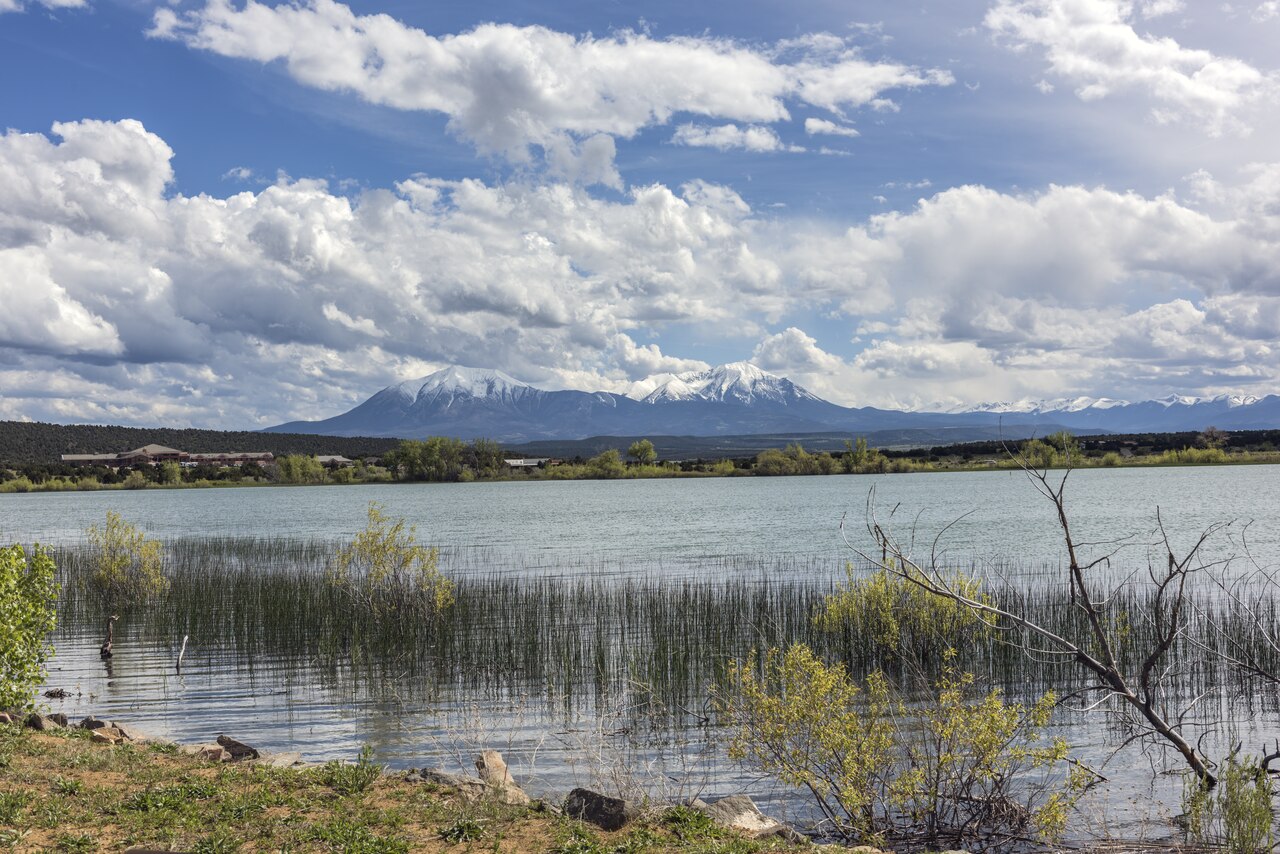
Natural Features and SceneryThe campground sits within **Lathrop State Park** on Colorado’s southern high plains, with a striking combination of **two lakes (Martin Lake and Horseshoe Lake)** and views of the **Spanish Peaks** rising to the west[1][2][3][5]. The Spanish Peaks’ volcanic profiles form a dramatic backdrop to the twin lakes, creating classic “mountains above prairie and water” scenery that many camping resources emphasize[5]. At approximately **6,400 feet elevation**, the park blends semi‑arid grasslands, piñon‑juniper scrub, and cottonwoods near the water and seasonal drainages[5]. The northern boundary is marked by **Walsen Ridge**, a prominent volcanic dike that adds geological interest and distinctive skyline features[1]. Martin Lake features a **sandy beach** suitable for swimming and sunbathing, while Horseshoe Lake has more irregular shoreline and quieter coves better for fishing and paddling[1][3]. The overall environment is open and sun‑exposed, with relatively limited shade in many camping loops, punctuated by clusters of piñon and low shrubs that provide modest privacy between sites[8]. Combined with broad views of the Spanish Peaks and nearby mesas, the setting is often described as scenic, spacious, and quintessentially southern Colorado.[2][3][5]
Geological RegionNestled in Colorado's captivating Southeast Region, Lathrop State Park rests in the protective shadow of the Spanish Peaks, ancient volcanic formations that have watched over this land for millions of years. The park's unique position creates a transitional landscape where the Great Plains meet the Rocky Mountains, resulting in a fascinating blend of ecosystems. Natural shade from native trees dots the terrain, while Martin Lake and Horseshoe Lake carve aquatic oases into the mountainous topography, creating a geological tapestry that tells the story of Colorado's dynamic natural history.
Scenic Views“Excellent views of the Spanish Peaks.” Multiple reviewers praised lake views and sunsets.
Programs & ActivitiesThe park offers interpretive programs and nature study exhibits. Free programs are available for visitors.
 4.22
4.22