How to Set Up a Tent (So It Survives the Night)

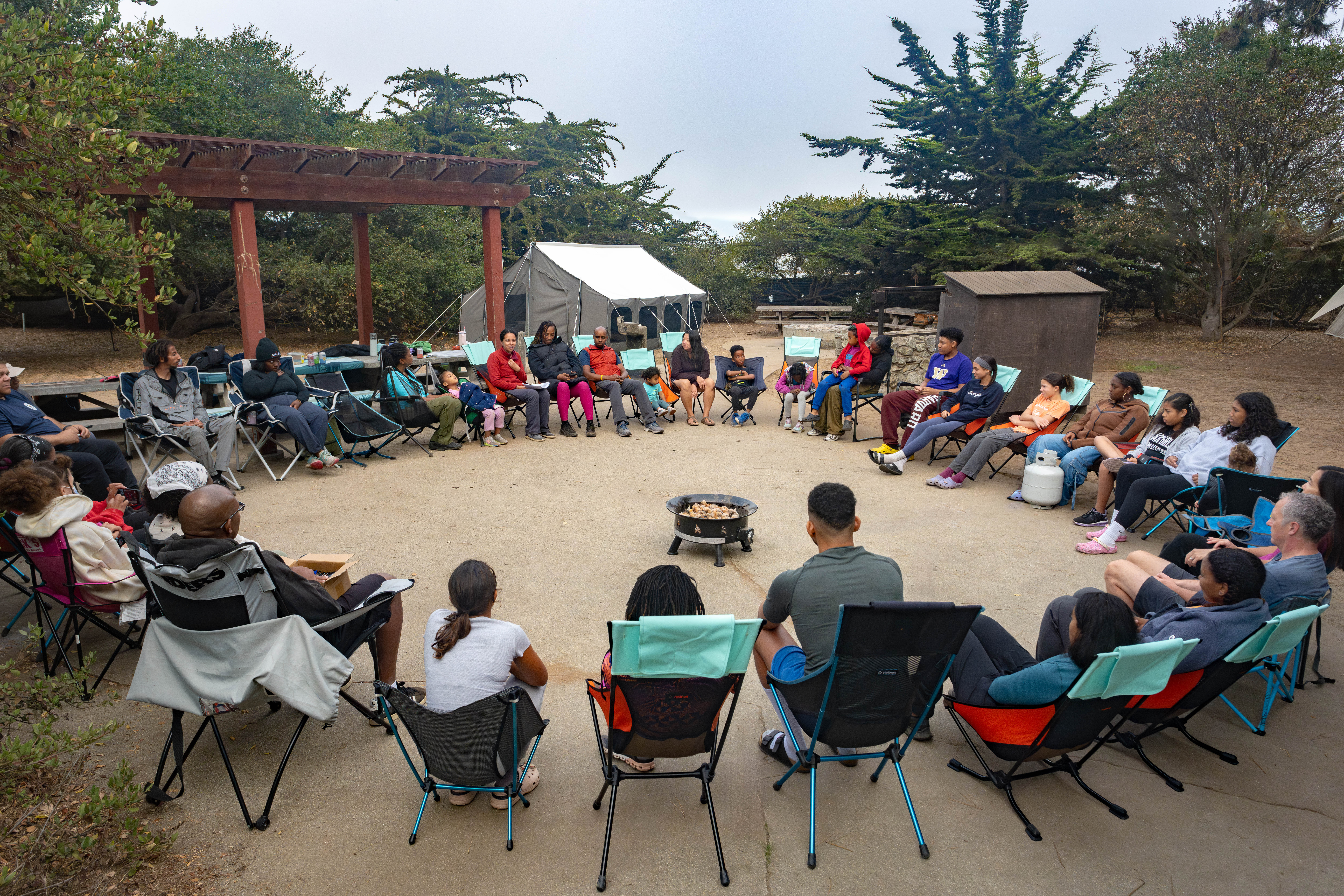
We set up a tent at midnight in Pinnacles National Park. Group site. Cut to hazard lights only out of respect for quiet hours. Walked the tent down a hill in the dark. Headlamps on, ground sheet laid first to get the footprint and orientation right. Flat spot, clear of rocks, oriented so we'd sleep with heads uphill.
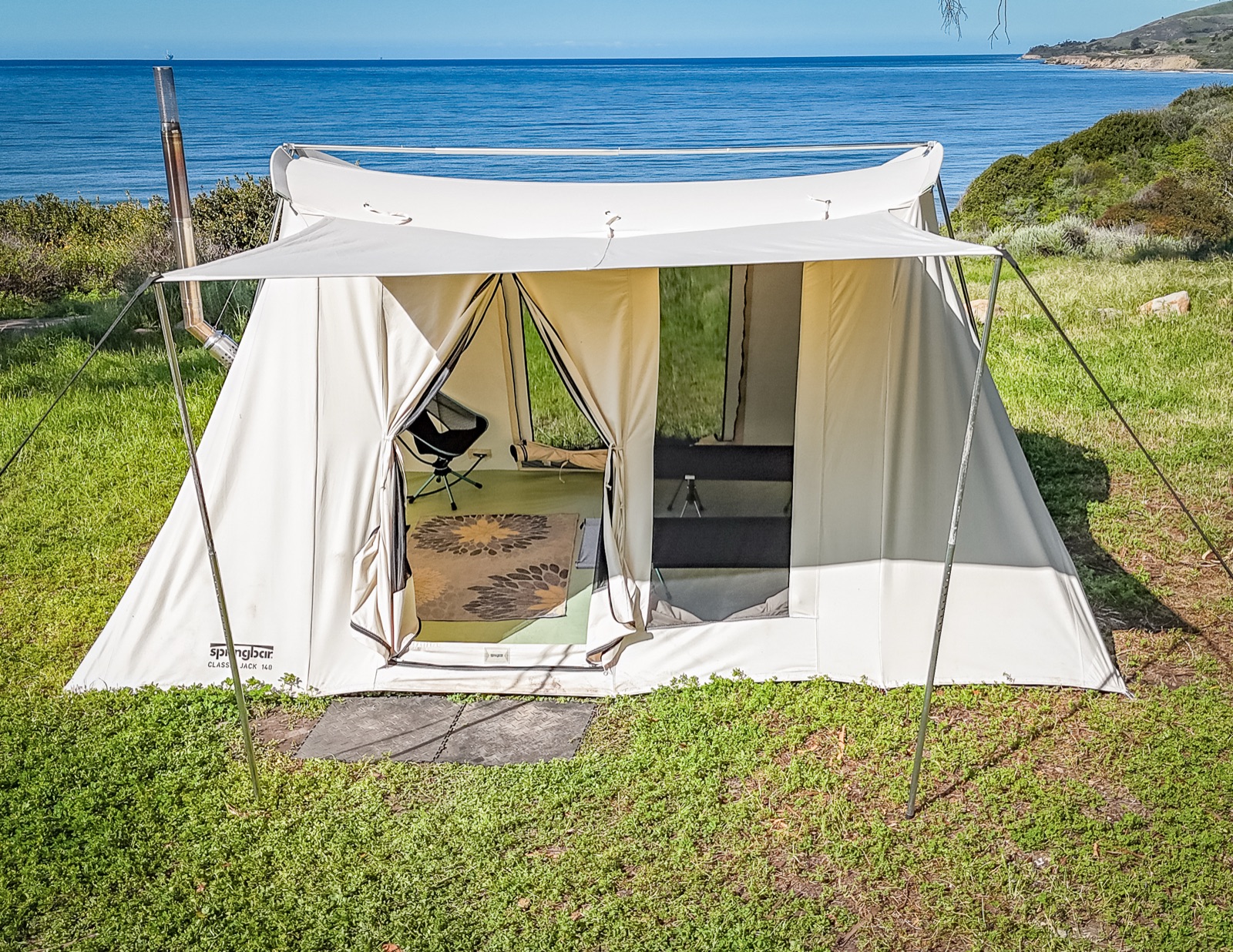
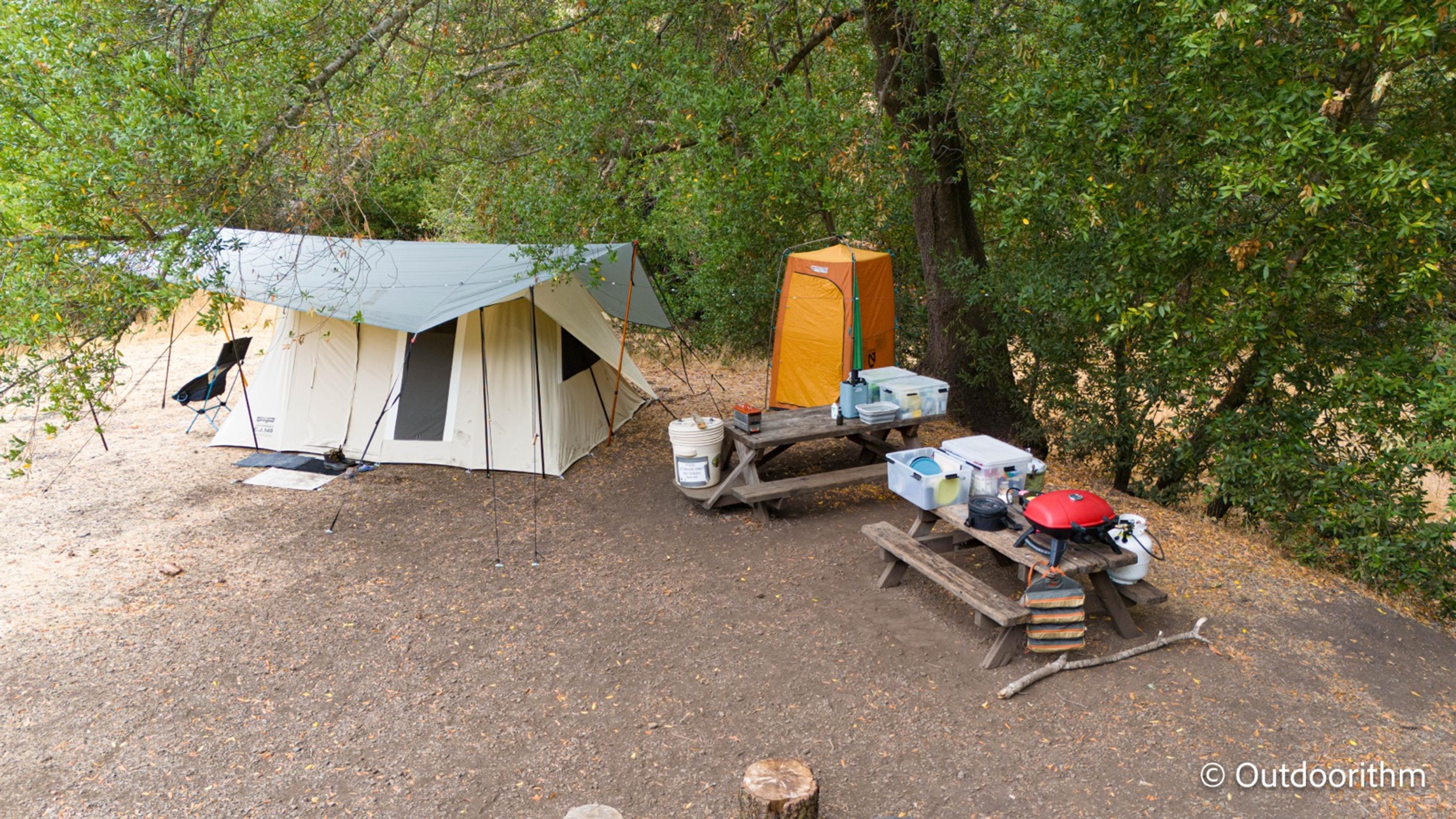
The Spring Bar Classic Jack 140 has a lot of stakes. Four per side. We pounded them in by headlamp, pulled the canvas tight, got everything squared away by 12:30. Not bad. Then Eliza threw up at 1:30 AM. Twice. All six of us in one tent because we hadn't wanted to set up a second in the dark. Eight stuffed animals compromised. We bagged everything, finished the night on bare cots, and did laundry when we got home. Camp As It Comes.
Setting up a tent isn't hard. But doing it well, in a way that handles rain, wind, midnight emergencies, and the general chaos of family camping, takes a few things most people don't think about until it's too late.
Choose Your Spot Before You Unpack
Site selection matters more than tent quality. Most people skip this step entirely. Before you unpack anything, walk your campsite and look for: flat ground without roots or rocks, drainage patterns (where did water last run?), distance from bathroom lights (they're harsh and you can't turn them off), and highway noise. Some sites are closer to roads than they look on the map. Our campsite selection guide covers this in detail.
Orient your tent so you'll sleep with your head slightly uphill — it's more comfortable than you'd think, and prevents the sensation of sliding toward the door all night. Point the east side toward morning sun if you can. It warms the tent, burns off condensation, and makes waking up feel like the sun is your alarm clock instead of your phone.
Ground Sheet First, Always
Lay your ground sheet before anything else. It protects the tent floor, defines your footprint, and helps you visualize the orientation before the tent goes up. Critical rule: the ground sheet must be slightly smaller than your tent floor. If it extends beyond the tent edges, it becomes a rain funnel — catching water and channeling it directly underneath you. This is the one rule most people get wrong.
Poles, Stakes, and Getting It Right
Most modern tents use color-coded pole systems — match the blue pole to the blue sleeve, the gray to the gray. Sounds obvious. In headlamps at midnight, wrong poles in wrong sleeves happens more than anyone admits. Lay all poles out first and match colors before threading anything.
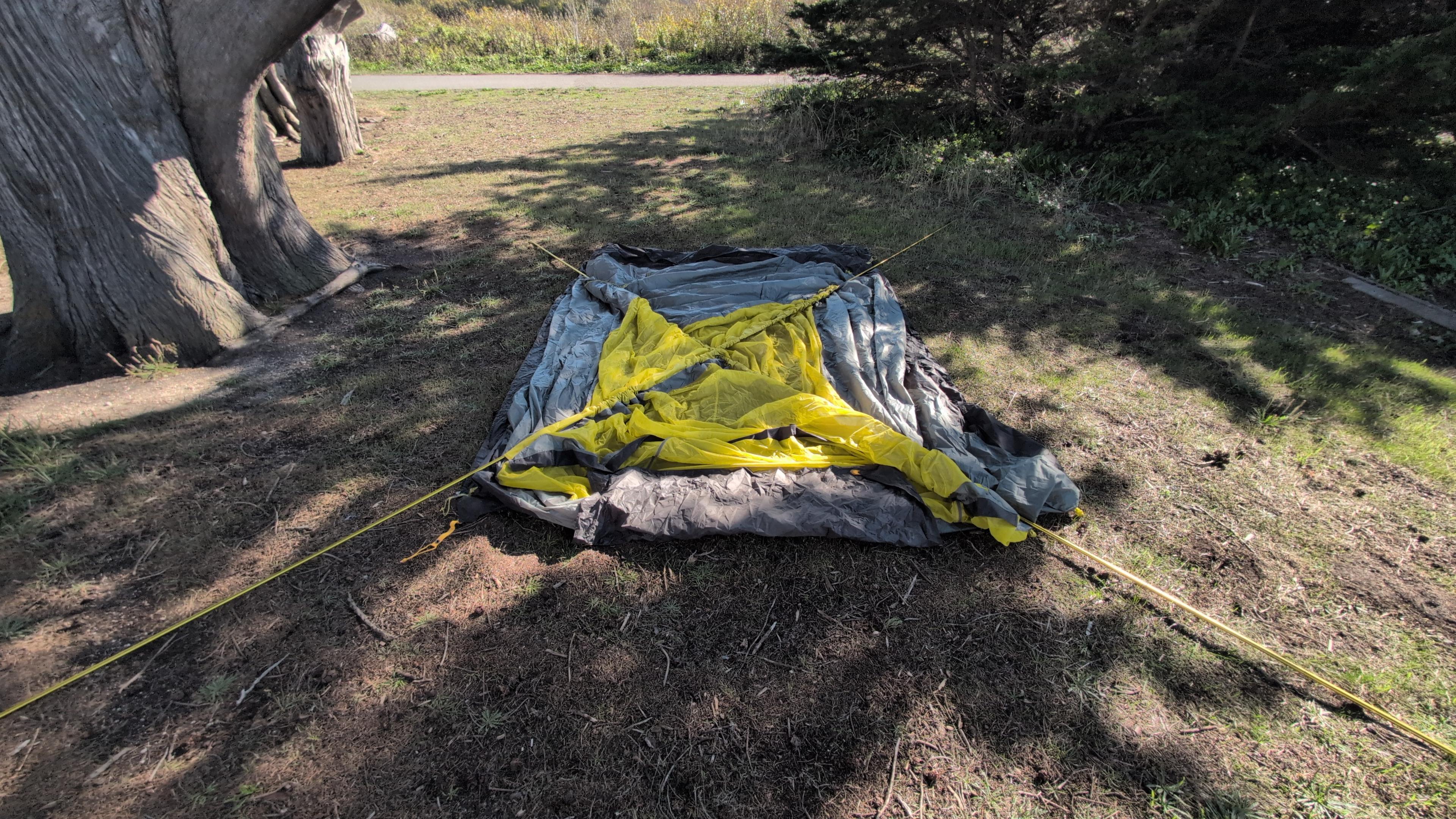
Stake the four corners first, pulled tight. This sets the tent's shape and prevents the bunched, saggy look that catches wind and pools rain. Drive stakes at a 45-degree angle, leaning away from the tent. Hard ground? Use a rock or the heel of your boot. Soft ground? Bury the stake deeper.
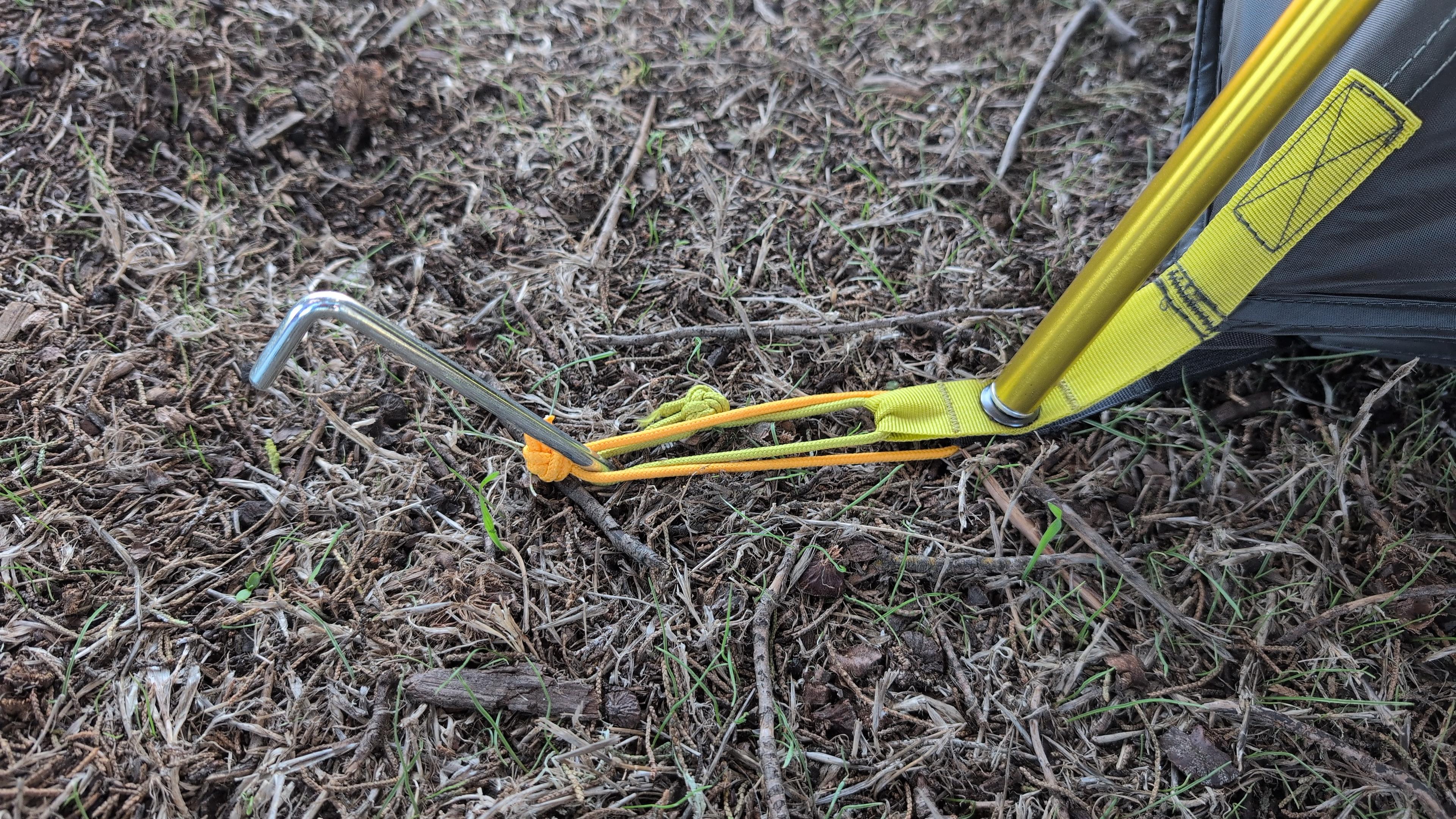
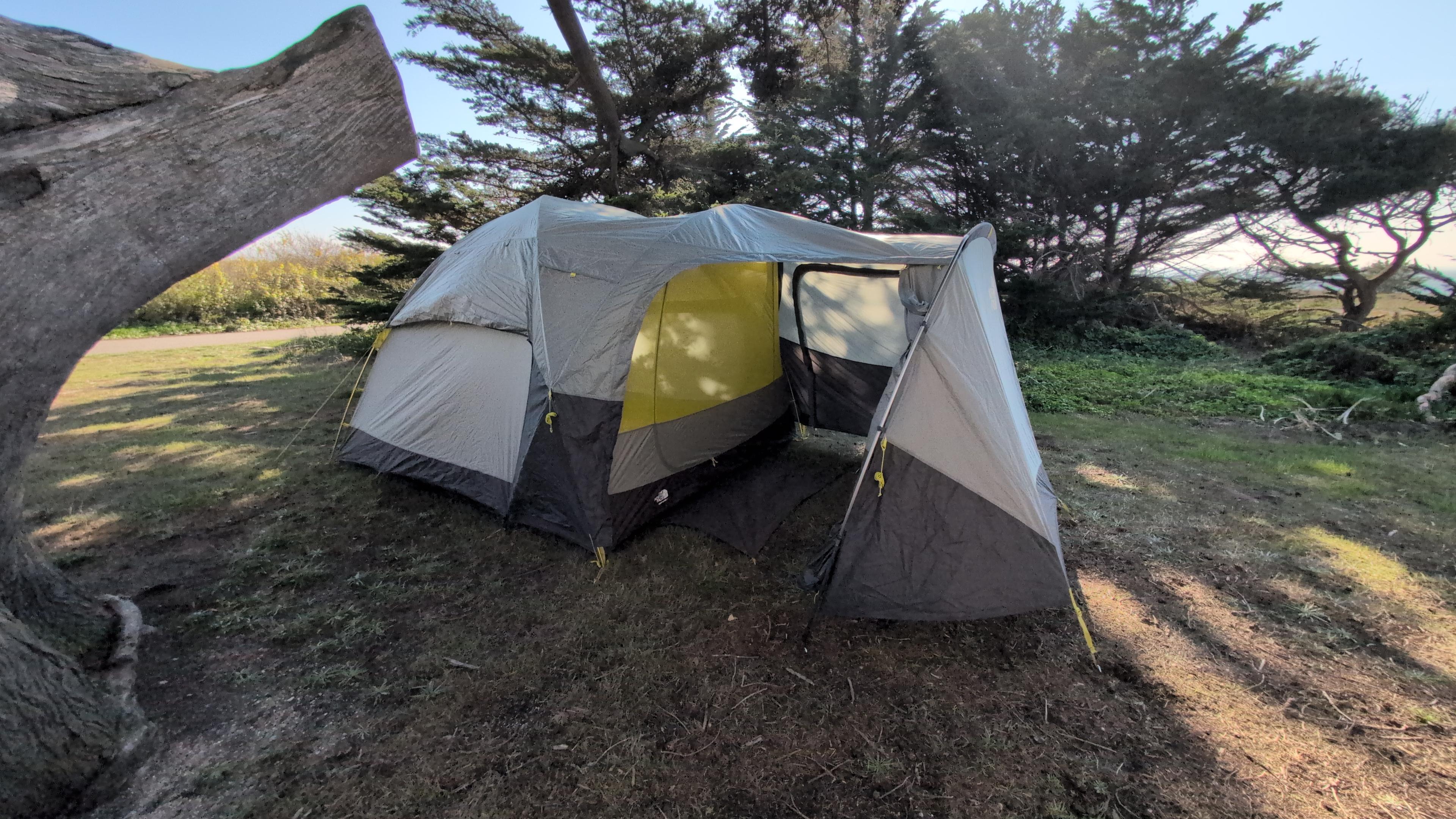
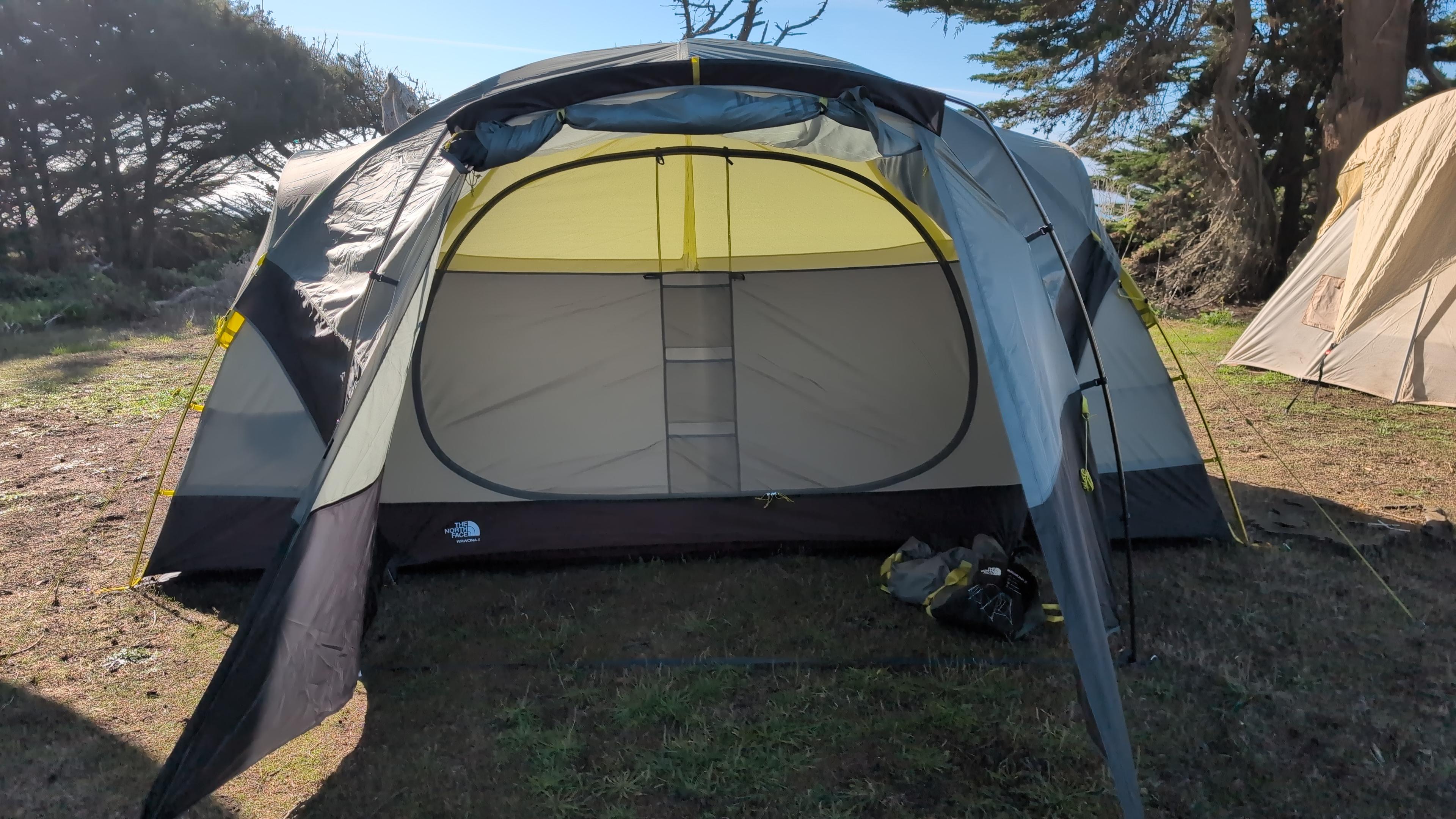
Put the rain fly on every time. Even if the forecast says clear skies. Dew is as wet as rain, and a fly-less tent on a dewy morning means everything inside has a fine mist of moisture on it. Pull the tensioners until there's a visible air gap between the fly and the inner tent wall. A loose fly that sags against the inner tent transfers water by contact. Use guylines even in calm weather — wind picks up at midnight when you're asleep and can't fix it.
One exception: canvas tents in dry conditions. Our Spring Bar doesn't use a rain fly because the canvas itself is weather-resistant. But skip the fly under trees and you might wake up with sap or bird droppings on your roof. Desert camping without a fly is fine. Forest camping, keep it on.
The Five Mistakes Every First-Timer Makes
We've taught dozens of first-time campers on group camping trips. These five things go wrong almost every time.
Packing for a trip? Our free interactive checklist tracks everything, tent to toothbrush, so nothing gets left in the garage.
Open the camping checklist1. Forgetting the ground sheet. Then wondering why the tent floor feels damp by morning. The ground pulls moisture upward through even waterproof tent floors over time. Always lay a ground sheet first.
2. Wrong poles. Color-coded systems help, but in the dark, people still mix them up. Lay all poles out first and match colors before threading anything into sleeves.
3. Rain fly backwards or forgotten. Most flies only attach one way. If the vestibule is over the wrong door, or the fly isn't on at all, you'll know by 5 AM when the condensation or dew soaks through.
4. Not staking corners first. If you build the tent before anchoring it, you end up with a floppy, bunched structure that catches wind like a kite. Corners first, pulled tight, then fill in the remaining stakes.
5. Not thinking about door orientation. Where does the door face? Can you access the vestibule? Are you opening the tent directly into the neighbor's campsite or the trail to the bathroom? Small decisions that matter at 2 AM when you need to get out.
From Nylon to Canvas: The Tent Evolution
Our tent evolution tells the whole story of getting serious about camping. We started with a REI Half Dome — a two-person backpacking tent that fit a couple but not a family. Upgraded to a bigger Half Dome, then a Marmot Limestone 6, then our first Spring Bar Classic Jack 140 — a 10x14 canvas tent that changed everything.
The progression: smaller tents you can't stand up in, made of nylon, that pack down small but feel cramped. Then larger canvas tents that are beautiful, last forever, and feel like a room in your house. Now we run a two-tent setup — a Classic Jack 140 alongside a Classic Jack 100.
For beginners: start with nylon. It's lighter, cheaper, and packs small. A tent like the North Face Wawona 6 is a great family starter — you can stand up, there's room to move, and it handles weather. But if you get serious about car camping, canvas is the long game. It breathes (zero condensation issues), lasts 15–20 years, and turns camping into something that feels permanent. It's also heavy and expensive. Read our canvas tent guide and Springbar review for the full breakdown.
The Pride Moment
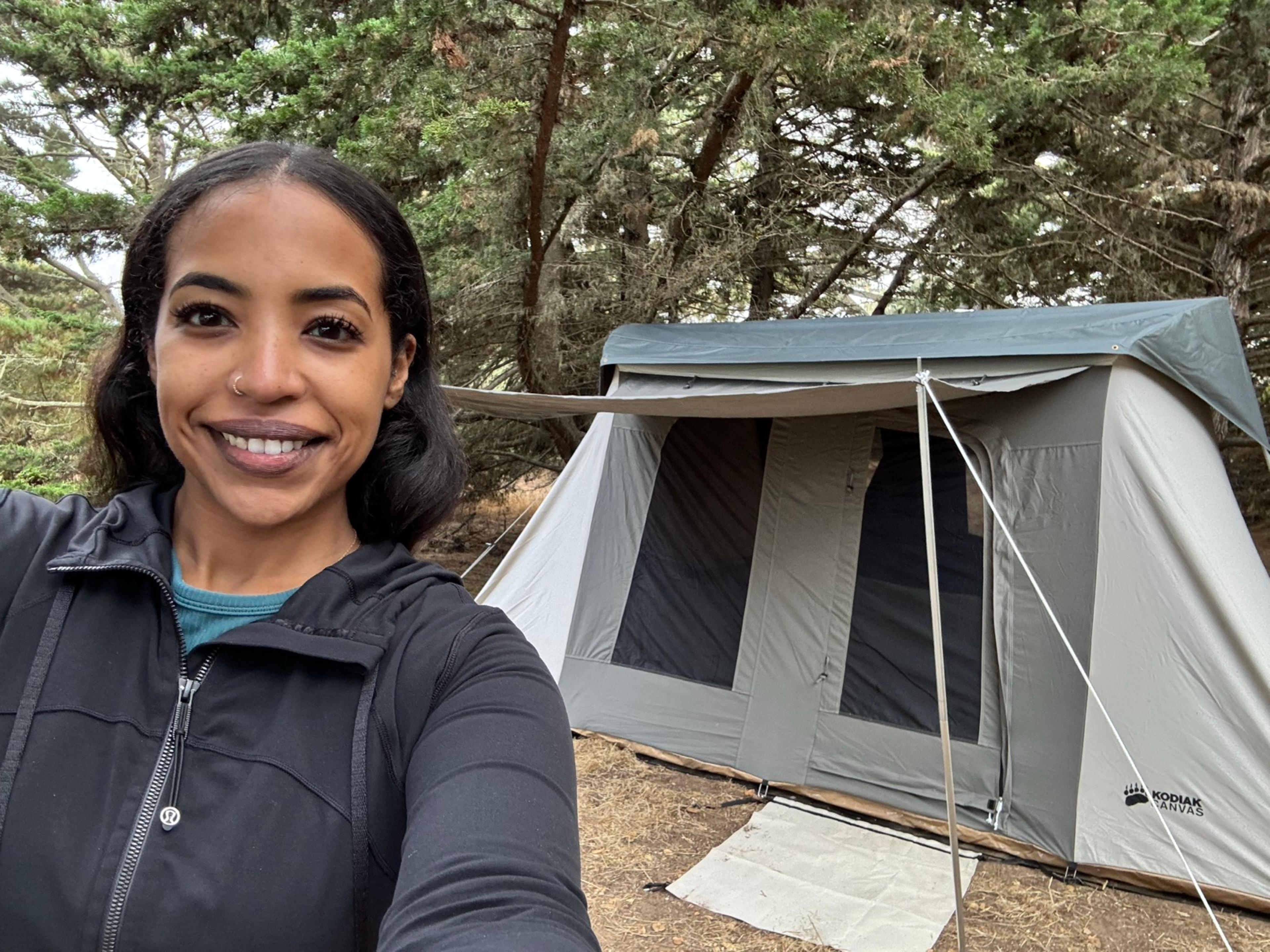
Selfies in front of tents are more common than you'd think. After a first setup, after surviving a night, after proving something to yourself that had nothing to do with camping and everything to do with capability.
Maab came on a group trip to Sunset State Beach. Never slept in a tent before. The next morning, standing in the early sun in front of her tent, she took a selfie and said: "I'm so proud. I did it." That's what a tent setup is really about. Not the stakes or the poles or the rain fly tension. The pride of doing something you weren't sure you could.
Before You Go
Practice at home first. Set up your tent in the backyard, get familiar with the poles and stakes, time yourself. Then when you're at the campground in fading light with kids asking when dinner is, you'll know exactly what goes where. Find your next campground on Camp Sage, and check our packing checklist to make sure you don't forget the ground sheet.
That night at Pinnacles, we had the tent up in under fifteen minutes. We've done it enough times now that the steps are automatic. Ground sheet, poles, corners, fly. The vomit at 1:30 AM was less automatic. But we handled it, because that's what you do. You set up, you adapt, you wake up the next morning in a place worth waking up in. The tent is just how you get there.

Want a personalized version of this guide?
Camp Sage tailors recommendations to your dates, group, and gear — free.
Join our newsletter to get more resources and tips to help your family camp with confidence!