Best Canvas Tents 2026: Springbar vs Kodiak (We Own Six)
Justin Steele, Wrights Lake, El Dorado National Forest, August 2022

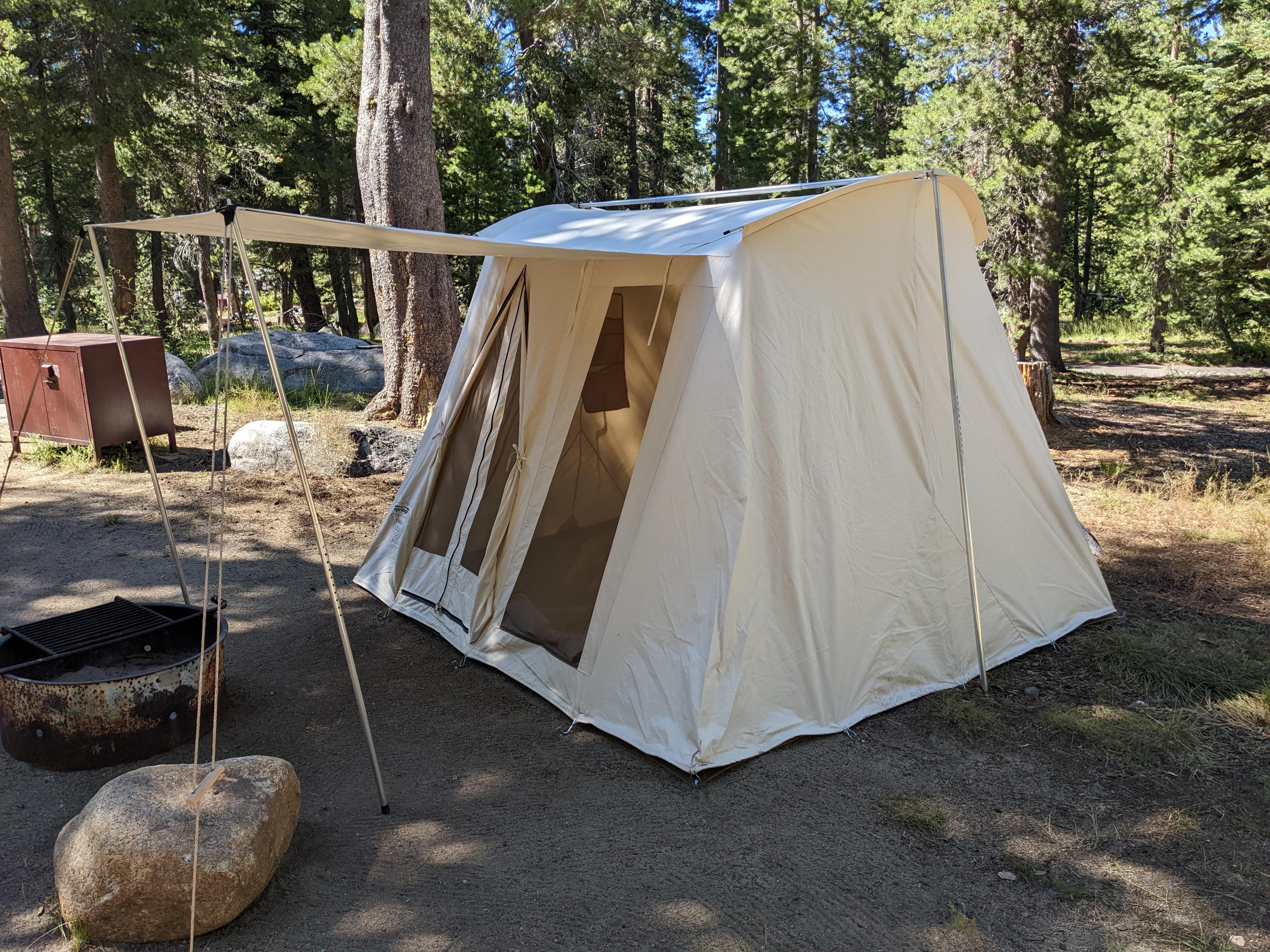
August 13, 2022. Wrights Lake, El Dorado National Forest. Justin drove up solo for a backcountry scouting trip in Desolation Wilderness. He'd been wanting to try an off-trail peak hike above the Twin Lakes area, and Wrights Lake has the trailhead and a great campground with premium lakeside sites. He'd snagged a lakeside one, day-hiked the route, and pitched our brand-new canvas tent for the very first time.
He texted me from camp that night. The Springbar was beautiful. The white canvas was calming and soothing. Light, airy, and cozy at the same time. Sleeping in it felt like a warm summer breeze on a perfect day, with the light hitting just right. He didn't want to leave.
We bought it on impulse two weeks earlier. July 30, 2022, around 10:30 PM. We were sitting on the balcony of our hotel room at the Westin in Mammoth Lakes, fresh off a camping trip near Devil's Postpile with our four kids. It was a warm summer evening, music from a nearby festival drifting up, the Sierra glowing pink in the distance.
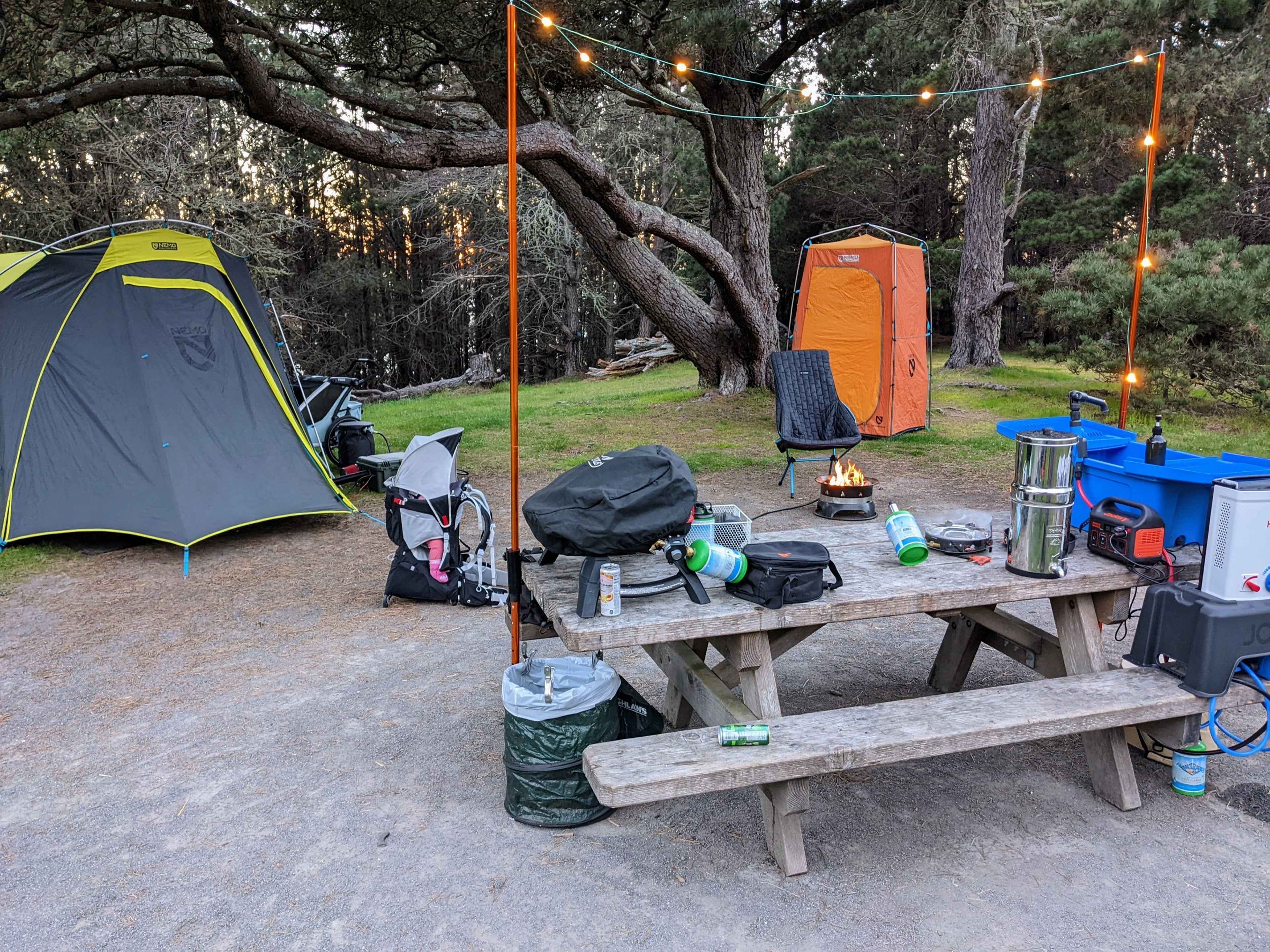
I'd been reading an Outside Magazine piece on Springbar canvas tents. We'd been sleeping in our campervan and a large NEMO nylon family tent. The NEMO was a good tent, more functional than anything. The Outside piece described canvas as something different. We ordered a 10x10 Springbar Traveler from springbar.com that night, on our phones, on the balcony. $1,433 including the ground tarp. It shipped August 1 and showed up August 3. Justin took it to Wrights Lake ten days later.
For three-season car camping, we have not slept in a nylon family tent since. Four years, twenty-something trips, six canvas tents across two brands. Nylon still has a role on our shelf. We pull out the North Face Wawona for winter rain trips and for walk-in sites where canvas is too heavy to carry. For everything else, it's canvas.
What canvas actually changes
Nylon family tents are designed for a season or two. Canvas tents are designed for decades. Four things change once you make the switch.
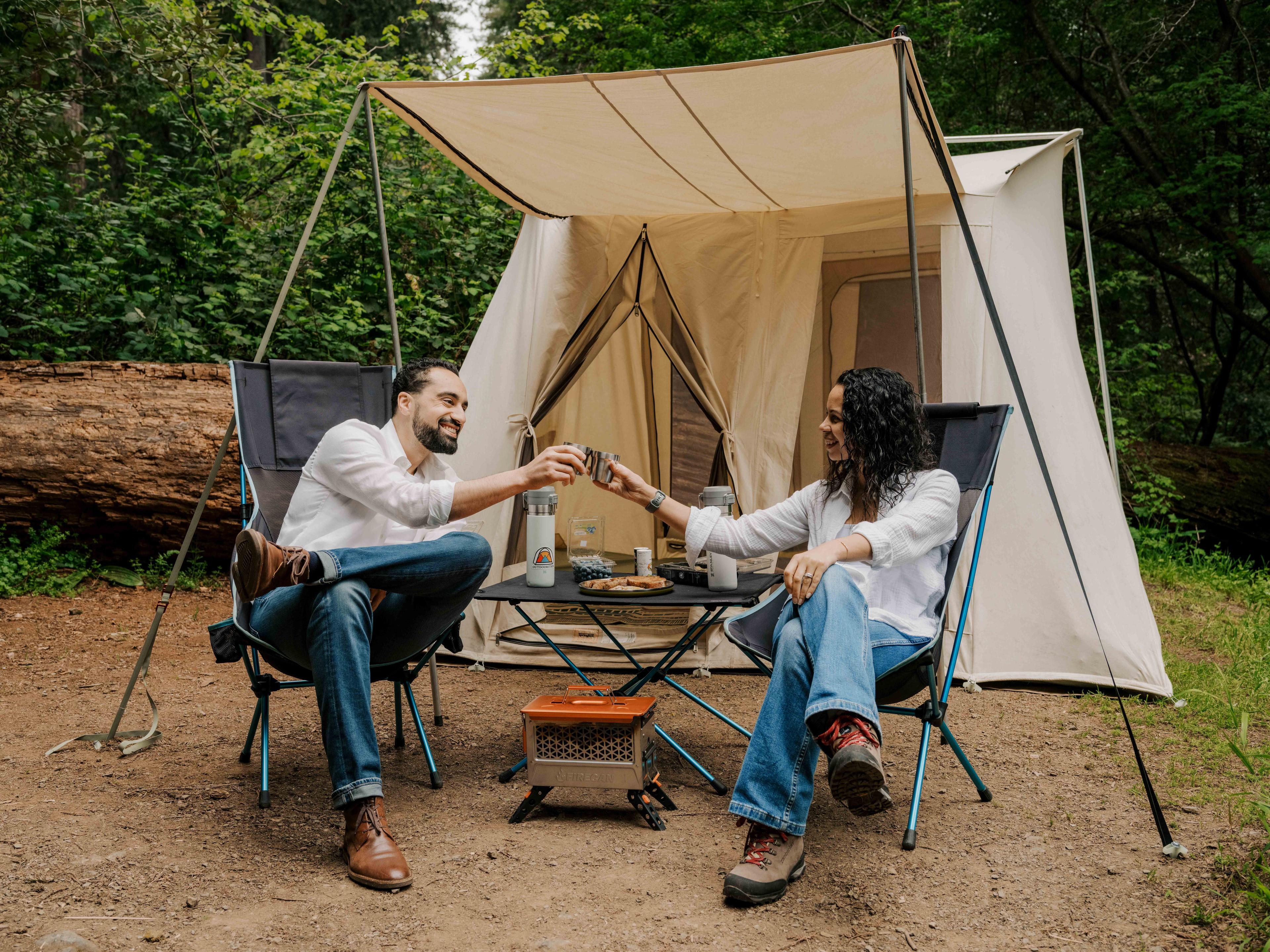
Breathability. Cotton canvas breathes. Air actually moves through the weave. The thing you feel isn't the temperature. It's the absence of condensation. No droplets falling on you at 4 AM as the cold roof drips. No wet sidewalls if you roll over and brush against them. No towel-down before you pack the tent away because the whole ceiling is soaked. Canvas can still get warm on a hot afternoon. It just doesn't trap moisture the way nylon does.
We took the Springbar to D.L. Bliss State Park on Labor Day weekend 2022, a few weeks after Wrights Lake. California was in a heat wave. Lake Tahoe was an 80°F bluebird day, which is unusual for Bliss in early September. The canvas tent breathed through it. Inside the tent felt like a summer porch, not an oven. Everyone wanted to hang out in it. Our kids dropped their phones and read books.
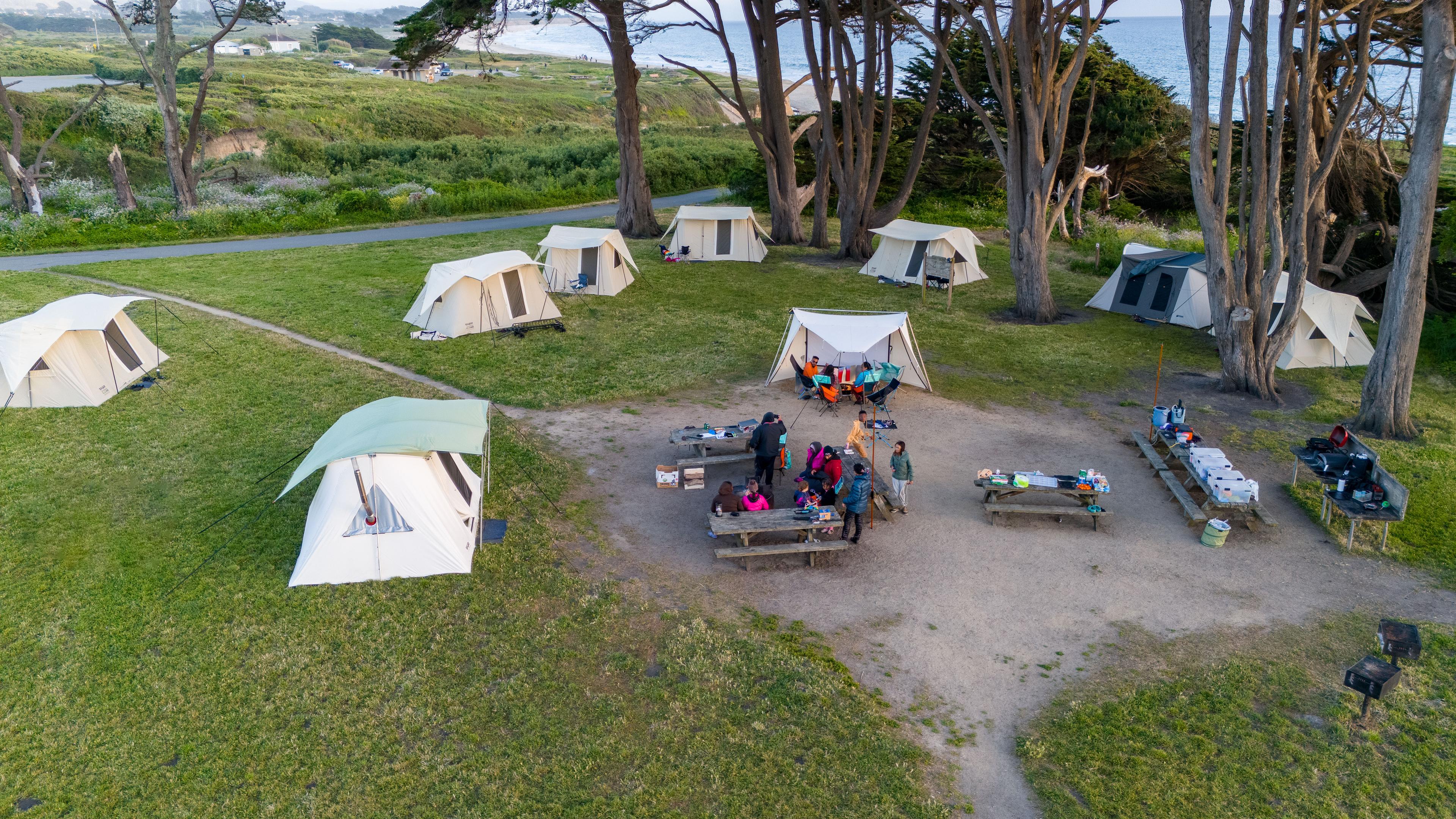
Durability against kids. Canvas takes abuse. Our four kids have been in and out of these tents thousands of times. Nobody has punched a hole in the floor or torn the wall. With a nylon family tent, we'd have replaced it twice by now. With canvas, we've replaced zero tents. We've added more.
Light quality. Natural canvas filters sunlight into a soft warm glow. Even at 6 AM, the tent feels welcoming rather than glaring. Kids wake up easier. So do parents.
Weather resistance you can trust. Canvas walls don't move in heavy wind the way nylon does. The Joshua Tree story below is the proof.
Springbar vs Kodiak: which one to buy
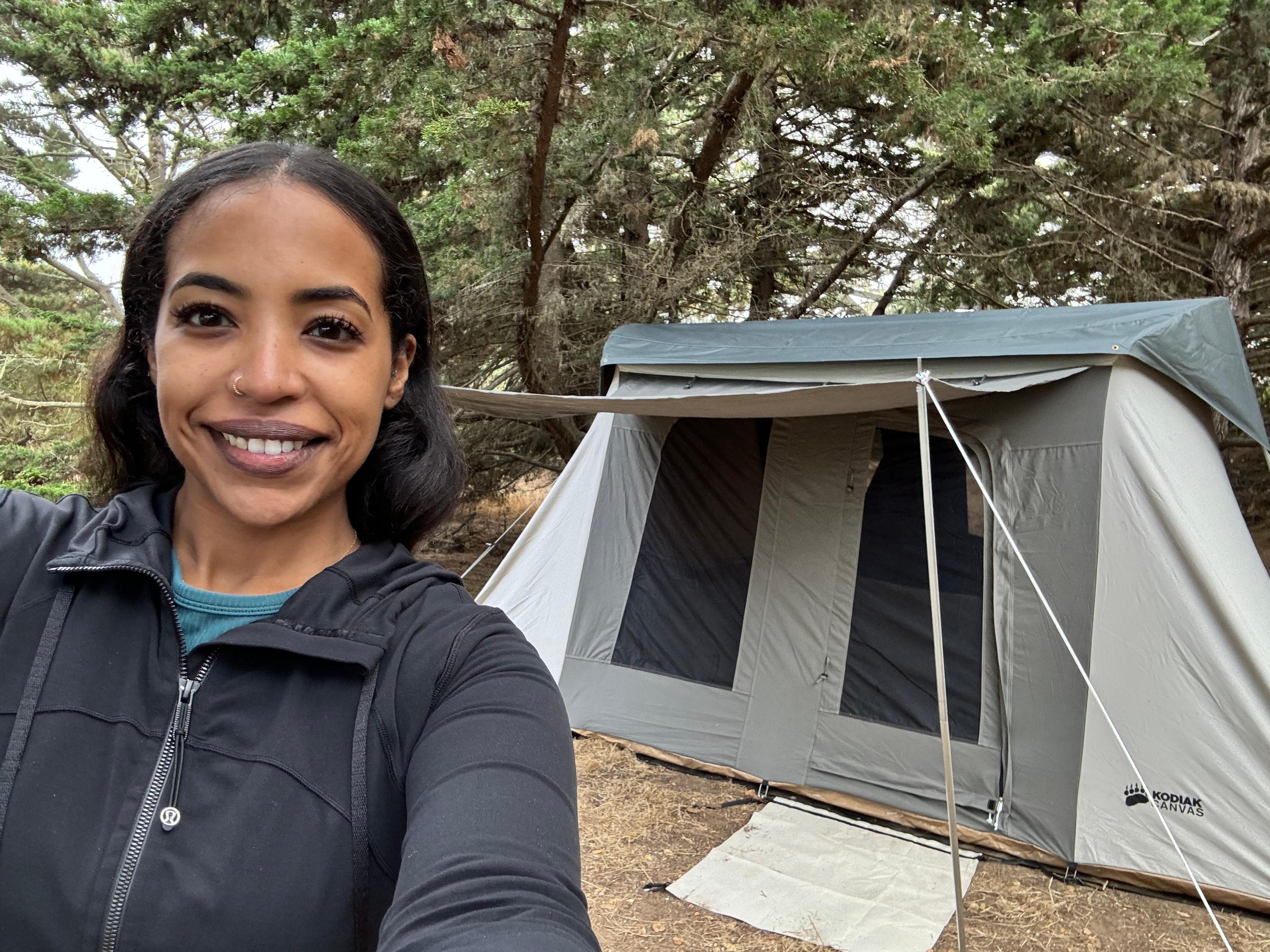
We've personally only owned Springbar and Kodiak. We've used both heavily. Springbar is the higher-quality tent in every detail. Kodiak is the better value, and the only company that makes a true vertical-walled cabin tent.
If we could only have one canvas tent, we'd pick the Springbar Classic Jack 140. We've made that decision repeatedly. Our quiver now has two Springbar Classic Jacks (a 100 and a 140), a Leisure Port shade shelter, and three Kodiak tents for specific jobs.
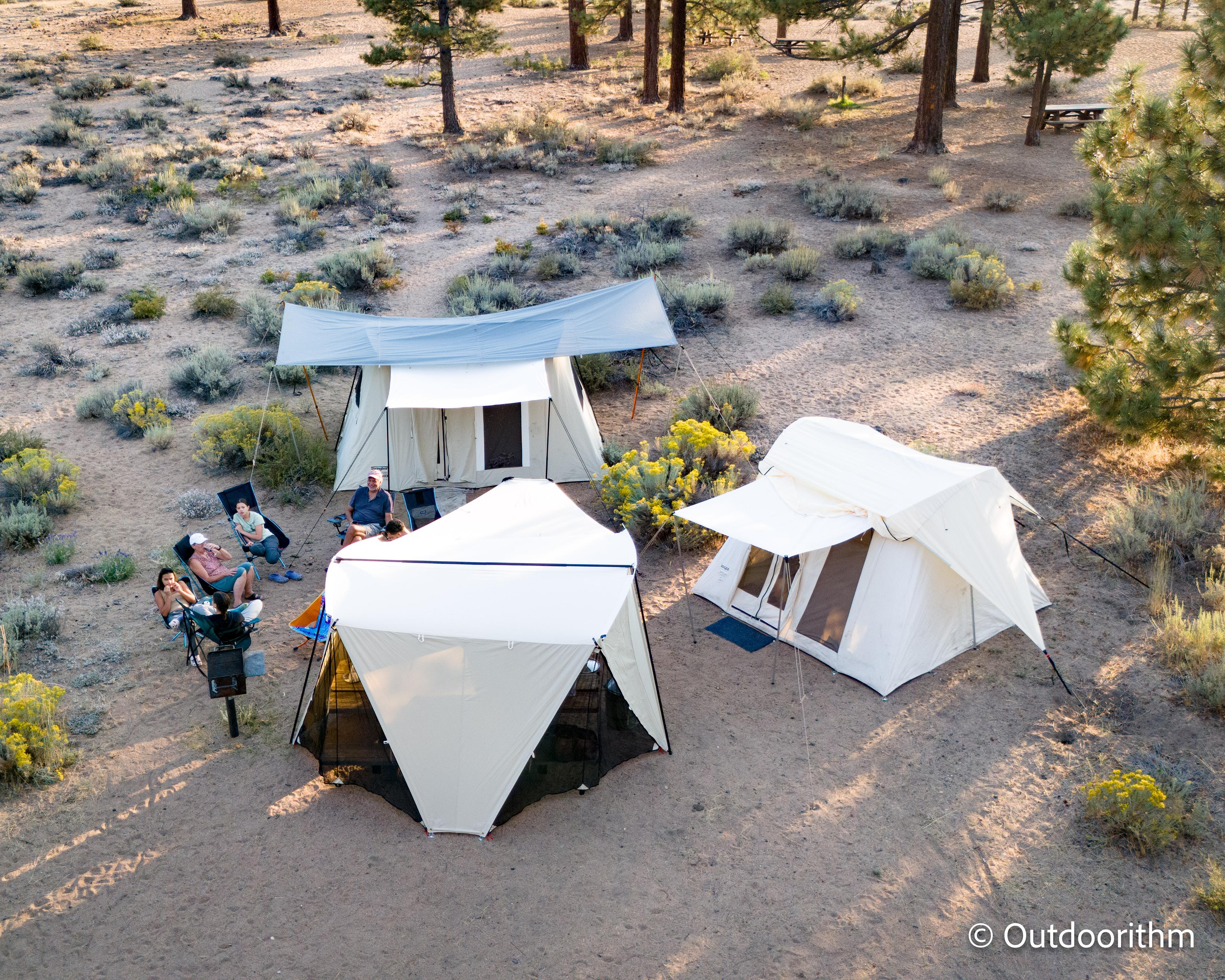
Above: our short video walk-through of all three side by side. Useful if you're trying to decide between them and want to see the relative size and shape in motion.
Best overall canvas tent
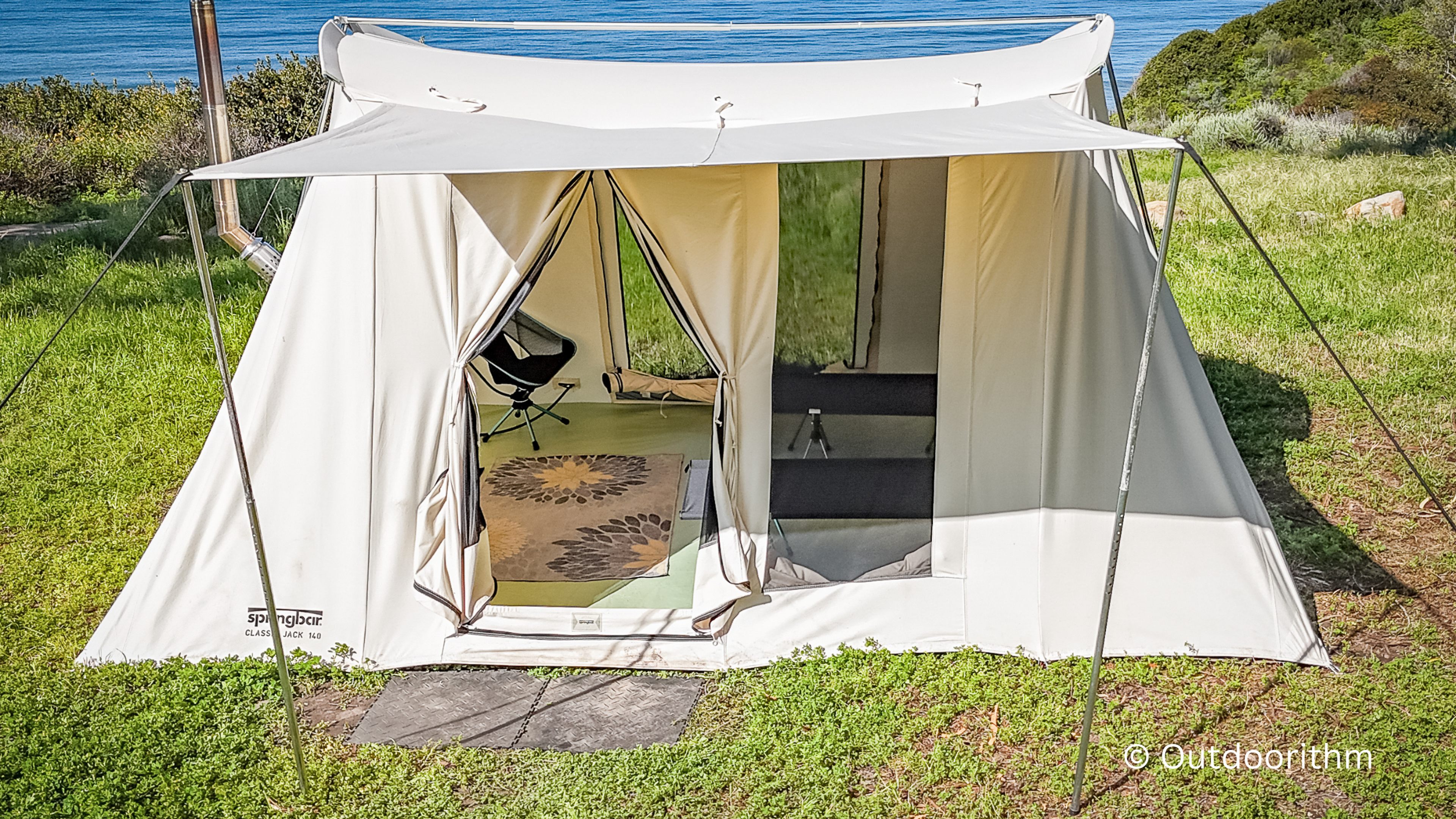
The Springbar Classic Jack 140 (10' x 14', $1,299). Six and a half feet of standing headroom, 140 square feet, integrated 6' x 6' canvas awning. Sleeps six. The build quality and patented tension frame make this the most comfortable canvas tent in our quiver. The setup guide is here. About 20 to 30 minutes with a partner.
Best smaller / couple canvas tent
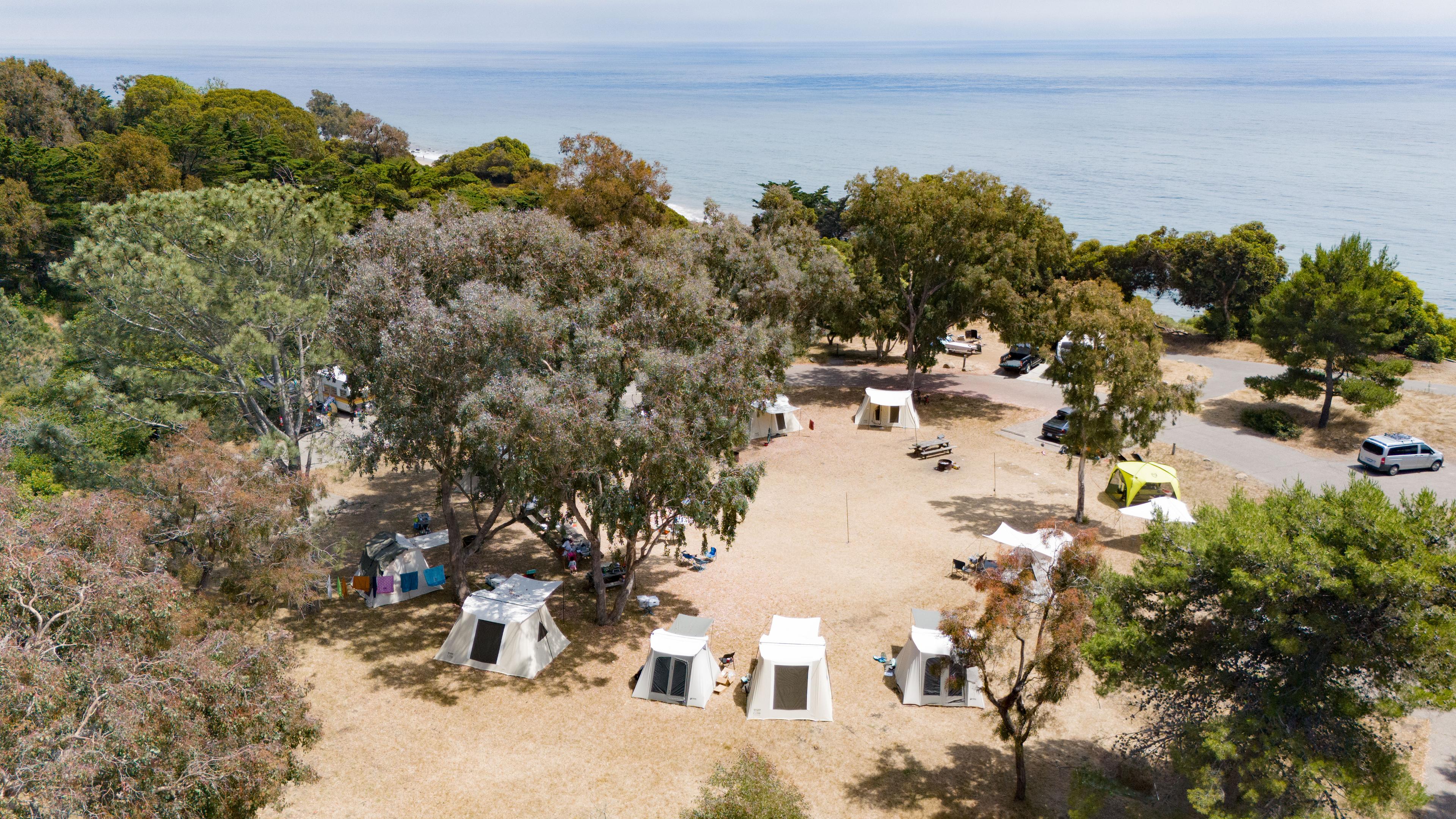
The Springbar Classic Jack 100 (10' x 10', similar build to the 140 in a smaller footprint). After our 140, our kids wanted to stop sleeping in the campervan and start sleeping in their own tent. We bought a 100 as the kids' tent. Two-tent setup has been our default ever since.
Best budget canvas tent
The Kodiak Flex-Bow 10x10 (check price at Amazon). Half the price of the Springbar 100. The Flex-Bow's curved bow frame predates the Springbar tension-frame design and is the canvas tent that built Kodiak's brand. The walls slope inward more than the Springbar's. The canvas is the same 10 oz Hydra-Shield used on the Cabin. This is the tent we recommend to first-time canvas buyers who aren't ready to spend $1,300 yet.
Best for big group / wall-tent feel
The Kodiak Canvas Cabin 12x9 with Deluxe Awning (check price at Amazon). Vertical walls on all four sides, 7.5 feet of headroom, sleeps six with room to walk around. Springbar doesn't make a cabin-style tent. We use ours as the communal hot tent on group trips with a Nu-Way 3500 propane stove piped through the stove jack panel. The 6133 model includes a generous 8' x 8.5' deluxe awning. Setup guide here. About 30 to 45 minutes with two people.
Best larger family canvas tent
The Kodiak Flex-Bow 10x14 Deluxe (check price at Amazon). The Flex-Bow in family-sized footprint. We have one and use it on group trips for friends who don't own canvas yet. It's a workhorse tent with the same Hydra-Shield canvas as the Cabin.
Best canvas glamping shelter
The Springbar Leisure Port (check price at Amazon). Not a tent, technically. A 10' x 14' canvas shade shelter with swappable mesh and canvas side panels. Open it as a sunshade, zip the canvas walls on for a screen-house, or extend one side as an awning over a picnic table. Pairs visually with a Classic Jack 140. We use ours for outdoor movie nights (hang a white sheet, open one side, kids gather around) and as a propane-fire-pit shelter on cold high-desert nights. Setup guide here.
Canvas tents are the rare bit of camping gear people go in on together. If that is the situation, our gifts for campers guide has these sorted by budget.
Why we prefer Springbar (when budget allows)
Build quality is one notch higher. Springbar's seams, zippers, hardware, and canvas weave feel slightly more refined. Both tents will outlast their owners. Springbar just feels nicer in your hands.
The Stormfly rain fly is better. Kodiak's storm fly covers less of the tent and leaves the corners exposed.
The Springbar Stormfly (10x10 and 10x14 versions, sold separately) covers more of the tent body and keeps the canvas protected from sap, bird droppings, and dew. We use ours on almost every trip. It doesn't cover the corners either, so we still hand-dry those before packing, but in moist environments it dramatically reduces the canvas drying time at the end of a trip.
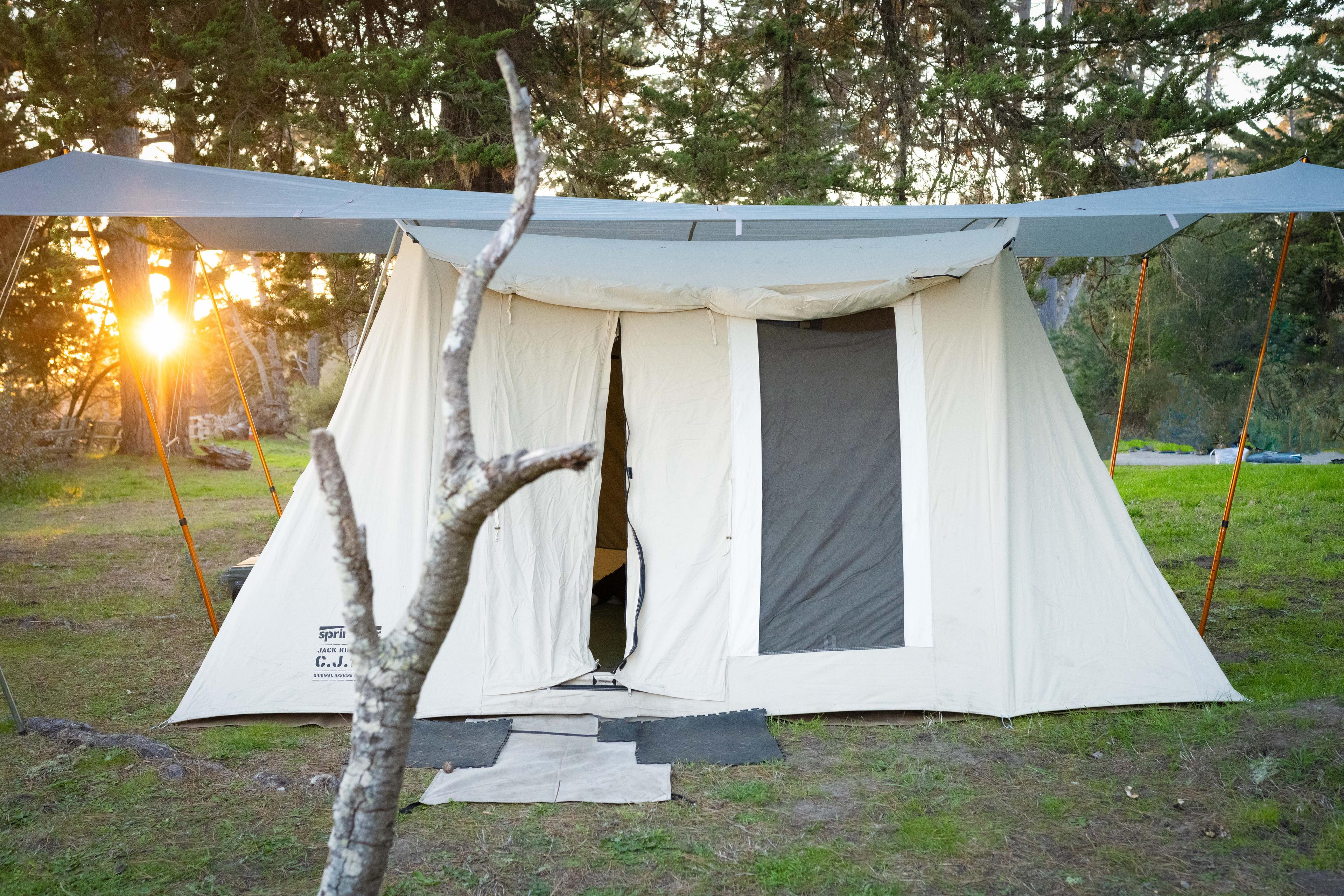
Light-colored canvas. Springbar's natural canvas is lighter than Kodiak's tan-tinted Hydra-Shield. Kodiak feels like a tent. Springbar feels like a room.
Ground sheet quality. Springbar's heavy-duty ground tarp is a thicker, higher-quality waterproof fabric than Kodiak's. Kodiak's footprint is more like a basic tarp.
Why we own Kodiak too
Springbar makes only one tent style. The Classic Jack tension-frame canvas. Beautiful, but it slopes from peak to walls. Kodiak makes a real cabin-style tent with vertical walls on all four sides. When you want headroom from edge to edge, and especially when you want a tent big enough to sleep six and stand up across the entire floor, Kodiak is the only option.
We also use the Kodiak Flex-Bow as a backup tent on group trips for first-time canvas users. It's lower-stakes than handing someone a $1,300 Springbar for their first canvas night.
The night canvas earned its keep
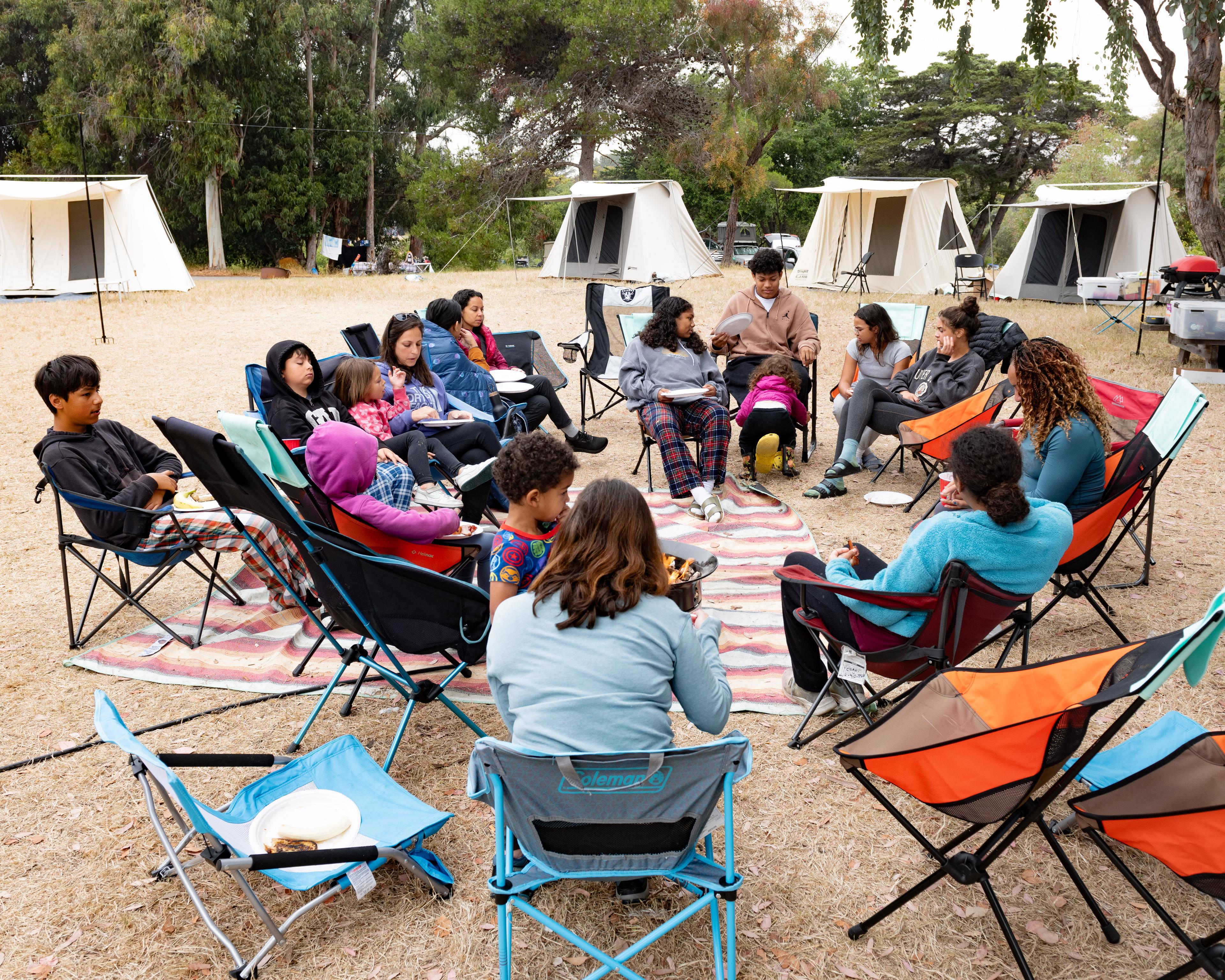
Indian Cove Group Campground, Joshua Tree National Park. Spring 2026. Nine households on an Outdoorithm Collective group trip. Granite boulders the size of houses, stacked at impossible angles, glowing pink at sunset. Our second night, a windstorm rolled through.
High desert wind is its own kind of weather. You hear it coming before you feel it. First the rocks above camp start to whistle, then the gusts pour down into the valley and hit the tents. We were getting gusts that felt like 50+ mph. One of the strongest nights any of us had ever spent in a tent.
Springbar canvas tents don't move in that kind of wind. They squat low and shrug it off. We knew that. Our first-time campers, sleeping in our spare Springbars for the very first time, did not. My phone lit up with texts: "Are we okay? Should we sleep in the car?" We assured them yes, you're okay, no, you don't need to sleep in the car. Watching the canvas walls bow under a 50 mph gust is unsettling the first time, even when the tent is fine.
Justin slept great. There is something deeply good about being warm and safe in the middle of weather like that.
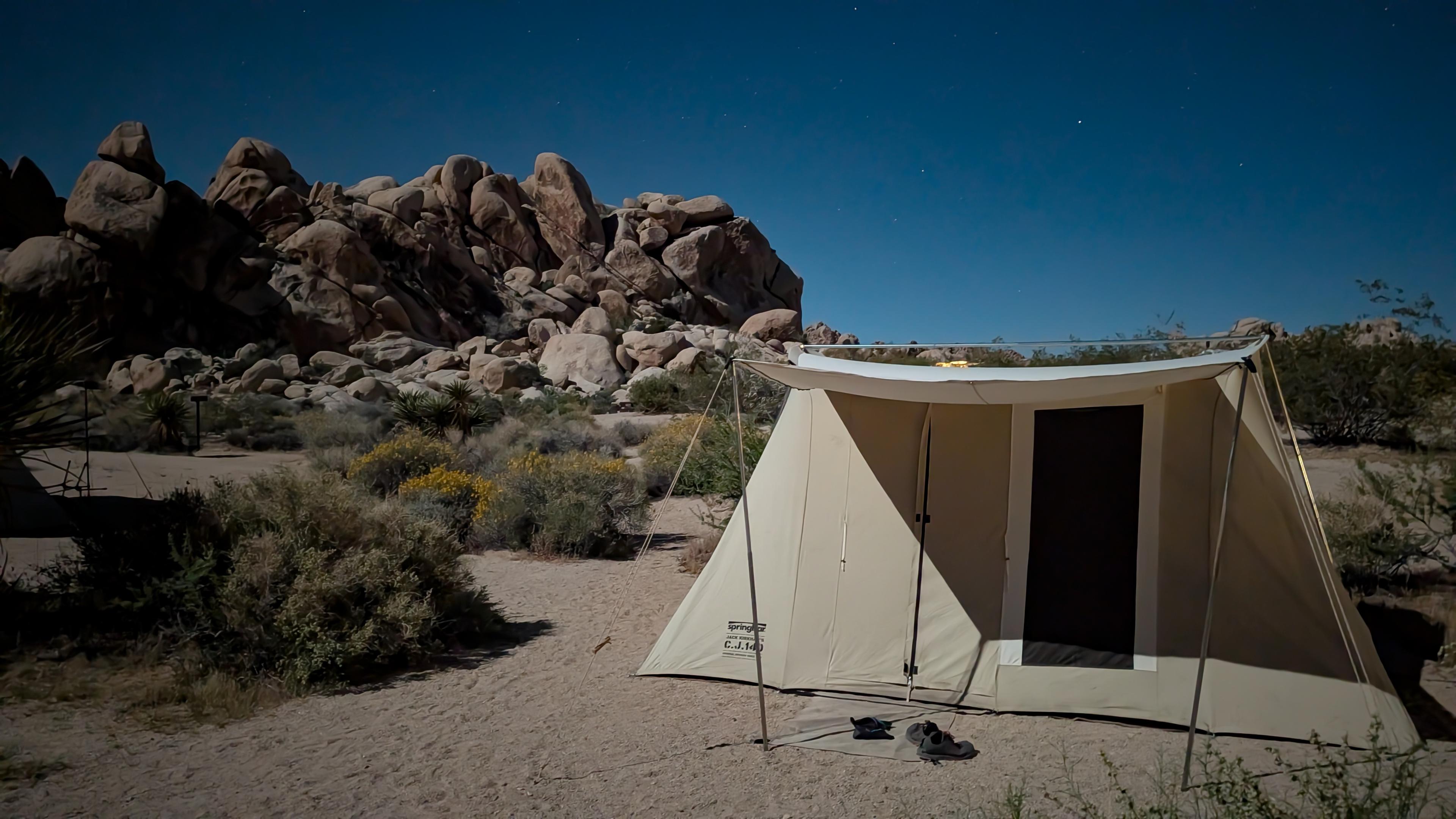
A nylon family tent in that wind would have been a kite. We've watched dome tents collapse in much less. Canvas tents don't catch wind the way a dome does. The low profile and the weight of the canvas itself shed the gusts.
Packing for a trip? Our free interactive checklist tracks everything, tent to toothbrush, so nothing gets left in the garage.
Open the camping checklistThe full trip recap, including the dance circle, the moonlit hike, and Ryan Mountain with kids on our backs, is in this post.
The honest tradeoffs
Canvas tents aren't for everyone. They're expensive. The Springbar Classic Jack 140 is $1,299. The Kodiak Canvas Cabin is $949.99. Even the cheapest tent in our quiver, the Kodiak Flex-Bow 10x10, is $599.99. The trade is a tent built to last a lifetime. A $200 nylon family tent lasts three or four seasons before the zippers go, the floor shreds, or a pole bends. Our four-year-old Classic Jack still looks brand new. Our kids will inherit it.
Three other things to know before you spend the money.
Weight. Our Classic Jack 140 weighs 80 lbs (tent 46, poles 26, stakes 8). The Kodiak Cabin is 112 lbs. This is car-camping gear, not backpacking gear. If you're walking your tent more than a few hundred yards from the car, canvas isn't the answer. We use a North Face Wawona for walk-in sites and for winter trips when heavy rain is in the forecast. Synthetic doesn't soak, doesn't have to dry on the garage floor afterward, and weighs a third as much.
Stake quantity and effort. Springbar's Classic Jack 140 includes 18 nail stakes. The Kodiak Cabin uses 16. They're heavy-duty 12-inch steel rods. In soft soil they hammer in fast. In rocky ground (Joshua Tree, the Sierra granite, any beach with a packed-clay base) they fight you. We carry a rubber mallet for soft ground and a small sledge for hard. Some of our screw-in stakes can be driven with a power drill, which eliminates hammering entirely. Worth the upgrade.
End-pole weight at setup. The upright end poles carry the full weight of the canvas roof when you push them up. Best with two people, especially the first few times. Some campers prefer nylon for the ease of setup. It's not a more complex setup process. It just requires some muscle.
Care: what we actually do
Canvas care takes more work than nylon. The work is what gets you thirty years out of the tent. Our original Springbar 10x10 is four years in and still flawless.
Drying is everything. Religiously dry the canvas before packing. Wet canvas grows mildew within days. We've laid tents out on the garage floor with a dehumidifier running when we had to pack up dewy on the coast and couldn't dry at the campground. Worth the extra two hours every time.
Re-waterproofing. We've re-waterproofed one tent so far. It got covered in bird droppings during a trip where we'd skipped the Stormfly. We powerwashed it at home and treated it with a silicone-based water repellent. Took a Saturday. Both Springbar and Kodiak recommend re-treating every few years depending on exposure.
Mildew prevention. We've had two small mildew spots over four years. Both times when we packed up slightly damp. For active mildew, IOSSO Mold and Mildew Stain Remover (per Kodiak's care guide) works. We try not to need it.
Storage. Our garage and a group-trip storage unit. Our yard isn't big enough to pitch the tents at home, so we can't do at-home test setups. If you have space to set up at home for a weekend before a big trip, do it. Canvas tents reward familiarity.
How to actually set one up
Setup for the three canvas tents we own (and the Leisure Port) is documented in step-by-step guides we built from the actual setups, including photos at each stage:
• Springbar Classic Jack 140 Setup Guide (also covers the Classic Jack 100)
• Kodiak Canvas Cabin Setup Guide
• Springbar Leisure Port Setup Guide
For broader tent-setup principles (site selection, ground sheets, wind orientation, the five mistakes every first-timer makes), see our general tent setup guide.
Canvas tents and the glamping question
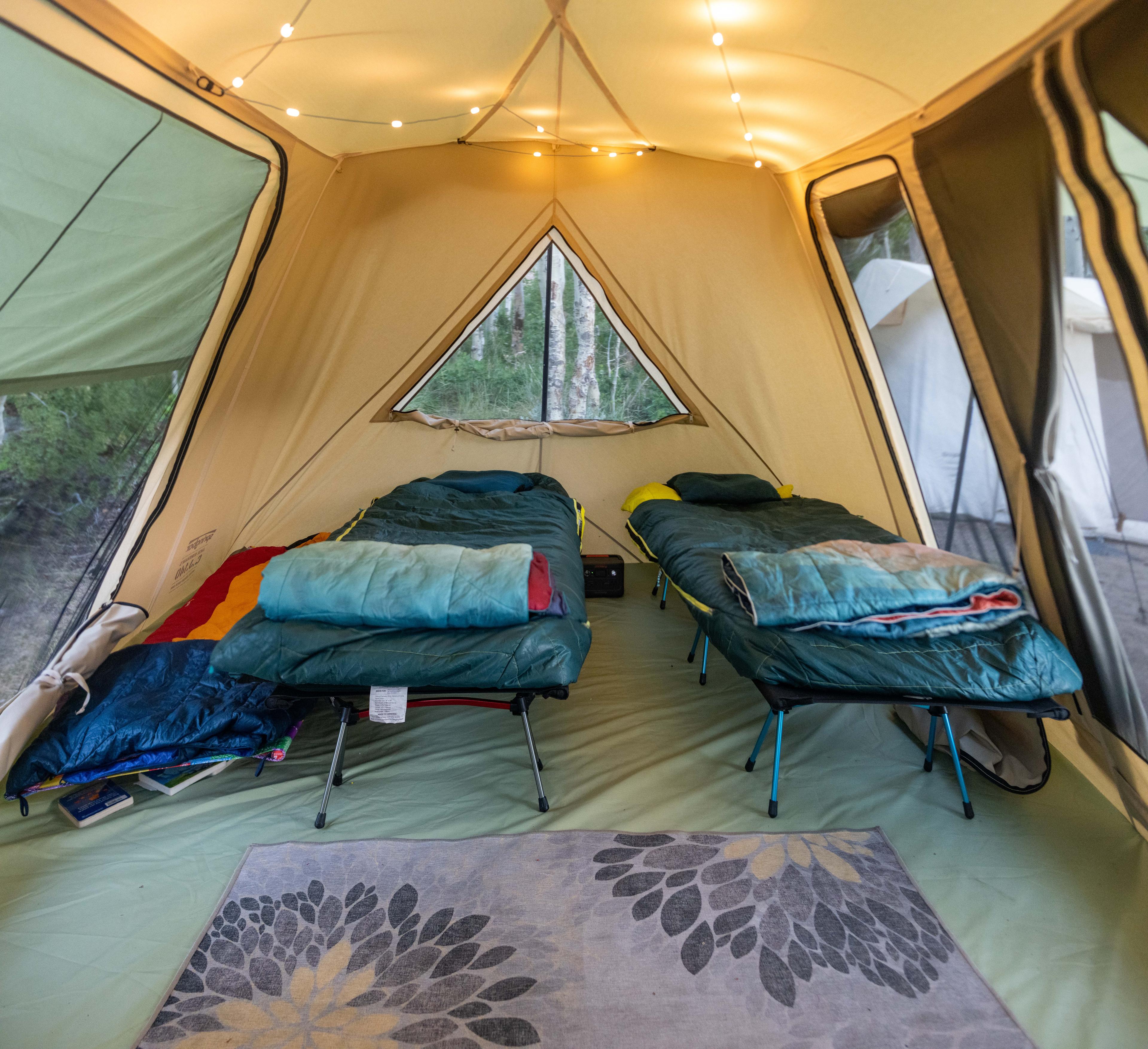
The line between "camping in a canvas tent" and "glamping" is mostly what you put inside the tent. A Classic Jack 140 with cots, rugs, and string lights is glamping. The same tent with sleeping bags on the floor is camping. The tent itself doesn't change.
If you're new to the glamping idea, we wrote a whole guide on DIY glamping setups using canvas tents. The short version: canvas tent + cots + a rug + decent lighting + a propane fire pit and you have a setup that any first-time camper will fall in love with. Three nights of glamping is what got most of our first-time-campers hooked.
Bell tents are the other canvas style associated with glamping. Round, central-pole tents like the Lotus Belle or Sibley. We don't own one. They're beautiful but the round footprint wastes floor space compared to a Springbar's rectangle, and bell tents tend to be Asian-import canvas of lower quality than the American-made Springbar and Kodiak products. If you want the aesthetic, look at White Duck's Avalon line. If you want the durability, get a Springbar.
The decision
We spent $1,433 in July 2022 to find out what we'd been missing. Four years later we've added five more tents and we'd buy them all again.
Family of four or more, camping twenty-plus nights a year? Springbar Classic Jack 140. Couple or smaller family, camping a handful of weekends? The Kodiak Flex-Bow 10x10 is the smarter starter buy. Running group trips that pull first-time campers into the outdoors? Add a Kodiak Cabin as the communal tent. Want a flexible shade shelter to pair with any of them? Get a Leisure Port.
Justin's first night in the Springbar at Wrights Lake was four years ago. He still talks about how the white canvas filtered the morning light. That's the thing nylon doesn't do.
If you're standing in line at REI debating the synthetic family tent against another summer of saving for canvas, save another summer. The cheap-nylon nights are the ones we regret. The canvas nights aren't.
Frequently Asked Questions
Are canvas tents worth the price?
Yes, if you camp more than a handful of weekends a year and want a tent that lasts decades. A $200 nylon family tent lasts three or four seasons before the zippers go, the floor shreds, or a pole bends. A $1,299 Springbar Classic Jack 140 is built to last a lifetime. Our four-year-old Springbar still looks brand new. The math takes a few seasons to come around, then it favors canvas for the rest of the tent's life.
How long do canvas tents last?
Decades, with proper care. The two limiting factors are mildew (caused by packing the tent wet) and UV damage (caused by leaving it pitched in direct sun for weeks at a time). If you dry the canvas before packing and store it indoors, a Springbar or Kodiak will outlast its owner. Our original 2022 Springbar is four years in and shows no wear.
Can you use a canvas tent in winter?
Yes. Canvas insulates better than nylon in cold weather, and several models include a stove jack panel for piping a tent stove or propane heater. The Kodiak Canvas Cabin has a sealed stove jack in the corner. We use ours with a Nu-Way 3500 propane stove on group trips. For heavy winter rain trips, we pull out a North Face Wawona instead. Canvas can't be packed wet. If it rains the whole weekend, you'll get home with a tent that has to dry for two days in the garage before storage.
Springbar or Kodiak: which is better?
Springbar is the higher-quality tent in every detail. Seams, zippers, hardware, ground sheet, canvas weave. Kodiak is the better value at roughly half the price for the Flex-Bow 10x10, and is the only brand that makes a true vertical-walled cabin tent. If budget allows, get a Springbar Classic Jack 140. If budget is tight, get a Kodiak Flex-Bow 10x10. If you need standing headroom across the entire floor, get a Kodiak Canvas Cabin.
How do you waterproof a canvas tent?
New Springbar and Kodiak tents arrive pre-treated with a water repellent. After a few years, or after a deep cleaning, you re-treat with a silicone-based water repellent like Kiwi Camp Dry, Atsko, or 3M Scotchgard. Pitch the tent dry, spray the canvas evenly from a few feet away, and let it dry fully before packing. We've re-waterproofed one of our six tents so far, after powerwashing bird droppings off a Springbar we'd left without the Stormfly.
Are canvas tents heavy?
Yes. Our Springbar Classic Jack 140 weighs 80 lbs (tent 46, poles 26, stakes 8). The Kodiak Canvas Cabin is 112 lbs. This is car-camping gear, not backpacking gear. If you're walking your tent more than a few hundred yards from the car, use a nylon tent instead. We carry a North Face Wawona for walk-in sites.
How are canvas tents different from bell tents?
Bell tents (Lotus Belle, Sibley) are round canvas tents built around a single central pole. Springbar and Kodiak use rectangular footprints with multi-pole tension frames. Rectangles use floor space more efficiently for cots and sleeping pads. Bell tents have a glamping aesthetic that suits photo shoots better than family camping, and most bell tents on the market are Asian-import canvas of lower quality than American-made Springbar or Kodiak. If you want the bell aesthetic with comparable quality, look at White Duck's Avalon line.
The Classic Jack 140 is also the biggest gift anyone in our family has given. It leads the tent section of our gifts for campers guide, priced out in full.

Want a personalized version of this guide?
Camp Sage tailors recommendations to your dates, group, and gear — free.
Join our newsletter to get more resources and tips to help your family camp with confidence!