How to Choose a Campsite Six Months Before You See It
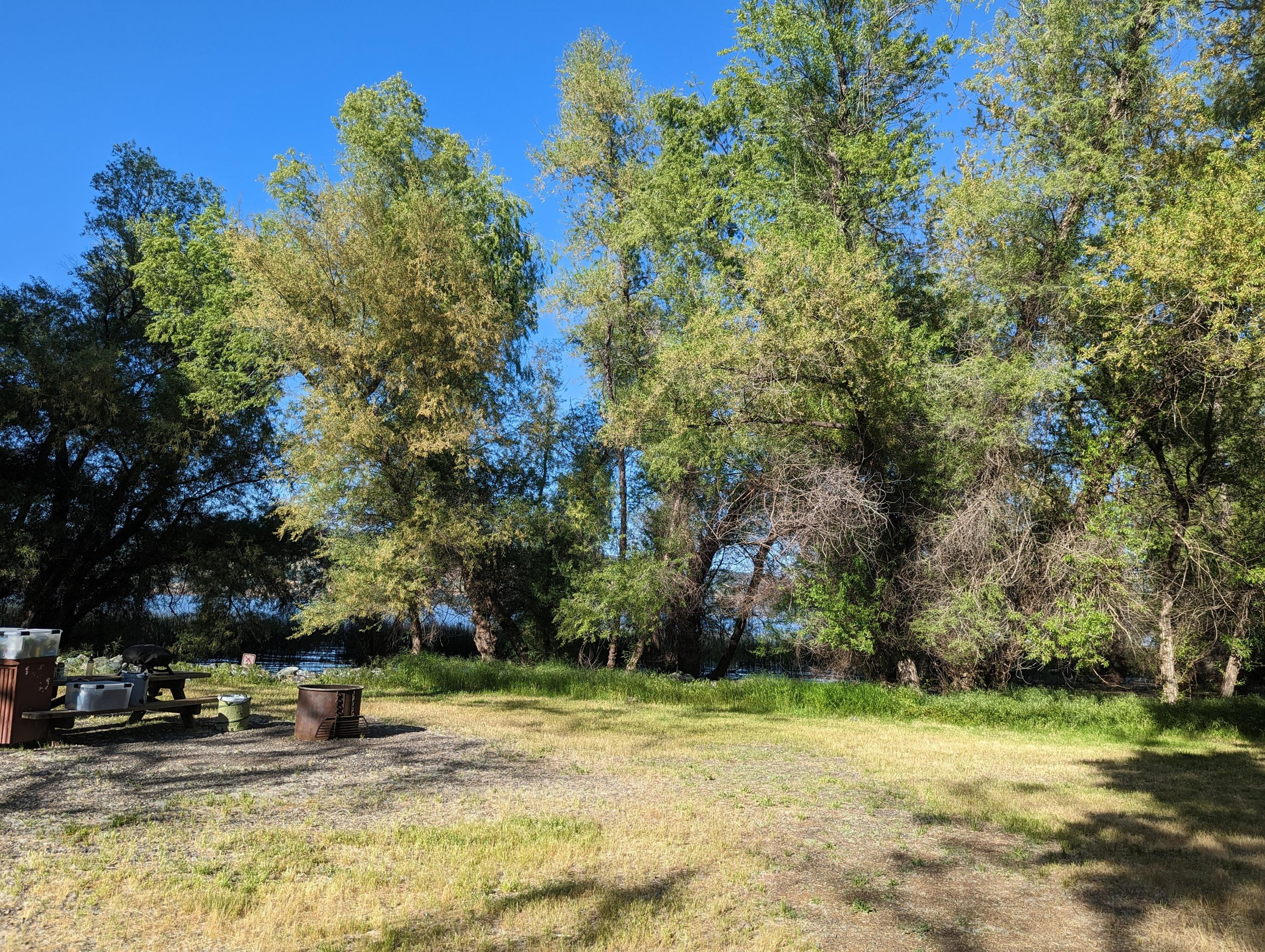

We pulled into Gualala Point at 10pm on a Friday. Pitch black, rain already falling, a site on the Sonoma coast we had booked blind six months earlier.
Justin got out to check the trailer. A raccoon jumped straight into our van, stole Eliza's mac and cheese, and bolted. He chased it into the woods and wrestled the container back. Then the rain came harder. All night.
That is what choosing a campsite actually looks like. Not walking the loop with a clipboard, weighing site 41 against site 43. You pick a number off a map at 8am on the morning a booking window opens, six months out, while a few hundred other people race you for it. Then you meet the site in the dark.
381 reservations. 233 of them cancelled. 161 trips, 395 nights, 84 campgrounds since 2004. Almost none of those sites were chosen standing in the campground.
So here is the other version of this advice. What we look at, in order, while the site is still just a number on a map.
Start with the photos of the actual site
Not the campground hero shot. The individual site. Most reservation systems photograph every numbered site, and we have collected photos for more than 96,000 of them, so the site you are considering probably has a picture on its page here.
Four things to read off it. Is the ground actually level, or does the pad tilt toward the road. Is there anything between you and the neighbors, brush, a berm, a stand of trees, or is it open lawn. Where is the shade, and what time of day was the photo taken. And then the part nobody admits to: do you like how it looks. Trees, water, rock, meadow. You are going to be staring at it for three days.
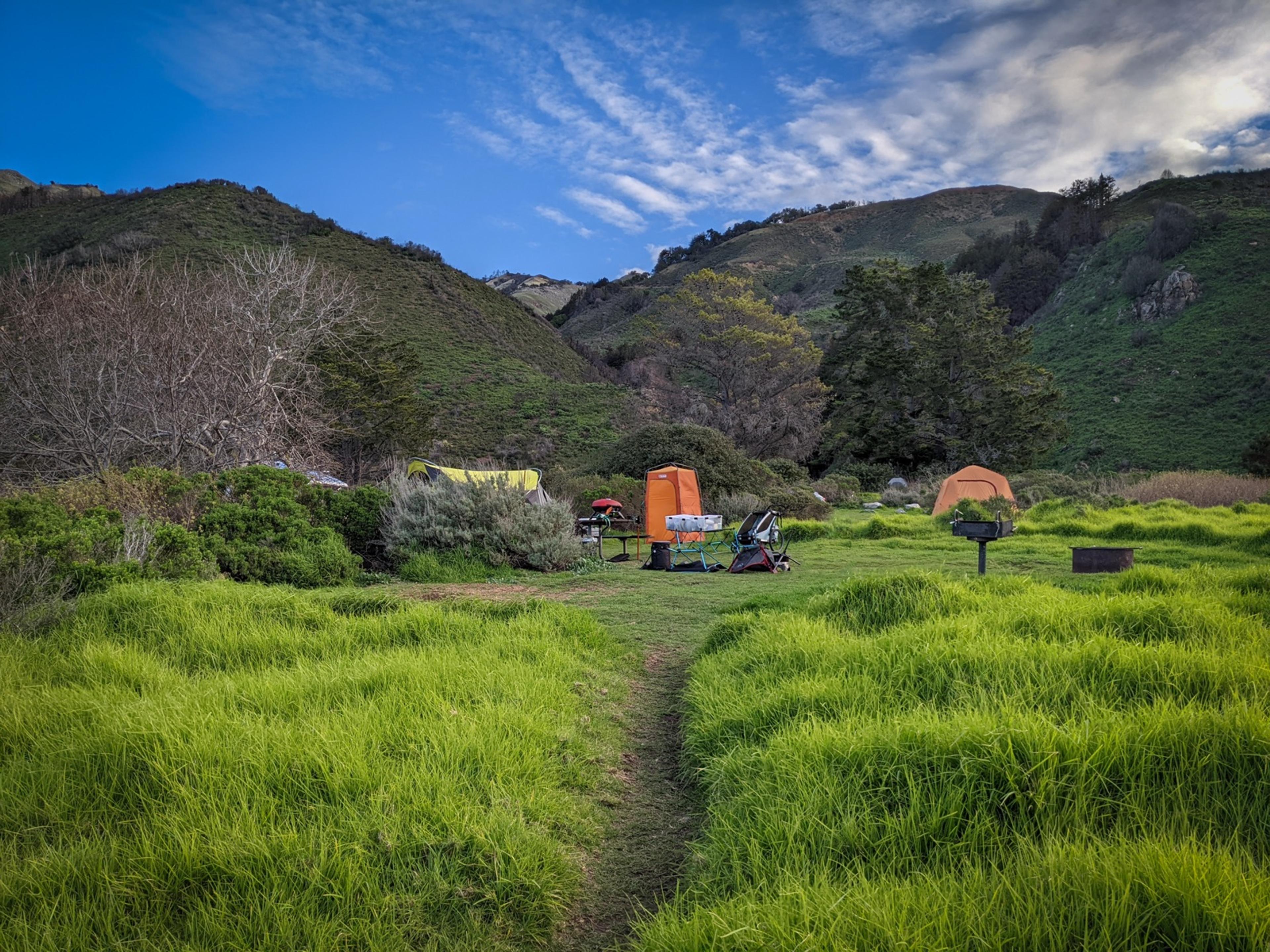
A photo will not tell you everything. It was taken once, from one angle, in one season. But it settles the level-ground question faster than any amount of reading.
If the site you want has no photo, that gap is fixable. Add one after your trip. The families booking that same site next spring are guessing at exactly what you are guessing at right now, and one photo from a camper who was actually there is worth more than anything we can scrape.
Then drop into Street View
Most campground loops have never seen a Google camera. But some have, and when the little yellow figure drops onto a loop road, it is the closest thing to walking the campground before you book.
You get spacing, tree cover, how far the site sits off the road, whether the ground is dirt or grass or gravel, and how big the gap to the neighbors really is. Thirty seconds of dragging down a loop road tells you more than the amenity list ever will.
Check the best-site list before you pick
Campers give away their favorite sites constantly, in reviews, buried in a sentence about something else. "Site 62 is the one you want." "Avoid the 30s, too close to the road." We run every review we have through that filter and pull the site numbers out. That is 21,263 site recommendations across 5,245 campgrounds so far, on the campground page, with the reason attached.
It is the fastest shortcut in this whole post. Somebody already camped in the site you are considering and said what they thought of it.
Find the low ground before you find the view
Every loop has a low point. Water collects there.
Satellite view tells you more than the site photos do. Bare packed dirt where the rest of the loop is grass usually means water sits there. A site on the inside of a curve that bends downhill collects everything the road sheds.
If the forecast turns, take the high side even when the view is worse. We ran a tarp over the picnic table at Gualala with a pair of adjustable poles and guy lines, and the whole kitchen stayed usable through a night of hard rain. More on that in camping in the rain.
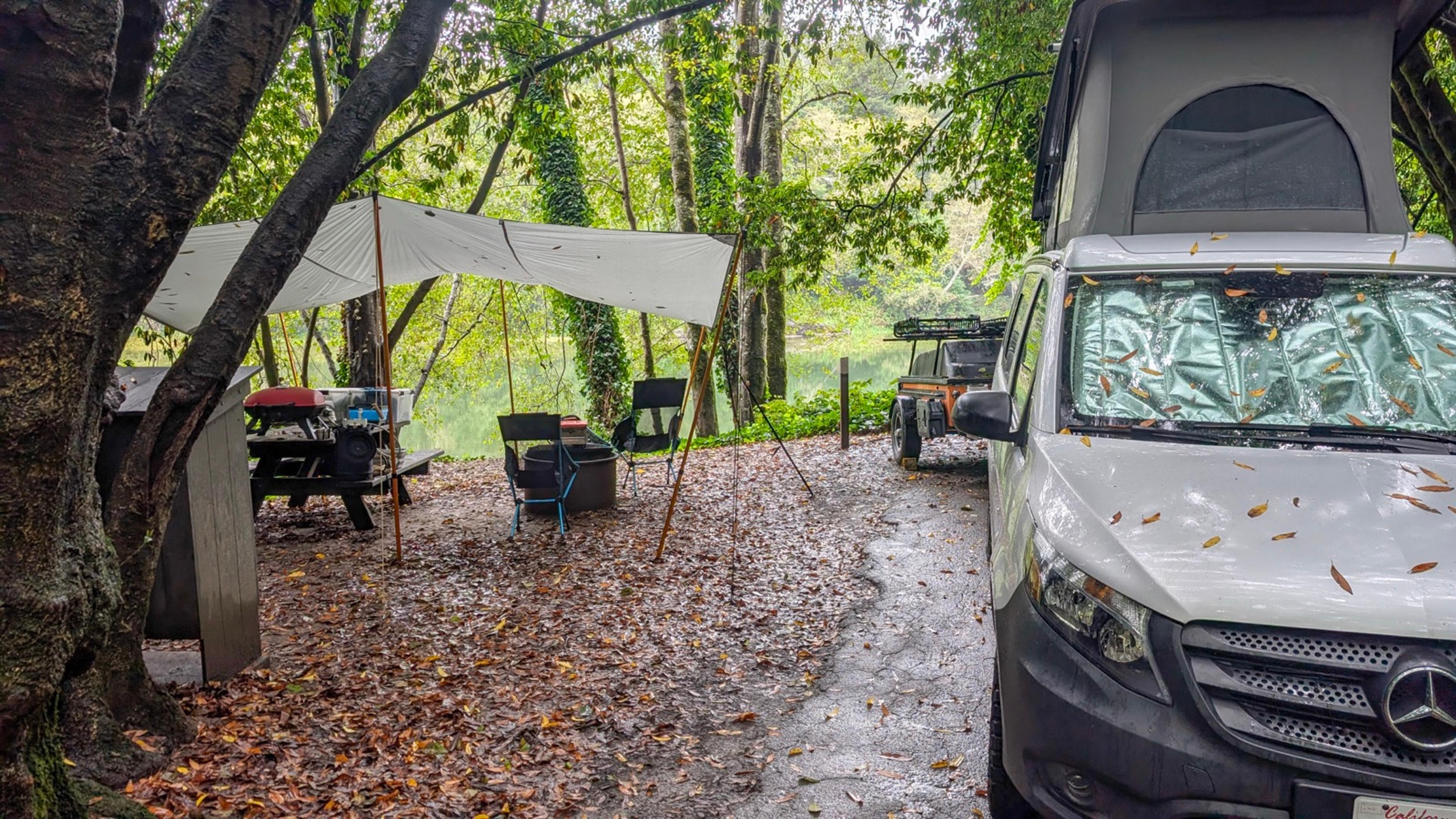
Then get as close to the water as you can
If the campground has a river, a creek, a lake, or a beach, the sites nearest it are almost always the best ones, and they go first for a reason.
With kids it is not a nice-to-have. It is the whole trip. A site where they can get to the water on their own, in sight, without a road crossing or a ten-minute walk, buys you entire afternoons. They go back and forth twenty times. You sit in a chair.
The tension with the section above is real, and you resolve it site by site: closest to the water often means lowest in the loop. Take the waterfront site in July. Think harder about it in February with rain in the forecast.
The site's furniture decides your layout
The fire ring, the table, the driveway, and the tent pad are bolted to that piece of ground. Everything else you bring is negotiable.
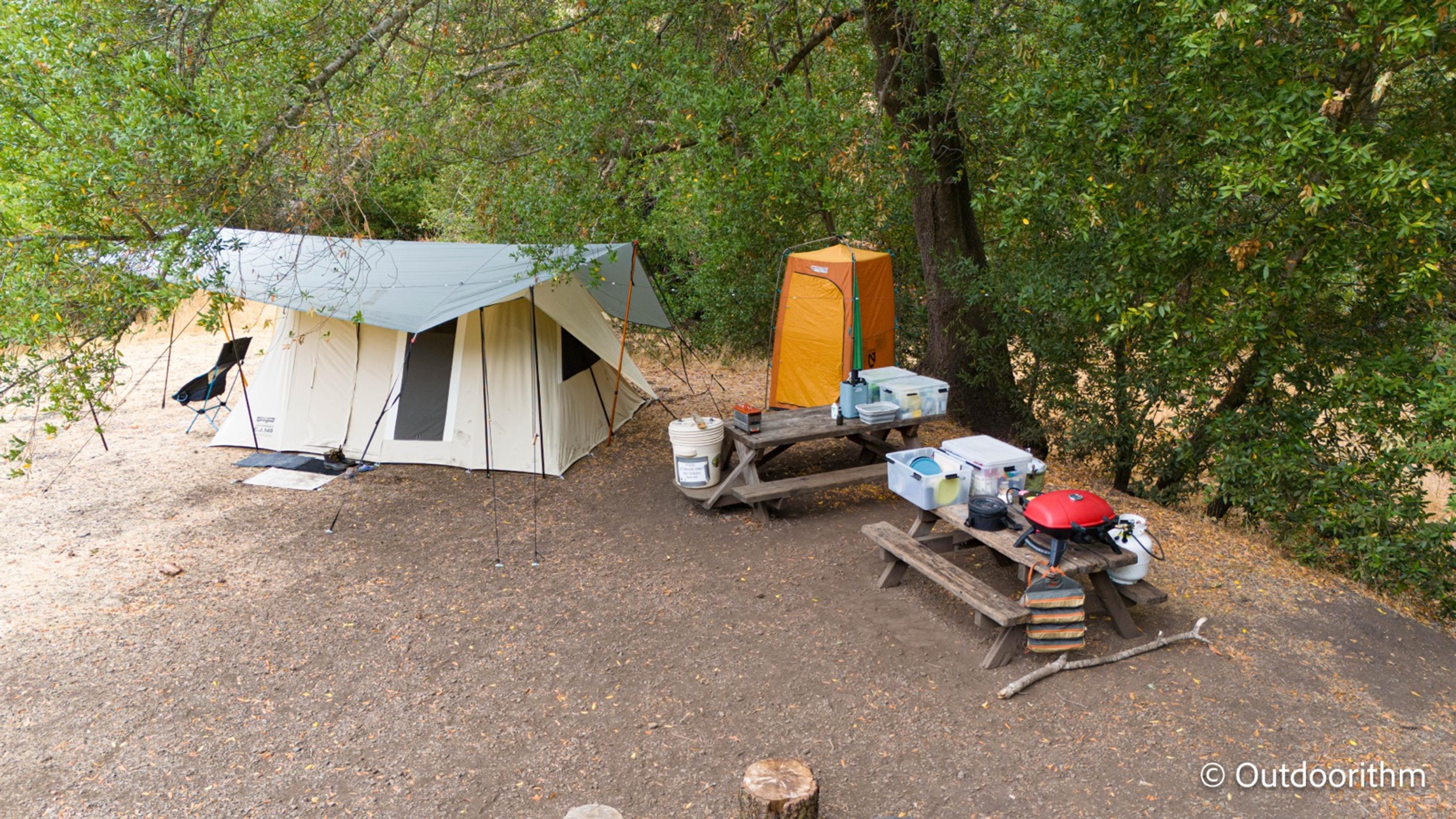
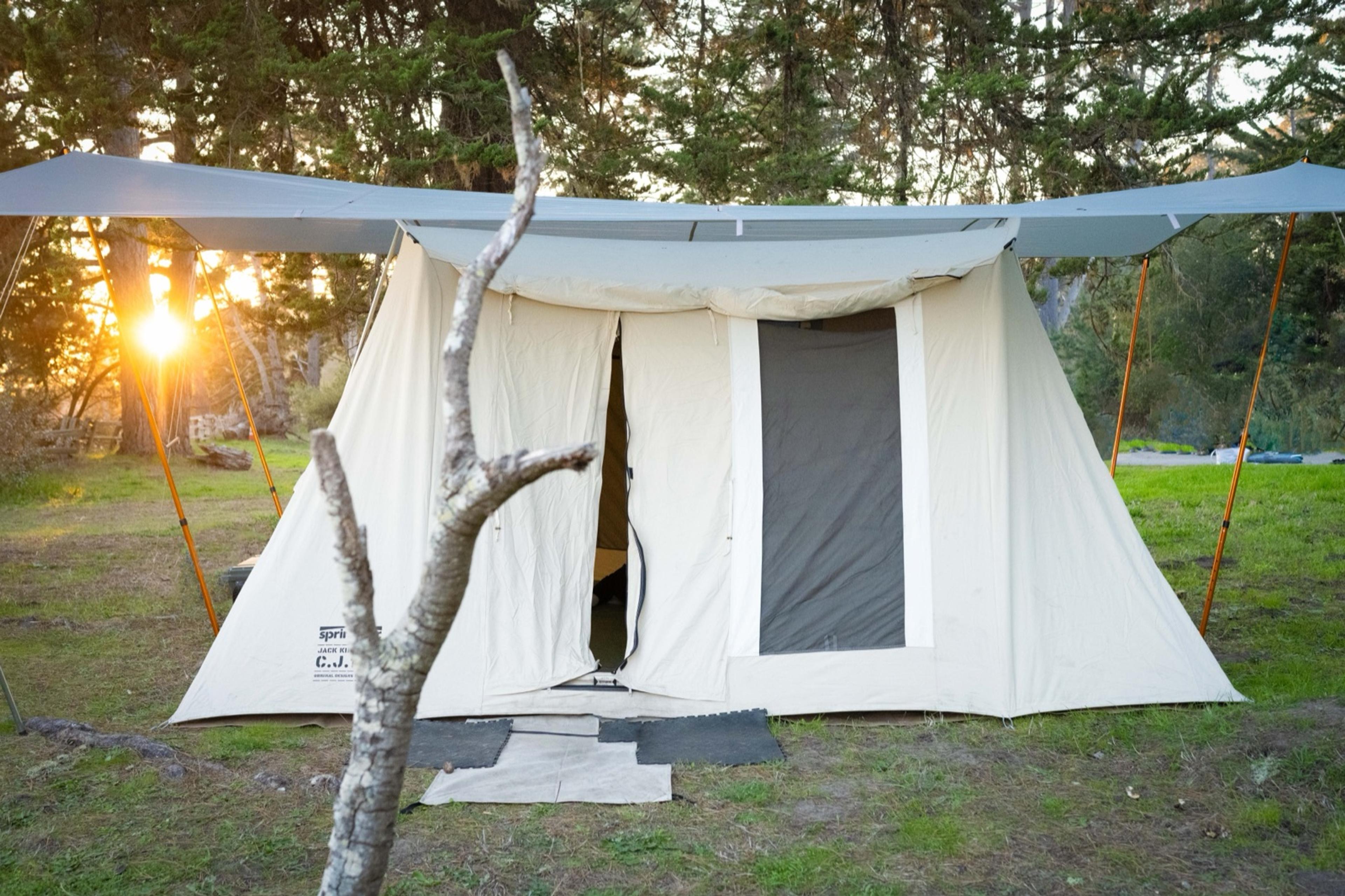
Our tent is a Springbar Classic Jack 140, which is ten feet by fourteen. So the question is never whether a site is big enough. It is whether there is a fourteen-foot rectangle of flat ground on it that isn't the driveway. Listings publish tent pad dimensions and driveway length, and if you tow anything, that driveway number is the one that ends trips before they start. Measure your rig once and keep the number in your phone.
Look at where the fire ring sits relative to the flat ground, too. At Kirk Creek ours was set well out in the grass, which is where you want it. Smoke that drifts into canvas stays in the canvas.
Take the outside of the loop
Campground loops are circles, and the sites on the inside of the circle face each other. You are in a fishbowl. Perfectly fine, and if your kids want to run with a pack of other kids for two days it is arguably better, but you will be watching four other families eat dinner while they watch you.
The outer edge backs onto whatever the campground backs onto. Trees, a hillside, a creek, nothing. One side of your site is nobody's.
The best of all are the sites at the far end of a loop, past the point where most people bother to drive. Fewest neighbors, least through-traffic, most privacy. Those are the numbers we look for first on any map.
Sun and shade are seasonal. The listing photo is not.
We camped at El Capitan State Beach in April and again in July of the same year. Same bluff, same trees, same site numbers.
Planning where to go next? Camp Sage knows every campground we track. Ask it anything, from drive times to which loops have shade.
Ask Camp Sage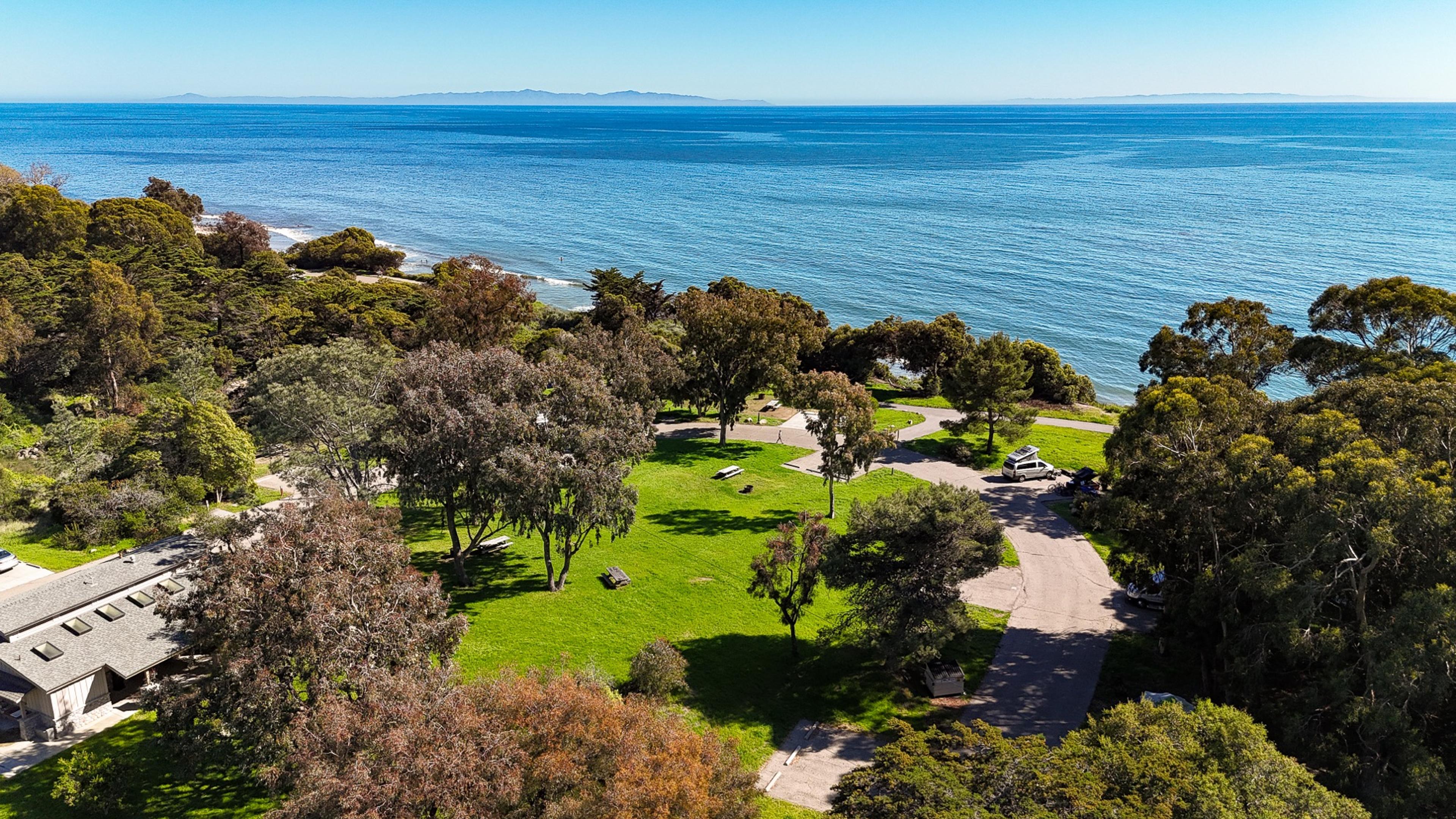
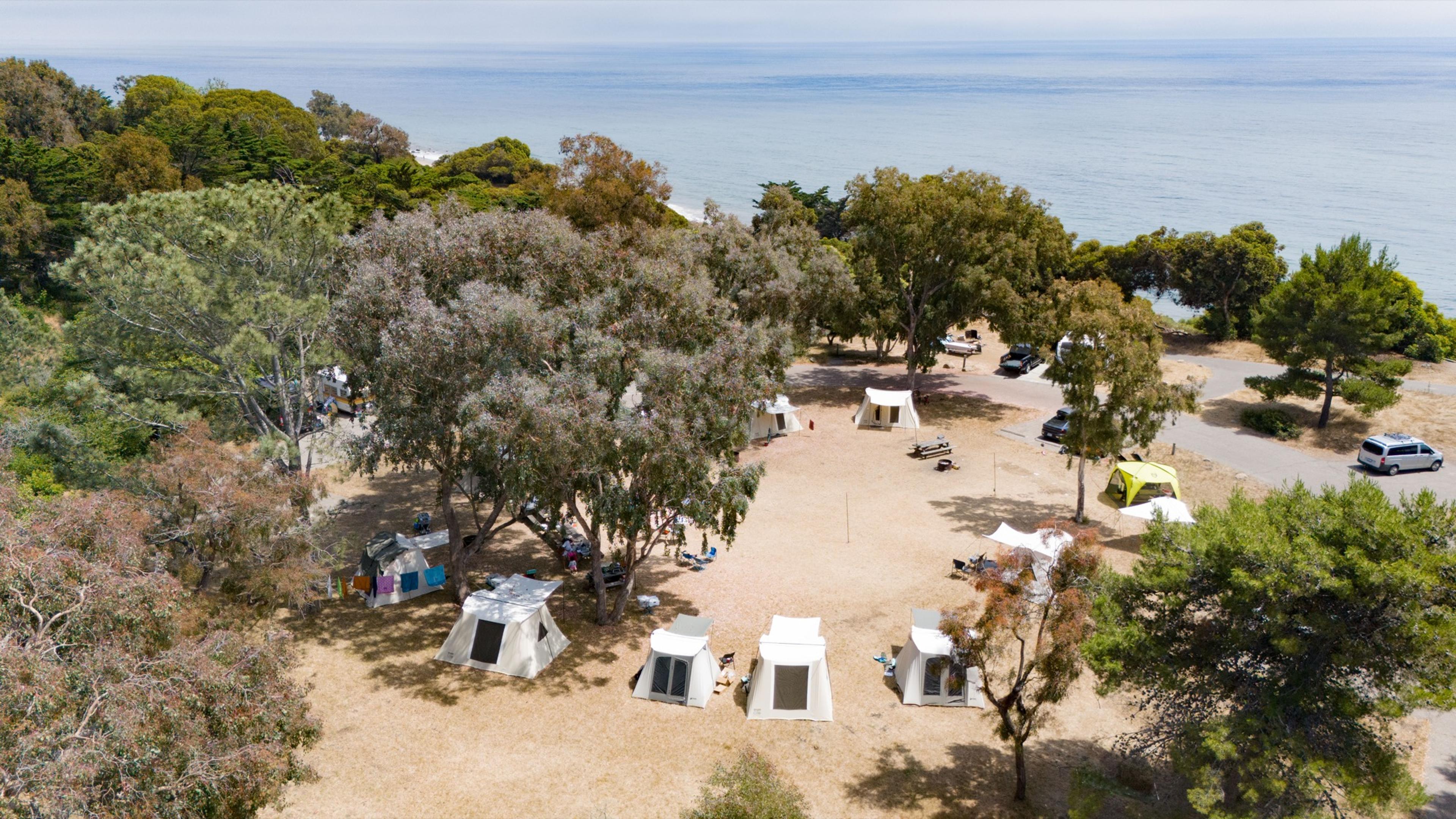
In July, a shaded site beats a view site and it isn't close. In February on the coast, the shaded site never dries out and the one that catches morning sun is the one you want. Check which season you are looking at.
The site with the view is the site with the wind
Kirk Creek sits on a bluff over the Pacific with Highway 1 running along the back of it. It is the most beautiful campground we know and we have completed two trips there out of sixteen bookings. Those bluff sites are exposed to everything the ocean sends.
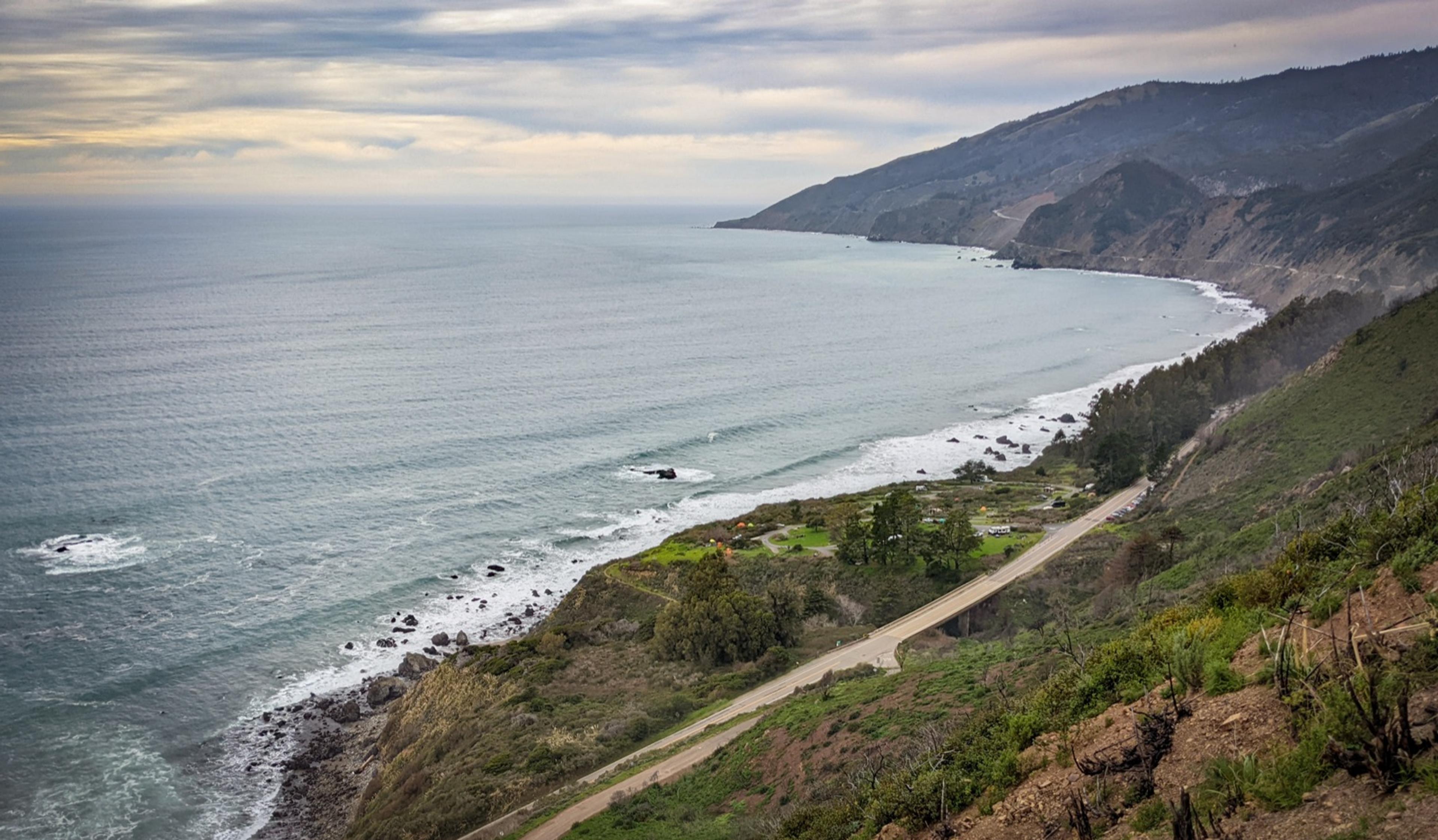
That is a trade, not a warning. Take the view. Then stake for it: every guy line out, stakes at an angle, the tent oriented so the narrow end faces the wind. We wrote up the tent setup that survives the night after learning that the slow way.
New Brighton is our most-visited campground, nine trips in. The premium sites look out over Monterey Bay and we have watched dolphins from our camp chairs. They also sit up where the wind comes off the water.
Now find the noise
Bathrooms first. With kids you want to be close, and you do not want to be that close. Restroom buildings run bright lights all night and pull foot traffic from the entire loop, so two sites away means doors banging and headlamps sweeping your tent until midnight. A short walk, three or four sites off, is the sweet spot. Same math for the playground, the group site, and the dump station.
Then look outside the campground. A lot of campgrounds sit near a highway or a rail line, and this is the mistake people make: they assume a forest absorbs it. It does the opposite. A quiet campground has no competing sound, so a truck downshifting a mile away arrives in your tent at 2am with nothing to hide behind. On the map, find the highway and the tracks, then count sites away from them.
Neighbors you cannot plan for, and shouldn't. 7am on a Sunday at Sugarloaf Ridge, we woke up to voices ringing across the campground. "IT'S GONNA BLOW!" "Dad! Dad, I got one on!" A family two sites down, boys fishing the creek at dawn, yelling back to their camp. My first reaction was annoyance. My second was remembering what it feels like to share a first with your kid.
Later their generator ran for thirty minutes. Their trailer had duct tape holding the panels together and a missing side mirror. They were making the outdoors work with what they had, at full volume, without checking whether they were allowed to.
What the map can't tell you is what's underneath you
A 40-degree night at Pinnacles taught us that cold comes straight up through the ground, and no site number warns you about it. That is a sleeping pad problem and a ground tarp problem, not a site-selection problem.
Ground surface changes how you set up, though. Decomposed granite takes a stake beautifully. Beach sand does not hold one at all. Hard-packed clay in August will bend anything you own, so bring a mallet.
And the toddler who says "Daddy, I threw up" at 1:30am is not on the map either. You take the site you get and you handle the night you get.
Book two. Decide later.
Our 61% cancellation rate is not indecision. It is how you camp in California. When a booking window opens, we take the best site available in the first few seconds rather than losing the campground entirely while we study the map. The research happens after you have something locked.
Cancellations are constant. Set an availability alert on the campground and move when the site you actually wanted frees up. Ask Camp Sage what a specific loop is like before you commit. And cancel the one you don't need before the deadline so it goes back into the pool for somebody else. The full version is in how we book sold-out campgrounds.
FAQ
How do I choose a campsite when I'm booking online months ahead?
Work in this order: site photos, Street View if the loop has it, other campers' site recommendations, drainage, water access, tent pad and driveway dimensions, loop position, sun and shade for your season, wind, then noise sources. Most of it is readable from a map and a satellite view before you ever pay.
Is a campsite near the bathroom a good idea?
Three or four sites away is better than two. You keep the short walk and lose most of the bright lights, door noise, and foot traffic.
Which campsites are the most private?
Sites on the outer edge of a loop, and especially the ones at the far end of a loop. Inside-the-loop sites face every other inside site, which is fine but public.
Do campgrounds near highways actually get road noise?
Yes, and more than people expect. Campgrounds are quiet enough that highway and railroad noise carries with nothing to mask it. Check the map for roads and tracks and pick sites on the far side of the campground from them.
What makes a good tent site specifically?
A flat rectangle at least as big as your tent footprint, on ground that sheds water instead of collecting it, far enough from the fire ring that smoke doesn't settle into the fabric, and out of the direct path of wind if the site is exposed.
How far ahead do the good campsites go?
California state parks open six months out to the day, and popular coastal campgrounds can be gone in under a minute. National forest and national park campgrounds on Recreation.gov vary by park. Check the exact window before you plan around it.
We never saw that Gualala site until morning. Rain dripping off the redwoods, the river moving past the picnic table, Eliza on the beach demanding seven more nights instead of one. We picked it blind, six months out, and lost the mac and cheese to a raccoon before we had unpacked a single bag.
Read the map. Then leave anyway.

Want a personalized version of this guide?
Camp Sage tailors recommendations to your dates, group, and gear — free.
Join our newsletter to get more resources and tips to help your family camp with confidence!