How to Keep Mosquitoes Away While Camping (The System We Use With Four Kids)

Justin is our early warning system.

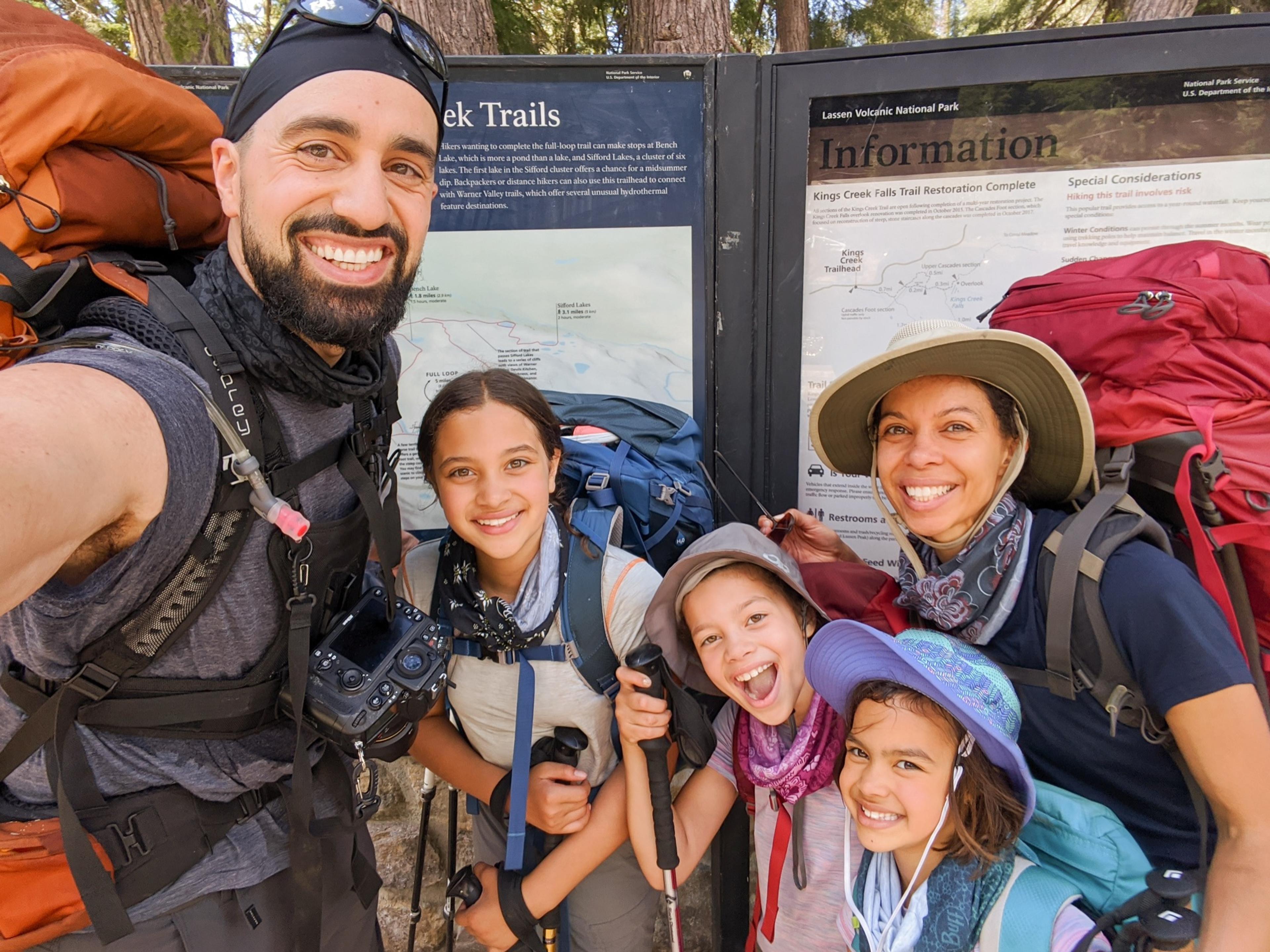
He's a mosquito magnet, the one they always find first, and in our family the moment he starts swatting is the signal for everyone else to cover up. Our canary in the coal mine. We were a mile above our backcountry site in Lassen, working our way down the Kings Creek trail in early summer with our three older girls, when he reached back and scratched his shoulder through his shirt. Eliza, our youngest, wasn't born yet.
We had rushed out of the house that morning the way we always do. No time to treat our clothes with permethrin before we left. And we'd talked ourselves into skipping the skin repellent too, because everyone knows mosquitoes only bother you when you're sitting still at camp. Right?
Wrong. The snow had just melted, the meadows were wet, and as the light dropped toward dusk the mosquitoes came up off the creek and found us on the trail. First Justin's shoulder. Then his bare arms. Then everyone. We hustled the last half mile down to camp, dug the picaridin out of a pack and slathered it on, fired up our Thermacell units, and beat them back. But not before every one of us was marked up and itching.
That was the trip that taught us the lesson for good. Now we make the time for permethrin, every trip. And if we forget, we pack the bottle in the car and treat our clothes the minute we reach camp, early enough that they dry before dark.
“Are mosquitoes immune to repellent now?”
We're not the only ones who learned the hard way.
A woman wrote to us a week after her first wedding anniversary. Her husband had planned the whole trip to Clear Lake, Manitoba: swimming, hiking, a sunset boat cruise. They bought Deep Woods Off at the camp store, sprayed it on vigorously, set off on a deep-woods hike, and got mauled. “Every part of my body is covered in mosquito bites,” she wrote. “There is even one on my ear.” Her sister had a theory: mosquitoes are resistant to repellent now. The spray just doesn't work anymore.
She wasn't wrong that the repellent failed her. She was wrong about why.
Mosquitoes aren't immune to your bug spray. Repellents don't kill anything and never claimed to. They mask the carbon dioxide and skin chemistry that tell a mosquito “warm meal, this way,” and a single coat rubbed thin over sweaty skin on a humid trail masks that signal for about as long as it takes to walk past the trailhead sign. The deep woods hold far more mosquitoes than her backyard in the city. Same spray, very different swarm.
Here's what we told her, and what we run now without exception. Bug protection isn't a bottle. It's a system. Three layers, and not one of them is the can of Off at the register.
The mistake almost everyone makes
You wait until the mosquitoes find you, then you reach for a single can of DEET and spray your forearms.
By then you've lost. You're protecting maybe 30 percent of your skin, the spray is already wearing off, and the bugs landing on your shirt, your back, your ankles, the strip of neck under your hat, are biting straight through cotton. One product, applied late, covering a fraction of you. That isn't a defense. It's a snack invitation with a light deterrent on two arms.
The fix is to stop thinking about the moment of the bite and start thinking about the whole envelope around your body: your clothes, your skin, and the air at your campsite. Each one gets its own layer.
Layer 1: Treat your clothes before you leave home (permethrin)
This is the layer that changes everything, and it's the one most campers have never heard of.
Let me tell you why we never skip it anymore.
Our oldest, Siena, was about four. We were doing a long day hike in Shenandoah, and she rode most of it asleep in the backpack carrier, taking in the Blue Ridge between naps. At the bottom we hit a creek, and she and her little sister stripped down and swam around in it, having the time of their lives. Somewhere in there a tick got onto her clothes. Two days later, combing her hair at home, we found it: an engorged tick dug into her scalp. The absolute worst. We worked it off carefully and sealed it in a bag, in case she developed any sign of Lyme and we needed it tested.
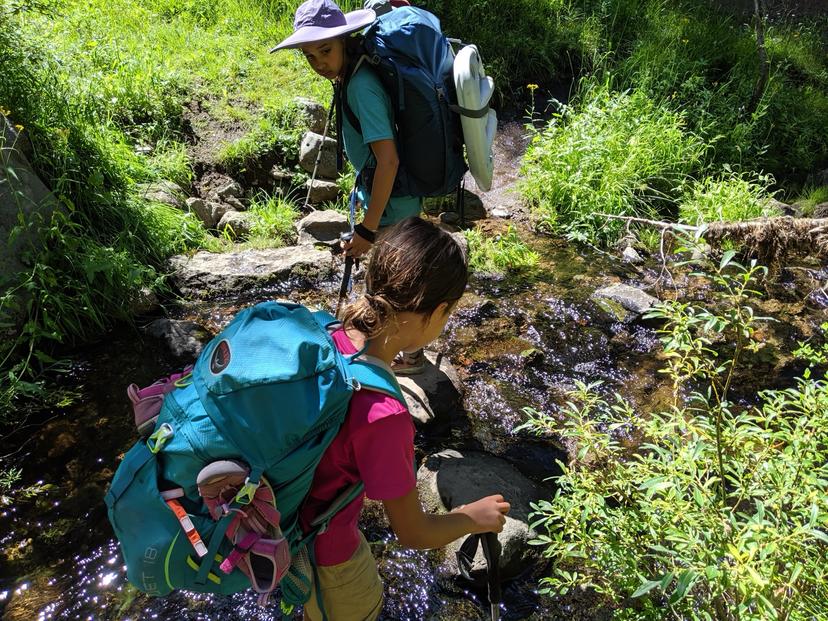
That tick rode in on her clothing and climbed to her skin. Permethrin is the layer that stops exactly that.
Permethrin is not a skin repellent. It's a clothing treatment. You spray it on your shirts, pants, socks, and hat at home, hang them to dry completely, and the fabric itself turns hostile. It doesn't just repel. It kills on contact. Permethrin is chemically related to the compound in chrysanthemum flowers, and it overstimulates an insect's nervous system into paralysis fast enough that a tick crossing a treated sock often never reaches skin at all.
A do-it-yourself spray treatment lasts about six weeks, or six washes, whichever comes first, then you redo it. (Pre-treated clothing you buy already impregnated holds up far longer, around 70 washes, if you'd rather treat once and forget it.) The CDC, the EPA, and the U.S. military all back permethrin-treated clothing. The military doesn't issue gimmicks.
Two rules that matter: let the clothes dry all the way before anyone wears them, and never put permethrin on skin. On fabric it's your best friend. It belongs on fabric only.
We treat the girls' clothes the night before a trip and hang them off the garage door. We use the Sawyer Permethrin Pump Spray ($18.50 at REI). One 24-ounce bottle treats several outfits.
Layer 2: Picaridin on the skin you can't cover (skip the DEET)
For the skin that's still exposed, hands, face, the back of the neck, you want a topical repellent. Most people grab DEET out of habit. We switched to picaridin years ago and never looked back.
The case for it isn't close:
- It works as well as DEET. In field tests, 20 percent picaridin holds for 8 to 12 hours against mosquitoes, matching or slightly outlasting a 30 percent DEET product.
- It's gentler. No sting on sensitive skin, and it's odorless instead of that chemical reek.
- It won't destroy your gear. This is the one nobody tells you. DEET melts plastic. It clouds sunglasses, eats watch bands, smears the finish off a camp chair, and degrades synthetic fabric, the exact rain jacket and tent you spent real money on. Picaridin leaves all of it alone.
- It actually handles no-see-ums. Those tiny biting midges at the coast that slip through everything? DEET barely touches them. Picaridin repels them for 8 to 14 hours. If you've ever been eaten alive at a beach campground while doing everything “right,” that's probably why.
We carry the Sawyer Picaridin Lotion ($10.95 at REI). Lotion over spray on purpose: you control where it goes, it doesn't blow back into a kid's face, and one application covers more skin. It's the bottle we dug out of the pack on the Kings Creek trail. We just wish we'd put it on before the mosquitoes reminded us.
Packing for a trip? Our free interactive checklist tracks everything, tent to toothbrush, so nothing gets left in the garage.
Open the camping checklistLayer 3: Own the air around camp (Thermacell)
The first two layers travel with your body. The third one stakes out territory.
A Thermacell heats a small cartridge and vaporizes repellent into the air, building a roughly 15 to 20 foot bubble that mosquitoes won't fly into. Set it on the picnic table at dusk and the space where you actually sit, eat, and let the kids run goes quiet. In controlled studies, metofluthrin emitters like these cut mosquito landings by 90 percent or more.
Two honest caveats, because we'd rather you trust us than oversell it:
- Wind is the enemy. A real breeze blows the protective cloud away. On an exposed bluff, the Thermacell underperforms. On a still, muggy evening at a lake, when you need it most, it shines.
- It protects a place, not a person. Walk off to the bathroom and you leave the bubble. It's for the stationary hours at camp, not the hike.
At a car-camp site we run the Thermacell E55 (check price at Amazon): rechargeable, no fuel cartridge to hunt down, quiet. For backpacking we carry a smaller packable unit, the kind we yanked out of our bags at Kings Creek the second we dropped our packs; these days that's the Thermacell EX90, rugged enough to clip to a pack and run for nine hours. Either way, the move is the same: light it before the bugs arrive, not after.
The add-ons that close the gaps
The three layers cover most trips. Two extras handle the brutal ones.
A head net for deep-woods hikes when the swarm goes biblical. It looks ridiculous. You will not care. Keeping mosquitoes off your face and out of your ears turns a miserable hike into a fine one. We like the Sea to Summit Ultra-Fine Mesh Mosquito Head Net (check price at Amazon): it packs down to nothing and, just as important, the mesh is fine enough to stop no-see-ums, which a standard mosquito net is not. At the coast, a regular net lets the little biters walk right through. You want “no-see-um mesh,” 16 to 18 holes per inch or finer. There's a version with permethrin-treated mesh too, which is Layer 1 and the head net in one piece.
A screen shelter over the picnic table for a base camp you'll sit at for days. We use the NEMO Victory Screenhouse (check price at Amazon). It pitches over a standard campground table, has built-in gutters so it doubles as rain cover, and gives the kids a bug-free spot to play cards while dinner cooks. On a long stay, it's the difference between hiding in the tent and actually living at your site.
Bug repellent FAQ
What about the kids?
Permethrin-treated clothing is fine for children. There's no age limit on the treated fabric, and because the chemical is on the cloth and not their skin, it keeps little hands out of it. Picaridin is approved for kids too. The one to watch is oil of lemon eucalyptus, the natural repellent the CDC actually endorses (most “natural” sprays it does not): it works for a couple of hours, but it is not for children under three.
Do natural repellents work?
One does. Oil of lemon eucalyptus is the only plant-based option with real CDC backing, and a 30 percent formula gives you around six hours. Citronella candles, wristbands, and most essential-oil blends are closer to wishful thinking. If you want natural and effective, that's the one. Just respect the under-three rule.
Are the mosquitoes really getting worse?
They're not evolving past your spray the way that woman's sister believed. But application is everything. A thin coat, sweaty skin, and a dusk swarm off a wet meadow will beat any single product. Layers beat a swarm. One can never will. We have the bites to prove it.
Back at Kings Creek
We finally got our camp set that night, kids slathered in picaridin, Thermacells humming on a rock, the worst of the swarm held off at the edge of the firelight. Everyone itching, but laughing about it. We'd done it backwards, protected ourselves after the bites instead of before, and the mountains made us pay the toll on the way in.

So here's the order we'd hand anyone the day before a buggy trip, the one we earned the hard way:
Spray your clothes with permethrin and hang them to dry tonight. Pack picaridin and put it on before the hike, not after. Drop a Thermacell on the table at dusk. Throw a head net in the bag for the deep woods, and a screen shelter in the car if you're staying a while. Those are the four lines we'd add to any camping checklist.
One caveat before you pack: none of this touches yellow jackets. Repellents don't work on them at all. If your trips run into meat bees instead of mosquitoes, that's a different playbook, and we wrote up what actually works against yellow jackets at camp.
Do that, and the bugs stop being the thing you remember about the trip. Which is the whole point. You didn't hike down there to fight mosquitoes. You hiked down for the creek and the falls at the bottom, and for a night sky so thick with stars it stops you cold. The bites fade in a week. The girls will remember the mountains.

Want a personalized version of this guide?
Camp Sage tailors recommendations to your dates, group, and gear — free.
Join our newsletter to get more resources and tips to help your family camp with confidence!