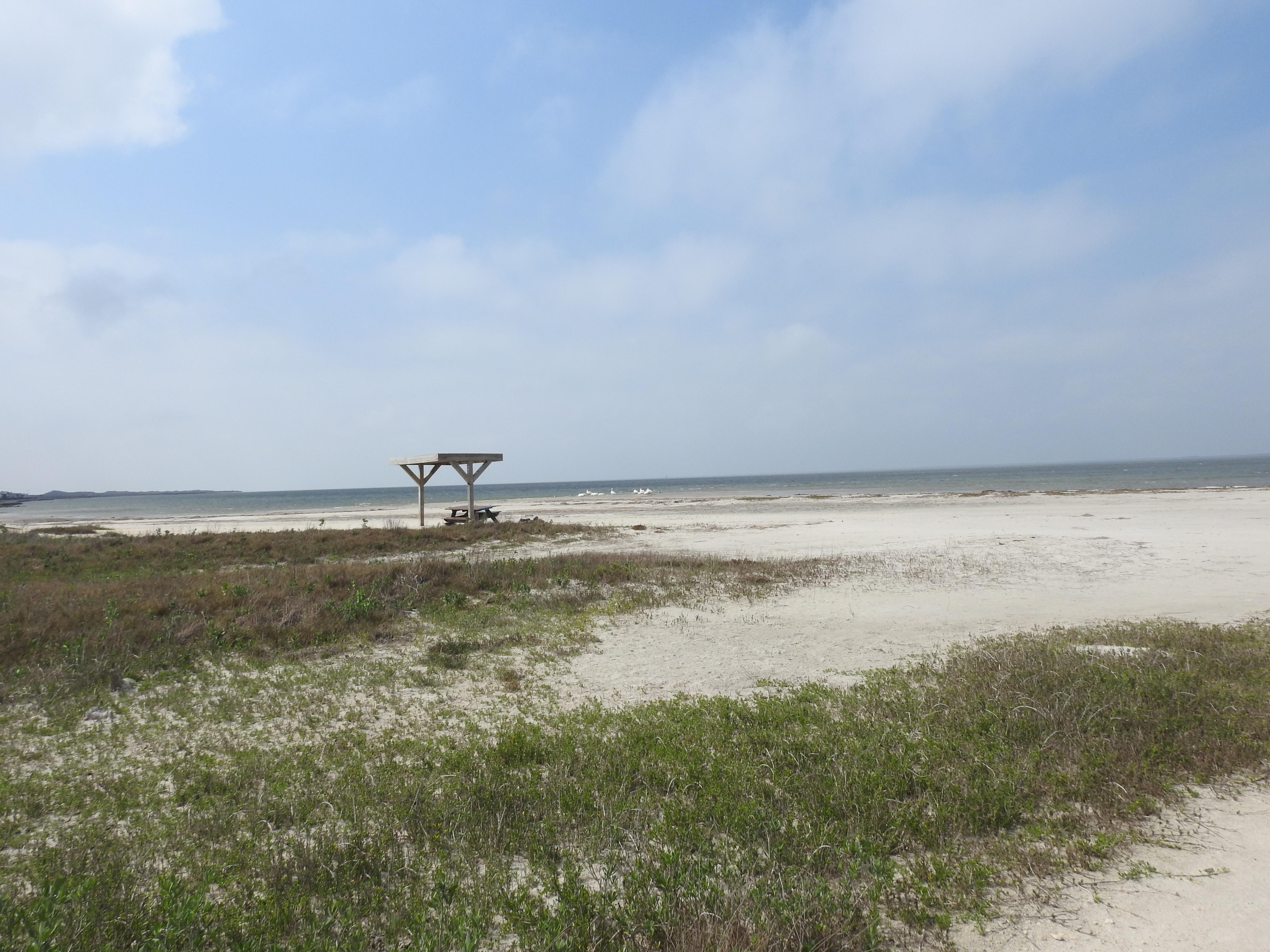
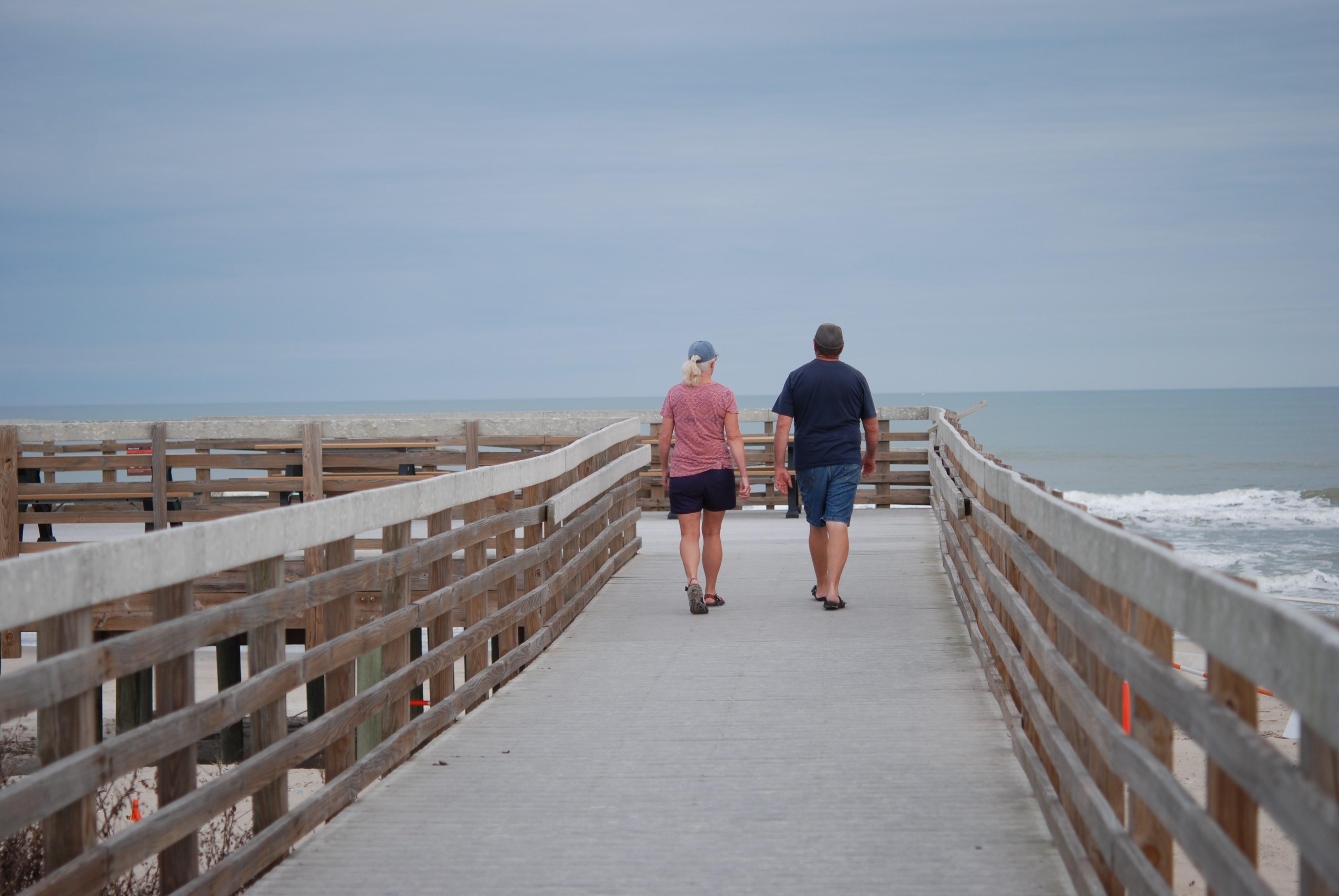
Mustang Island State Park sits on a barrier island five miles of beach south of Corpus Christi, where you can pitch a tent directly on the sand or park an RV with full hookups. The park has 50 sites total and charges $4–7 per night. Primitive beach camping delivers more space and a front-row view of the Gulf, while developed sites cluster tighter together on pavement with grassy pads.
Mustang Island State Park accommodates a wide variety of camping experiences, including primitive beach camping, RV camping with hookups, and tent camping.
Weather and SeasonsFall delivers the best conditions. October through November brings daytime highs in the mid-60s to mid-80s, lower humidity, and long sunny stretches. Surf and bay fishing pick up as water cools, and fall migration floods the shoreline with shorebirds and waterfowl from September through November. Crowds thin sharply after Labor Day, making it easier to snag a beachfront primitive site. Summer runs hot and humid, with highs in the upper 80s and low 90s. Good for swimming, less comfortable for hiking. Winter sees temps between 50 and 60, fine for walking the beach but too cool for most to swim. Coastal winds blow year-round and can gust hard, especially in spring.
ElevationThis barrier island sits at sea level, where land and ocean merge in a constantly shifting landscape shaped by wind, waves, and time.
Weather data by Open-Meteo.com, licensed under CC BY 4.0, processed by Outdoorithm.
Natural Features and SceneryThe park occupies a low-lying barrier island at 3 feet elevation, shaped by Gulf currents and steady wind. Dunes rise and fall behind the beach, stabilized by sea oats and coastal grasses. The shoreline stretches for miles, and the sand holds shells, ghost crabs, and the occasional jellyfish washed in with the tide. Maritime forest and coastal prairie grow inland from the dunes, creating a transition zone between beach and bay. Dolphins show up in the surf. The landscape shifts constantly. Sand moves, storms reshape the dunes, and tar balls appear on the beach depending on currents.
Geological RegionThis dynamic barrier island represents millions of years of geological artistry, where the relentless Gulf of Mexico has sculpted a stunning landscape of shifting sands and protective dunes. The island serves as nature's buffer, protecting the mainland while creating a unique ecosystem where maritime forests, coastal prairies, and beach environments converge. Wind-carved dunes rise and fall like frozen waves, their soft sands holding the stories of countless storms and calm days alike.
Scenic ViewsViews of the Gulf of Mexico from campsites. Reviews describe sunrise and clear night skies as highlights.
Lodging & AccommodationsThere are no details about hotel-style lodging options within the park.
Programs & ActivitiesThe park offers guided tours.
 4.24
4.24