Florida Caverns State Park Campground
 4.67136 reviews
Florida Caverns State Park Campground
Real-Time Availability
Select a month, then check for open campsites
S
M
T
W
T
F
S
Quick Facts
157 ftPrice
Varies
Booking
Reservable
Sites
Varies
Season
Year-round
Cell
No Service
Pets
No Pets
Florida Caverns State Park Campground is a popular campground. Set up a free alert to catch cancellations.
Real-Time Availability
Select a month, then check for open campsites
S
M
T
W
T
F
S
Quick Facts
157 ftPrice
Varies
Booking
Reservable
Sites
Varies
Season
Year-round
Cell
No Service
Pets
No Pets
Florida Caverns State Park Campground
No fees available
Campsite Fees
Standard Site Fee$0.00
Hookup Site Fee$0.00
Premium Site Fee$0.00
Hike and Bike Site Fee$0.00
Group Site Fee$0.00
Food Storage Locker Fee$0.00
Get Notified When Available
We'll monitor this campground and alert you the moment sites become available.
Free to start · paid plans add 2-min scans
256,000+ sites monitored · Email, SMS, or in-app notifications
Learn more about alerts →Share this campground
Florida State Parks
ProviderBeen here recently?
Campers like you keep our info accurate. Fix a detail in under 30 seconds.
Campground Map
Florida Caverns State Park Campground
Florida Caverns State Park Campground
30.8150, -85.2319
About Florida Caverns State Park Campground
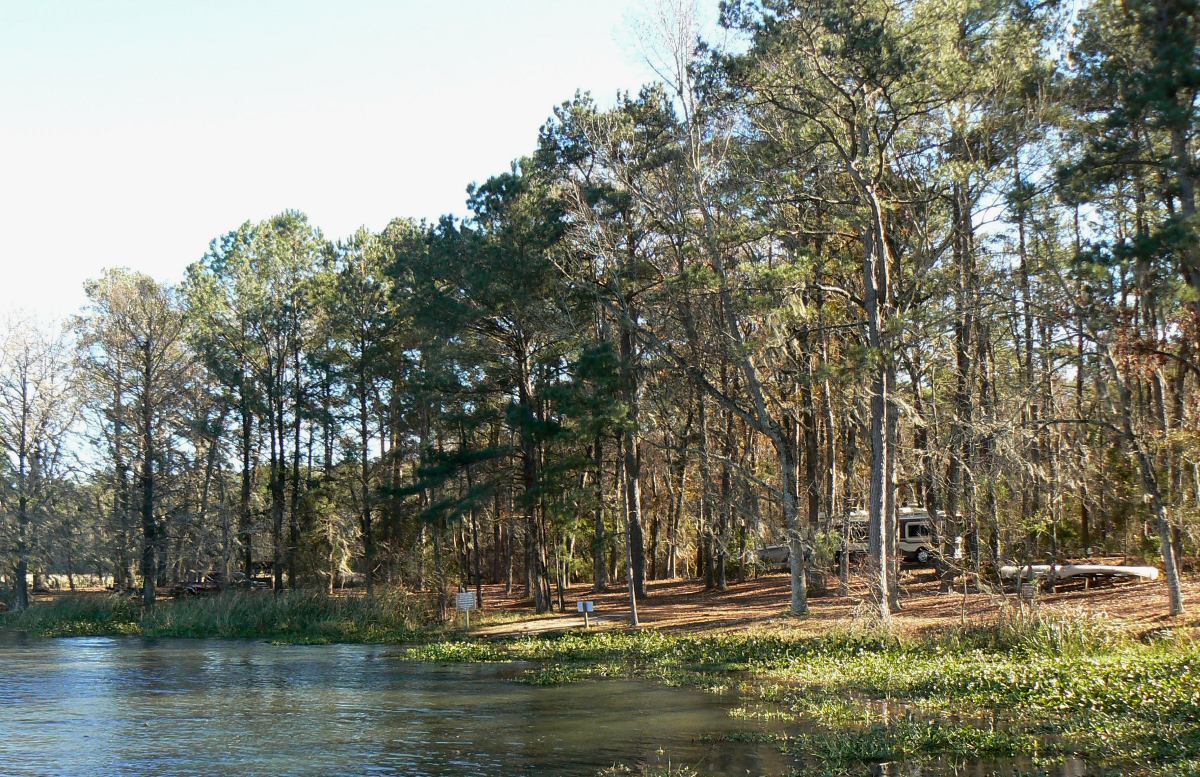
Florida Caverns State Park Campground sits in the Florida Panhandle near Marianna, best known for the state's only public limestone cave tours featuring stalactites, stalagmites, and flowstone formations. The 32-site campground was rebuilt after Hurricane Michael destroyed most of the tree canopy, leaving wide, level full-hookup sites in an open, sunny setting with minimal shade. Guided cavern tours draw families and geology enthusiasts, while above-ground trails, Blue Hole spring, and the Chipola River offer hiking and swimming.
Planning your trip?Check out our camping packing checklist