10 Best California Campgrounds for Spring Camping

Leave anyway. That's one of our mantras at Outdoorithm Collective. Not "leave when you're ready." You're never ready. Not "leave when it's convenient." It never is. Just leave.
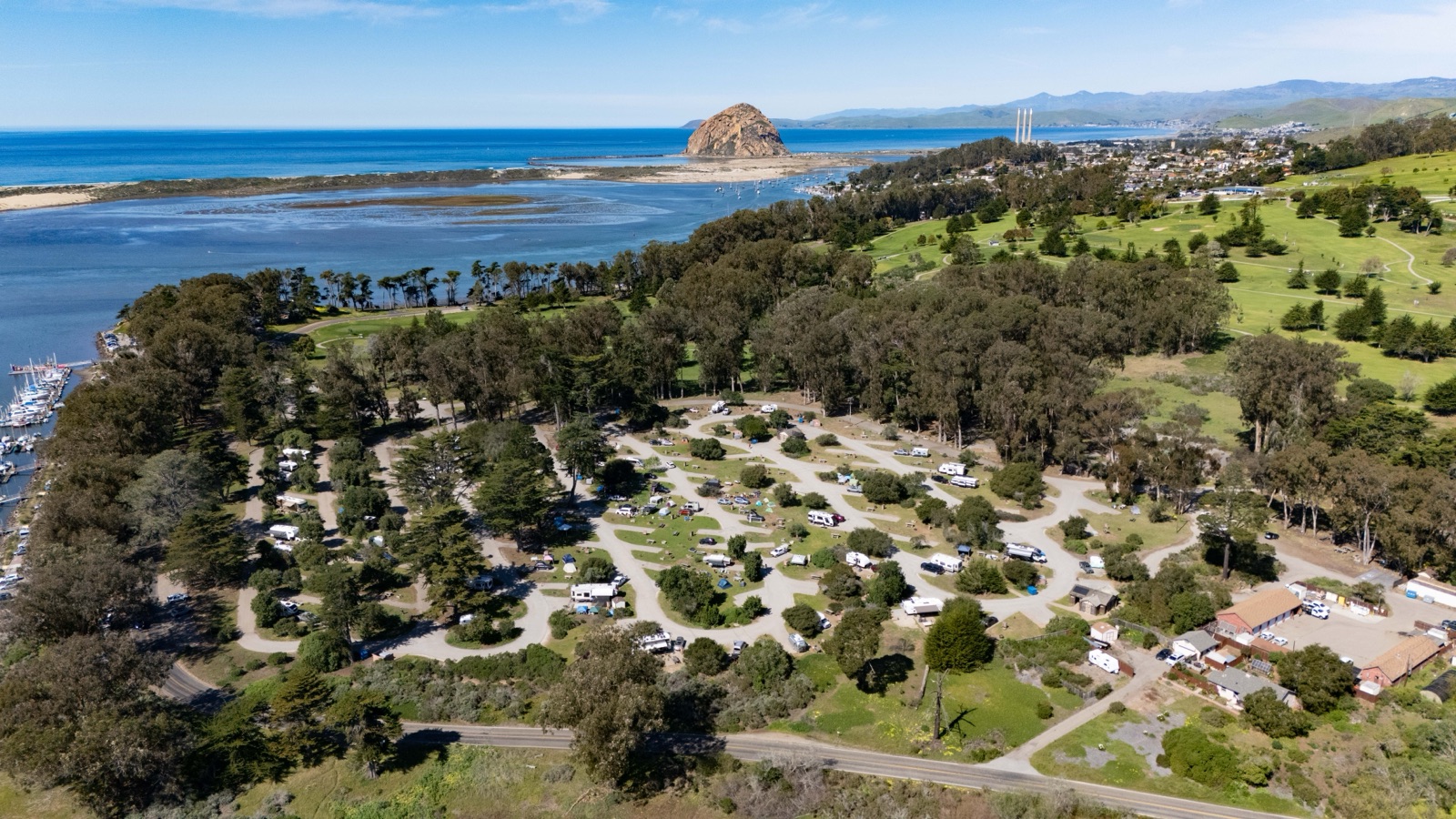
A few weeks ago, our oldest had a school program that required parents there until five. We couldn't leave the house until six. Morro Bay State Park was three hours south, and we still needed dinner and gas. The smart move was to cancel. Go next weekend. Sleep in our own beds. But we loaded the van at 6:15 and pointed it toward the coast.
We pulled in around 10pm to find someone already in our site. A couple of older gentlemen had misread the campsite signs and parked their vans across two spots, one of which was ours. But the site they were supposed to be in turned out to be great, so we swapped without any fuss. Good thing they weren't asleep yet. We set up in the dark, crawled into our sleeping bags, and crashed.
The next morning we slept in, then stepped out of the tent to a full campground and sunshine. It was 75 degrees. Blue sky. Not a cloud in sight. Kids on bikes doing laps around the loop. A park ranger rolled past in his truck and leaned out the window. "Isn't this the most perfect camping day?" he said. "Doesn't get better than this."
That's what leaving anyway gets you. Not a smooth arrival. Not a perfect plan. Just the chance to be standing outside in the right place when the morning comes. And in California, spring is full of mornings like that.
Why Spring Camping Hits Different
Here's why. In summer, when the Central Valley heats up past 100 degrees, it pulls cold ocean air inland like a vacuum. That's your marine layer: the fog, the chill, the reason you packed a down jacket in July. But in spring, the inland valleys haven't cooked yet. No temperature differential means no fog machine. You get days like our Morro Bay weekend. Warm, calm, sunny. No marine layer in sight.
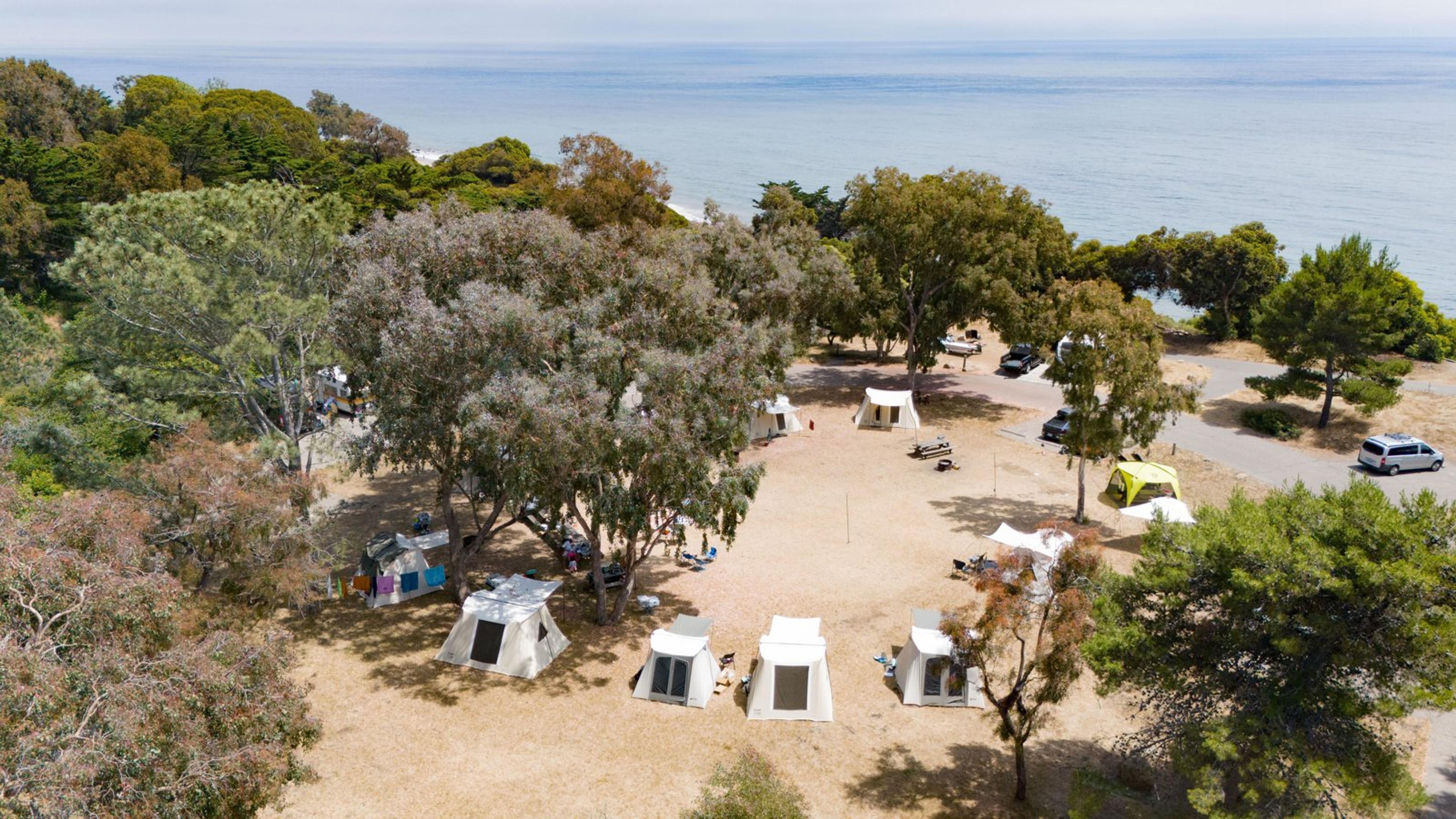
Then there's the green. California turns impossibly lush after the rainy season. We camped at El Capitan State Beach near Santa Barbara one spring break. The bluffs above the ocean were covered in thick green grass, and the campground felt alive. We came back in July with a group. Same campground, same bluffs. Every blade of grass was brown and dusty.
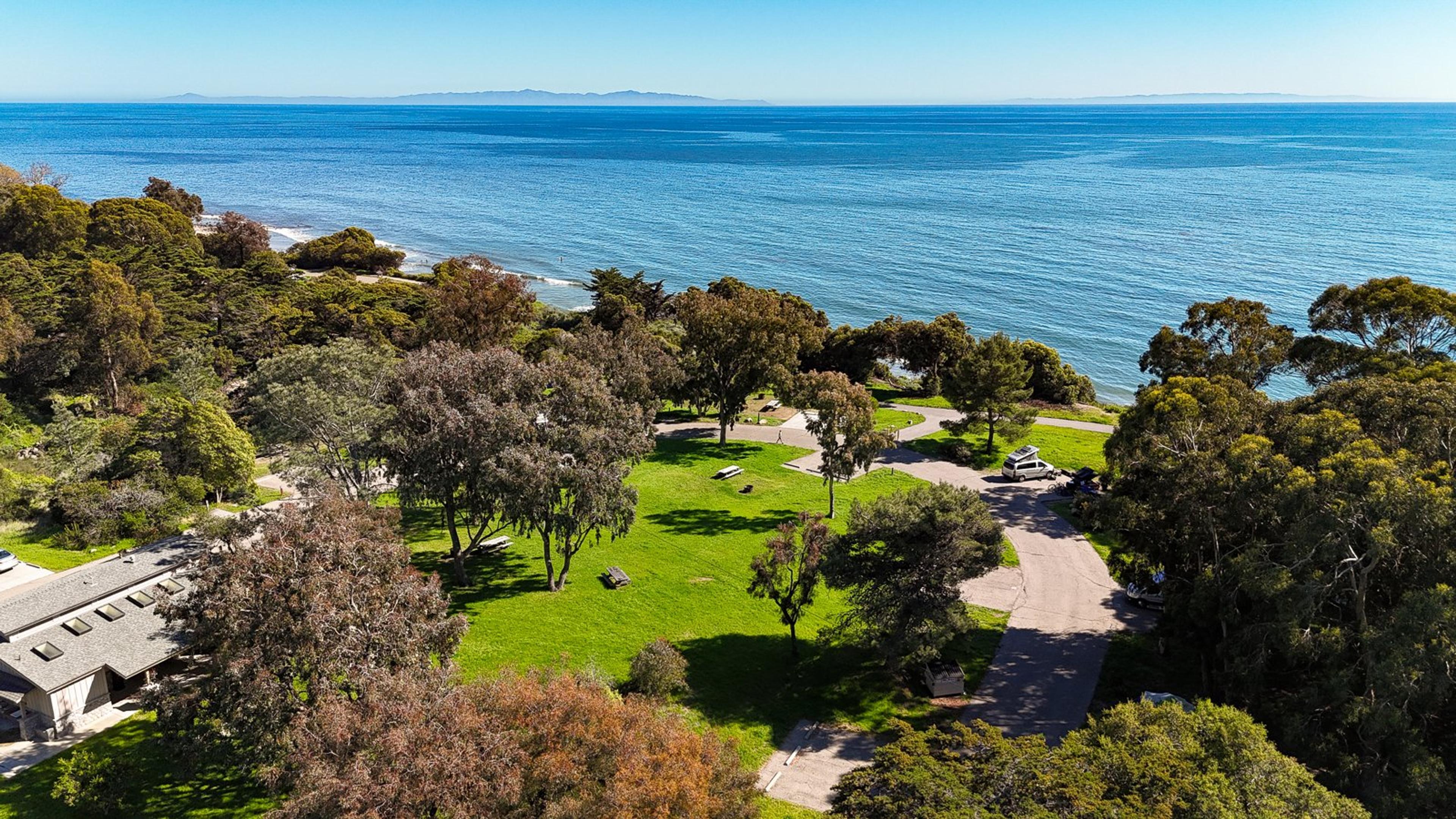
Drive Highway 1 in late March and the hillsides light up orange with California poppies. You look left, wildflowers. You look right, the Pacific. That's the moment you stop planning the next trip and just stand there.
10 Best California Campgrounds for Spring Camping
Here are the spots that deliver. Each one linked to its Outdoorithm page so you can pull up maps, photos, site numbers, and live availability.
1. Morro Bay State Park
Location: Central Coast, San Luis Obispo County
Best for: Bay views, full amenities, families wanting protection from open-ocean wind
Why visit in spring: Even late winter can deliver 75-degree blue-sky days here. No marine layer fog like summer.
Reservation info: Morro Bay State Park
$35–50/night. Great birding right in the campground, and Morro Rock is a 5-minute drive. This is the campground in our "leave anyway" story above. The site we ended up in was better than the one we'd booked.
2. El Capitan State Beach
Location: Santa Barbara Coast
Best for: Blufftop ocean sites, families with young kids
Why visit in spring: Green and lush after the rainy season, dusty brown by July. The window is short.
Reservation info: El Capitan State Beach
$45/night. Sheltered sites under eucalyptus trees. The bluffs above the ocean turn impossibly green in March and April. Stairs down to the beach put you in tide pools at low tide.
3. New Brighton State Beach
Location: Monterey Bay, Capitola
Best for: Dolphin watching, gentle bay swimming for kids
Why visit in spring: Bay water warms up before open-coast beaches, and the post-rain green hasn't faded yet.
Reservation info: New Brighton State Beach
$35–100/night. Our most-visited campground. Nine trips and counting. Premium bluff sites look out over Monterey Bay, and we've watched dolphins from our camp chairs. Stop at Pretty Good Advice on the way in for vegan burgers and Arnold Palmers.
4. Pfeiffer Big Sur State Park
Location: Big Sur, Central Coast
Best for: Redwoods, river swimming holes, hot showers
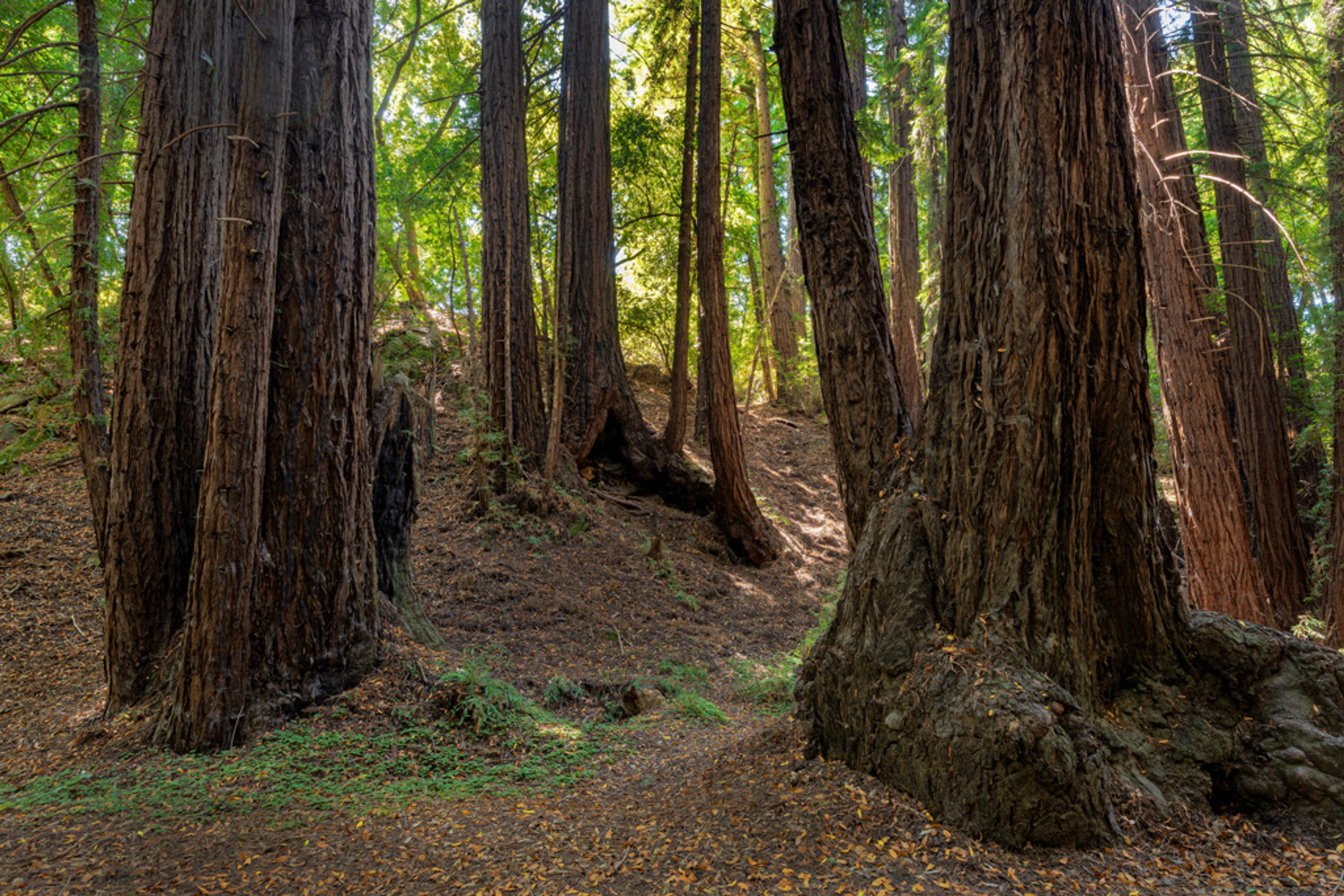
Why visit in spring: The Big Sur River is running hard from winter rains, hiking is cool enough to push hard.
Reservation info: Pfeiffer Big Sur State Park
$5–60/night. Riverfront premium sites are worth the extra $10. It books six months out, but cancellations pop up regularly. Set up a campsite alert to grab one.
5. Crystal Cove State Park (Moro Campground)
Location: Laguna Beach, Orange County
Best for: Every site is a bluff site, dead-calm mornings
Why visit in spring: Onshore wind builds later in the day, but spring mornings here are still and clear.
Reservation info: Crystal Cove State Park (Moro Campground)
$75/night. You walk out of your tent and you're looking straight at the Pacific. Stone stairways cut into the cliff take you down to the beach. Pricier than other state beaches, but the view earns it.
6. San Clemente State Beach
Location: Orange County Coast
Best for: Surf access, value pricing, kids who want to learn
Why visit in spring: The water hasn't fully warmed yet, but the morning breaks are clean and consistent.
Reservation info: San Clemente State Beach
Planning where to go next? Camp Sage knows every campground we track. Ask it anything, from drive times to which loops have shade.
Ask Camp Sage$25–45/night. Blufftop sites with a trail down to a mile of beach. You'll see locals paddling out at sunrise. One of the better-value coastal campgrounds in Southern California.
7. Pinnacles National Park
Location: Inland Central California
Best for: Volcanic rock formations, condor viewing, talus caves
Why visit in spring: Warm enough days to hike without overheating, cool nights, long light, no summer crowds.
Reservation info: Pinnacles National Park
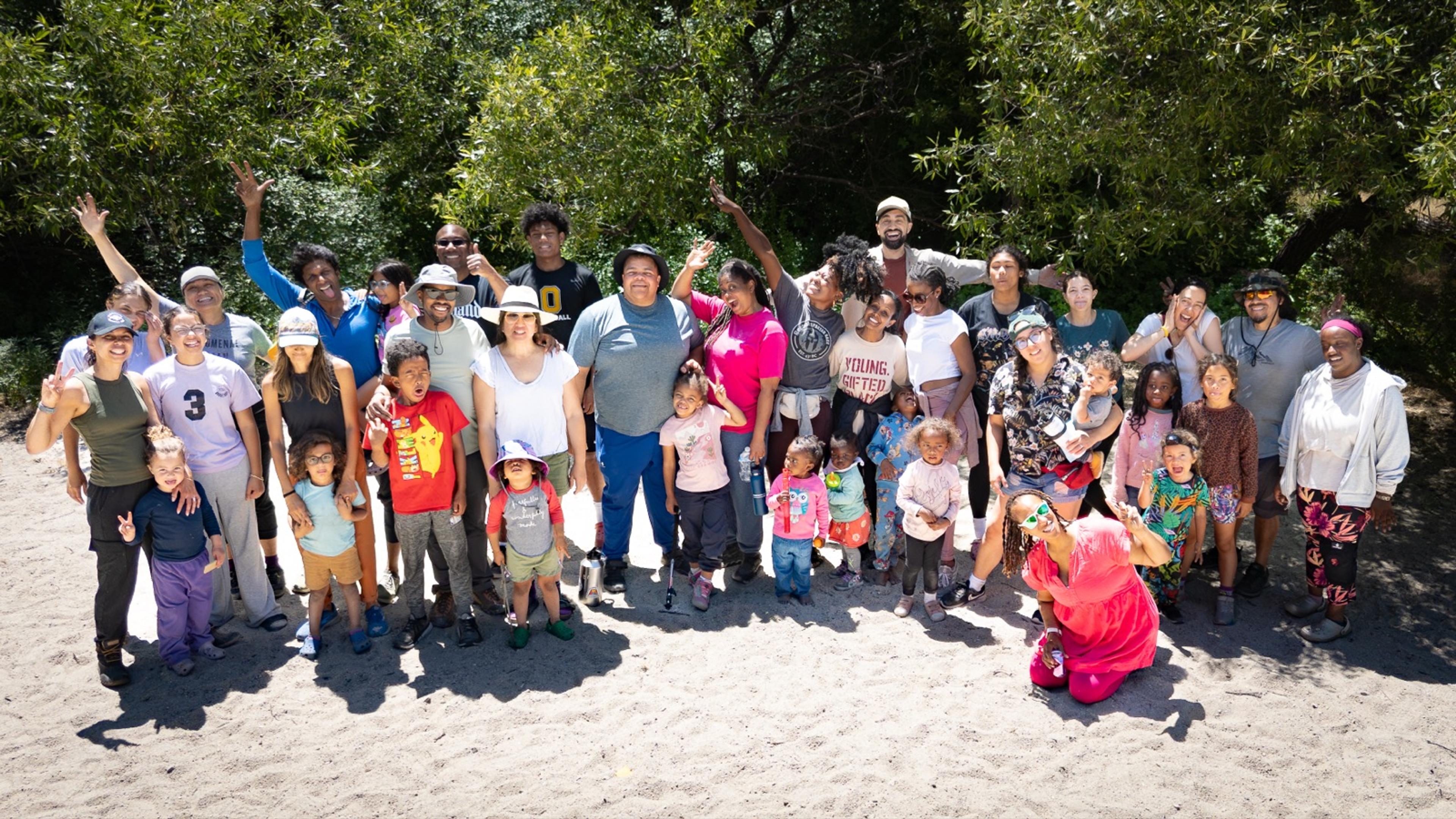
$43–139/night. Wildflowers in March and April. The talus caves are open, California condors are soaring overhead. We've done three trips here, including a Memorial Day weekend with 40 people. Spring is the sweet spot: warm days, cool nights, long light.
8. Sugarloaf Ridge State Park
Location: Sonoma County, wine country
Best for: Creekside waterfall hikes, escape from the coast crowds
Why visit in spring: The waterfalls are running hard from winter rains. By June, they're trickles.
Reservation info: Sugarloaf Ridge State Park
$10–30/night. Most people have never heard of it. The drive up through Sonoma Valley is half the trip. Stop for lunch in the town square or grab a bottle of something local on the way back.
9. Joshua Tree National Park (Jumbo Rocks Campground)
Location: High Desert, Southern California
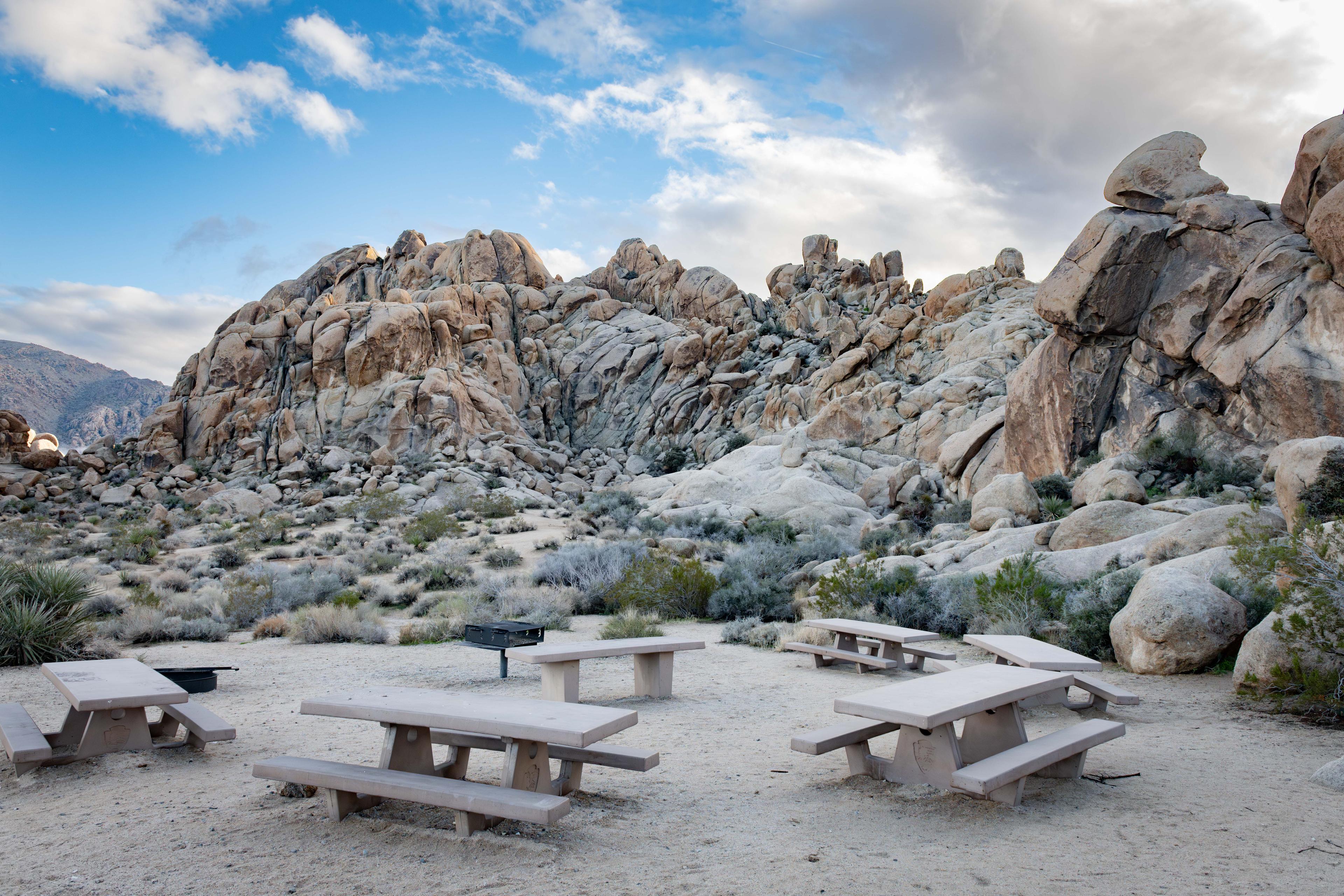
Best for: Wildflower blooms, dark-sky stargazing, boulder scrambling
Why visit in spring: March through mid-April hits the narrow window of 70-degree days before triple-digit summer.
Reservation info: Joshua Tree National Park (Jumbo Rocks Campground)
We drove down from Oakland on New Year's Eve and pulled in to pouring rain, huge puddles across the park roads, water flying off the tires. But when the weather cooperates, spring in Joshua Tree is magic. Go midweek if you can. Spring weekends fill fast.
10. Anza-Borrego Desert State Park (Borrego Palm Canyon)
Location: Southeastern Desert, San Diego County
Best for: Superbloom wildflowers, dark skies, wide-open space
Why visit in spring: In a good bloom year, the desert floor turns into a carpet of purple and yellow.
Reservation info: Anza-Borrego Desert State Park (Borrego Palm Canyon)
California's largest state park. Weekday visits are the move during peak bloom because the crowds can be intense on weekends. Check Anza-Borrego's wildflower hotline before you go.
Spring Camping Gear You Actually Need
The biggest surprise for spring campers? How cold nights get after a 70-degree afternoon. You need to plan for that swing.
Sleep system. Your sleeping bag should be rated 10–15 degrees below the expected overnight low. A 20-degree bag handles most spring camping in California. And your sleeping pad matters more than your bag. We learned this the hard way on a 40-degree night at Pinnacles when the cold came straight up through the ground. Look for an R-value of 3 or higher.
Layers. No cotton. Wet cotton stays wet and stays cold. Pack a merino or synthetic base layer, a fleece mid-layer, and a rain shell. You'll use all three, sometimes in the same day.
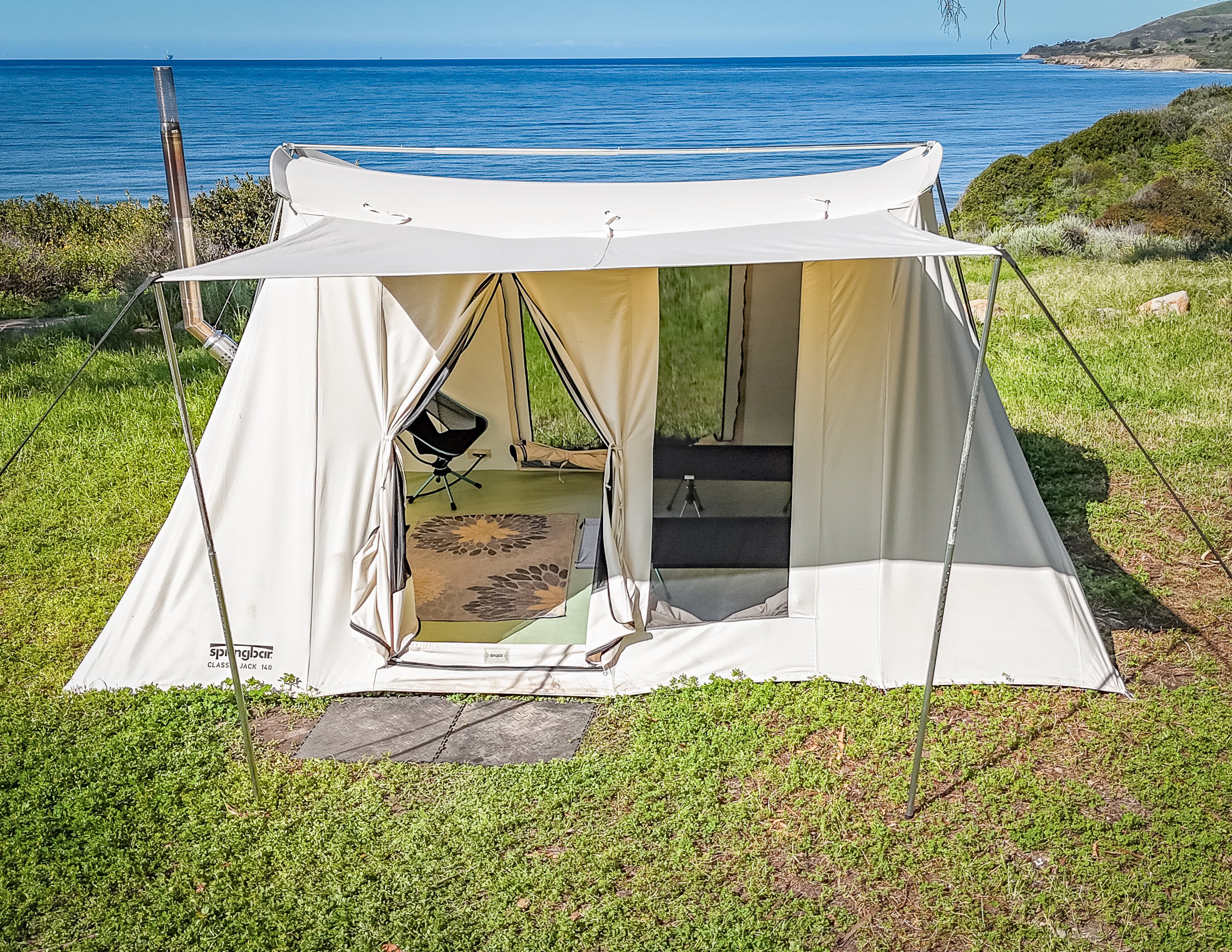
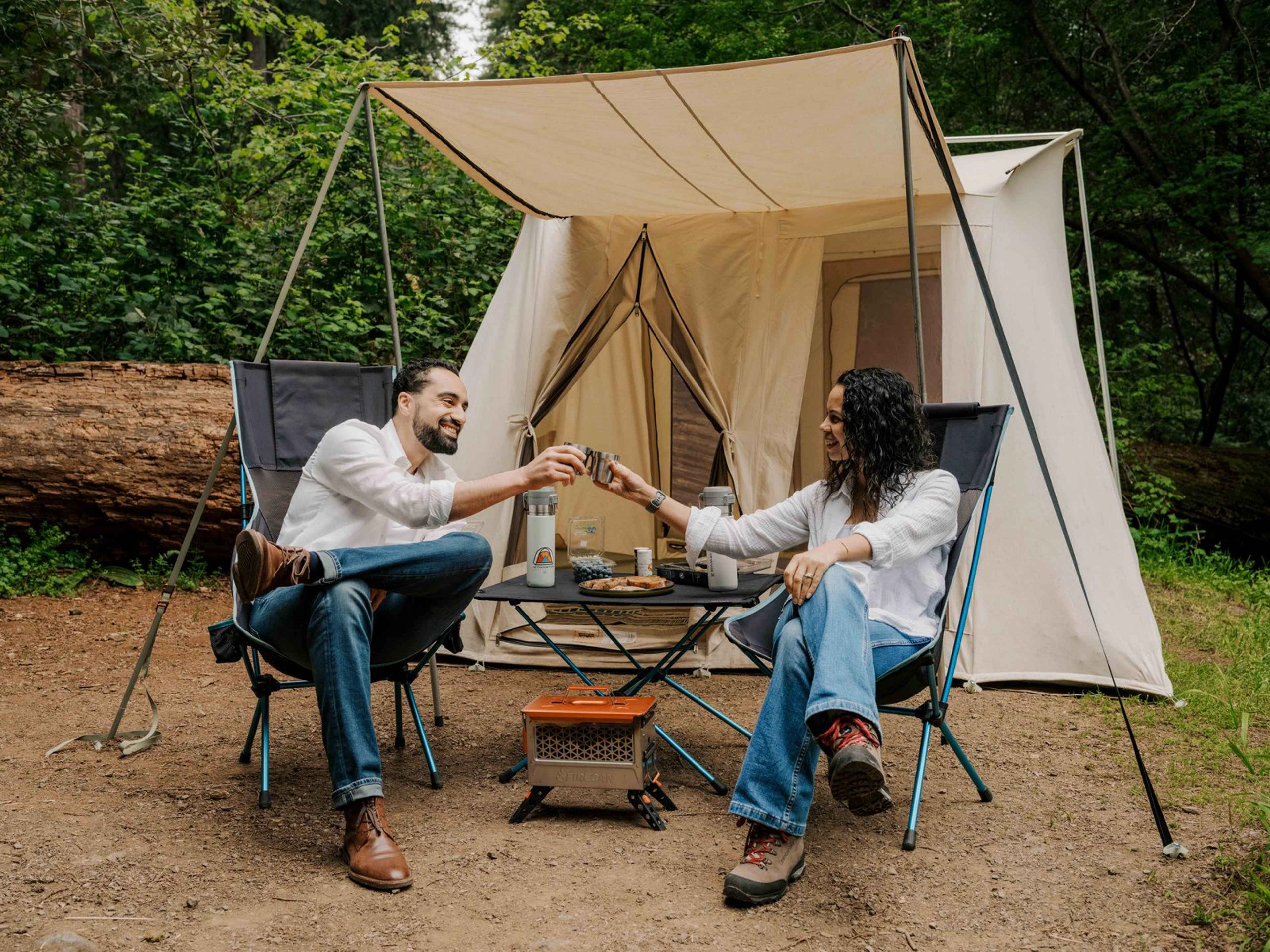
Rain gear. Spring means occasional showers. A good rain jacket and a tarp over your living area are the two essentials. We run a tarp over our picnic table using adjustable poles and guy lines. Everything underneath stays dry. The tarp is the one piece of gear we didn't know we needed until we tried it.
Headlamp. Spring days are longer, but you still need a headlamp for 6am bathroom trips and late-night cooking. Hands-free beats a flashlight every time.
Before You Go
Check if the water's on. Some campgrounds shut off water systems in winter and don't turn them back on until May. Call ahead or check the park website before you load the car.
Condensation is real. You'll wake up and the inside of your tent will be damp. This isn't rain. It's your breath condensing on cold tent walls overnight. Crack your rain fly vents and don't touch the walls. It catches every first-timer off guard.
Book now, or set an alert. Spring weekends fill fast, especially on the coast. But here's the insider move: spring rain forecasts scare off tent campers. One person's cancelled trip is your perfect weekend. Set up a campsite alert to catch cancellations as they drop. For more on booking strategy, check out our Campground Reservations 101 guide.
Not sure where to start? Camp Sage can match you with campgrounds based on your dates, location, and activities. And don't leave home without checking our camping packing checklist. Spring packing has a few curveballs you don't want to miss.
Spring doesn't wait for you to be ready. It just shows up. The poppies bloom whether you're there or not. The fog holds off whether you notice or not. But if you go, you'll notice. You'll remember the morning you stepped out of the tent and a park ranger told you it doesn't get better than this. And he was right.

Want a personalized version of this guide?
Camp Sage tailors recommendations to your dates, group, and gear — free.
Join our newsletter to get more resources and tips to help your family camp with confidence!