The North Face Wawona 8
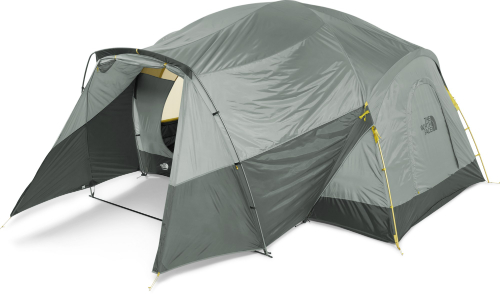
In about 10-15 minutes with a partner (15-20 solo), you will have a spacious 8-person home base with a covered vestibule for gear, hanging out, or escaping light rain.
With Partner
10-15 minutes
Solo
15-20 minutes
Capacity
Sleeps 8 | Peak height 6'6"
Vestibule
Expansive vestibule for chairs and gear
Color-coded poles make setup fast: yellow poles for the main structure, gray poles for extra support and vestibule.
Photo of fully assembled Wawona 8 with vestibule extended
Orientation
Before you begin
Clear the pad, lay out your parts, and spot the color coding so setup flows smoothly.
Choose your spot
Find a flat 15 ft x 12 ft area. Clear rocks, sticks, and debris. Important: The Wawona 8 has a very large vestibule that extends 6+ feet in front of the tent, so leave plenty of space in front for the vestibule to fully extend.
Photo of ideal campsite with flat ground cleared and tent bag for scale
Unpack and verify parts
Lay everything out before you start so nothing is missing mid-setup.
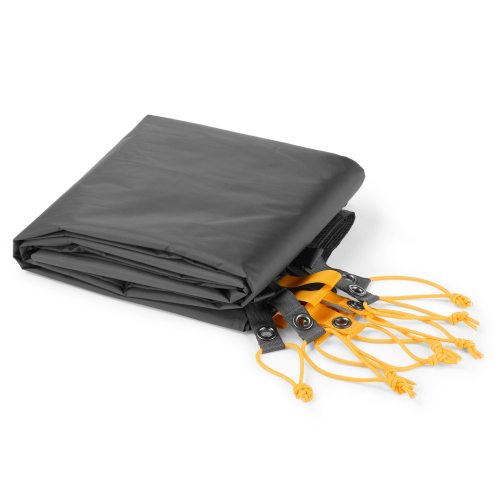
- Ground sheet / footprint (goes under the tent)
- Tent body (mesh + floor)
- 2 LONG YELLOW poles (main X shape - these are the longest poles)
- 1 SHORT YELLOW ridge pole (lifts the front wall - much shorter than the main poles)
- 2 GRAY support poles (medium length for side structure)
- 1 GRAY vestibule pole (arched porch pole)
- Rain fly with 'THE NORTH FACE' logo
- Stakes
- Guy lines (for windy conditions)
Photo of all tent parts laid out and labeled
The color-coding secret
Yellow poles go to yellow-marked sleeves and grommets. Gray poles go to gray-marked sleeves. The yellow ridge pole is short and goes above the front door. The gray vestibule pole creates the porch.
Pole identification
You have THREE yellow poles total: 2 very long ones for the X-frame, and 1 short one for the ridge. You have THREE gray poles: 2 medium ones for the sides, and 1 for the vestibule arch.
main body
Part 1: Main Tent Body
Lay the foundation with your ground sheet, then build the frame and watch the dome take shape.
Lay out the ground sheet
Lay out the ground sheet
Place the ground sheet (footprint) on your cleared campsite. This protects the tent floor and defines exactly where your tent will sit. Make sure the ground underneath is even with no sticks, rocks, or pinecones that could poke through. Remember to leave 6+ feet of clear space in front for the vestibule!
Ground sheet placement
The ground sheet establishes your tent's footprint. Take a moment to position it well - you don't want to move the whole tent once it's up!
Photo of ground sheet laid flat on cleared campsite
Lay out the tent body
Lay out the tent body
Spread the tent body flat on top of the ground sheet with the floor facing down and mesh up. Orient the tent so the front door (largest mesh panel) faces the direction you want to exit - this is also where the vestibule will extend.
Photo of tent body spread flat on ground sheet with front door visible
Assemble the long yellow poles
Assemble the long yellow poles
Unfold and snap the TWO LONG YELLOW pole sections together - these are the main X-frame poles and are the longest poles in the set. Don't confuse them with the short yellow ridge pole! The internal cord should pull joints into place - listen for each click.
Common mistake to avoid
Do not force bent poles. If a section resists, realign and wiggle gently until it seats to avoid cracking the pole.
Close-up photo of long yellow pole sections being connected
Thread long yellow poles through sleeves
Thread long yellow poles through sleeves
Find the sleeves with YELLOW markings at each end. Thread each long yellow pole corner-to-corner to form a big X across the tent top. The poles cross over each other at the peak of the tent.
Threading tip
Push the pole through in short sections. Fabric bunching is normal - just keep sliding it along the sleeve.
Photo showing pole being threaded through yellow-marked sleeve
Photo showing both long yellow poles crossed in an X while tent is flat
Secure yellow poles to corner grommets and raise the dome
Secure yellow poles to corner grommets and raise the dome
Insert each yellow pole end into its matching YELLOW grommet at the corners. As you do this, you'll push the tent up and watch the dome shape come together! Each pole end goes through TWO grommets: the yellow grommet on the tent AND the grommet on the ground sheet beneath it.
- Have a partner hold one pole end in its grommets while you bend and insert the opposite end.
- Make sure the pole goes through both the tent's yellow grommet AND the ground sheet grommet.
- Repeat for the second long yellow pole - the dome should now stand up!
Two-person step
While it's possible to erect the tent solo by securing one pole end and walking to the other side, this step is MUCH easier with two people. One person holds, the other bends and inserts.
Close-up of pole end being inserted through tent grommet and ground sheet grommet
Photo of dome shape forming as poles are secured
Assemble and insert gray support poles
Assemble and insert gray support poles
Now that the dome is standing, connect the GRAY support pole sections and feed them through the GRAY-marked side sleeves. These add side height and extra stability to the structure.
Photo showing gray pole sleeve location on tent side
Secure gray poles to corner grommets
Secure gray poles to corner grommets
Insert each gray pole end into its matching grommet. Like the yellow poles, each gray pole end goes through TWO grommets: the tent's grommet AND the ORANGE grommet on the ground sheet.
Easier with dome up
The gray poles are much easier to insert once the main dome is standing. The structure gives you something to work against.
Close-up of gray pole end going through tent and orange ground sheet grommet
Attach the clips
Attach the clips
Snap each fabric clip onto the nearest pole to tension the walls and stabilize the frame. Work your way around the tent attaching all clips.
Close-up of plastic clip being attached to pole
Add the short yellow ridge pole
Add the short yellow ridge pole
Take the SHORT YELLOW ridge pole (not the long ones you used for the X-frame!) and slide it into the sleeve above the front door. The ridge pole goes UP AND OVER the sleeves that hold the two long yellow poles, lifting the front wall more vertical and adding headroom at the entrance.
Milestone
With all pole ends seated and the ridge pole in place, the main tent structure is complete! Time for the rain fly.
Photo showing short yellow ridge pole above front door
rain fly
Part 2: Rain Fly
Dial in coverage before you pitch the porch. 'THE NORTH FACE' logo marks the front of the fly and should sit over the front door.
Drape the rain fly over the tent
Drape the rain fly over the tent
Unfold the fly and center it over the standing tent. Align the logo with the front door and keep the overhang even on all sides.
Photo of rain fly being draped over the tent
Attach back clips first
Attach back clips first
Clip the back fly corners to the tent body corners. Starting at the back makes front alignment easier.
Close-up of rain fly clip connecting to back corner
Attach front clips
Attach front clips
Connect the front corner clips and any additional front attachment points to keep the fly positioned correctly.
Photo showing front rain-fly attachment points
Secure with velcro straps
Secure with velcro straps
Wrap the velcro straps on the underside of the fly around the tent poles so wind cannot lift the fly.
Close-up of velcro strap wrapped around pole
Tighten the corner straps
Tighten the corner straps
Use the adjustable straps at each corner to tension the fly evenly. A taut fly sheds rain and resists wind better.
Pre-trip tip
Loosen these straps before packing. Tight straps make the next setup harder because you'll fight the shortened webbing.
Photo of adjustable corner strap being tightened
vestibule
Part 3: Vestibule Setup
Build the covered porch with the GRAY vestibule pole - perfect for gear, shade, and rainy-day hangouts.
Insert the gray vestibule pole
Insert the gray vestibule pole
Thread the GRAY vestibule pole through the sleeve on the fly's porch section. Important: When seating the pole ends, insert into the grommet that has the WEBBING STRAP attached to it - NOT the grommet that is closest to the tent body. The webbing helps anchor and tension the vestibule arch properly.
Choose the right grommet
There are two grommets near each vestibule pole end. Use the one with webbing attached - this is critical for proper vestibule tension and shape.
Photo showing gray vestibule pole being inserted into sleeve
Close-up of vestibule pole end in grommet with webbing
Attach vestibule to tent grommets
Attach vestibule to tent grommets
For full extension, attach the vestibule's first set of grommets to the INNER grommets on the tent - NOT the corner grommets, but the next set of grommets closer to the door. These inner grommets go through both the ground sheet and tent body. This anchors the vestibule to the tent structure before you stake out the front.
Grommet location
Look for the grommets that are one position inward from the corners, closer to the front door. The vestibule grommets slip under these to create a secure connection.
Photo showing vestibule grommet attaching to inner tent grommet
Photo showing the inner vs corner grommets on tent front
Stake the vestibule door first
Stake the vestibule door first
Before staking anything else, stake out the front corners of the vestibule door. There are two loops at each front corner - stake the OUTSIDE loop (the one farther from the tent). The inside loop is used to lift and roll up the door, so leave it free. Pull the vestibule forward to its full 6+ foot extension and stake at 45-degree angles. This creates a huge covered lounge area for 4-6 people with chairs.
Why stake the door first?
Staking the door corners first puts the vestibule under proper tension, which makes it easier to align and stake all the other points. The inside loops stay free so you can roll up the door later.
Photo showing vestibule door corner loops
Photo showing full-extension vestibule setup
Stake all grommet points
Stake all grommet points
Now stake out all remaining grommet points on the tent and vestibule. Work your way around the tent, staking each corner and side grommet. Pull fabric taut as you go to avoid sagging. The vestibule should create a large, flat canopy over the porch area.
Common mistake to avoid
A sagging vestibule will collect rain. If any section sags, restake further out until the fabric is flat and tight.
Photo of stake set at 45 degrees on tent corner
Photo showing all staked grommet points around tent
Add guy lines (optional - for high winds)
Add guy lines (optional - for high winds)
If you expect windy conditions, attach the included guy lines to the loops on the rain fly. Stake them out at 45-degree angles away from the tent for extra stability. Guy lines help prevent the fly from flapping and keep the structure secure in gusty weather.
When to use guy lines
Guy lines are optional in calm weather but highly recommended if wind is expected. They add significant stability to the tent structure.
Photo showing guy line attached to fly loop and staked
Install room divider (optional)
Install room divider (optional)
The Wawona 8 includes an optional mesh room divider that can split the interior into two separate spaces. Attach the divider to the ceiling loops inside the tent. This is great for families who want to create separate sleeping areas or for privacy.
Photo showing room divider installed inside tent
Final checks
Walk the perimeter once and confirm these items before moving in.
- Ground sheet is flat with no debris underneath
- All pole ends are fully seated through BOTH tent grommets AND ground sheet grommets
- All clips are attached to poles
- Short yellow ridge pole is in place above front door
- Rain fly is centered and taut with logo over front door
- Velcro straps are wrapped around poles
- Gray vestibule pole ends are in grommets WITH webbing (not closest to tent)
- Vestibule door corners staked using OUTSIDE loops (inside loops free for rolling)
- All tent and vestibule grommet points staked
- Vestibule is taut and not sagging
- Guy lines attached if windy conditions expected
- Zippers move smoothly
- Doors open and close without strain
Congratulations!
Your Wawona 8 is ready for adventure!
Gear in This Guide
The other products you saw in this setup.
Setup Video
Watch a walkthrough of the full setup process.
Features
Ventilation options
On warm nights, unzip and roll up rear fly panels or remove the fly entirely for maximum mesh airflow.
Photo of rear panel rolled up for ventilation
Rolling up the vestibule door
Use the INSIDE loops at the vestibule door corners to roll up and secure the door open, creating an open-air porch.
Photo of vestibule door rolled up and secured
Packing up
Reverse setup: pull stakes, remove fly, break down poles, fold ground sheet, then fold and roll the body. Loosen straps first to make the next pitch easier.
Quick reference
Peak height
6'6" (78 inches)
Footprint
Approx. 15 ft x 12 ft pad + 6 ft vestibule space
Best with
2 people (solo is doable with patience)
Vestibule
6+ ft deep porch for chairs and gear
Yellow poles
2 long (X-frame) + 1 short (ridge)
Gray poles
2 medium (sides) + 1 curved (vestibule)
Troubleshooting
The tent will not stand up
Check every pole end is fully in BOTH grommets (tent AND ground sheet). The poles must bend under tension to create structure. This step is much easier with two people.
I'm confused about which yellow pole is the ridge pole
The ridge pole is MUCH shorter than the main poles. The two long yellow poles form the X across the tent. The short yellow one goes in the sleeve above the front door.
The rain fly looks crooked
Place 'THE NORTH FACE' logo over the front door, then adjust corner attachments and retighten the straps evenly.
The vestibule sags in the middle
First check the vestibule pole is in the correct grommets (the ones with webbing, not closest to tent). Then stake the corners farther out or add a center guy line.
Poles will not connect
Do not force them. Align sections carefully and wiggle while pressing so the elastic cord can seat each joint.
There is condensation inside
Increase airflow by opening vents or unzipping rear fly panels, and keep the vestibule door cracked when weather allows.
I forgot the ground sheet
You can still set up without it, but the tent floor is more vulnerable to punctures and moisture. Consider using a tarp if available, or be extra careful clearing the ground.